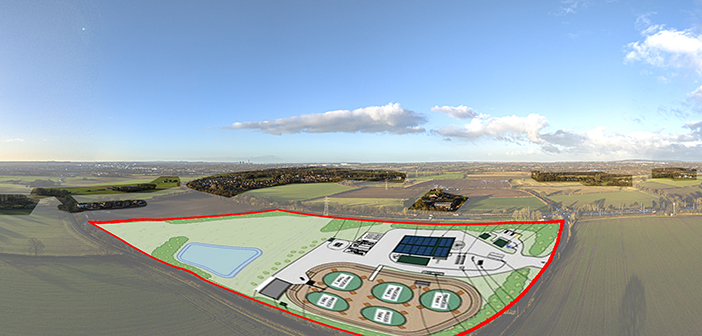
A local councillor has expressed concerns over planning application delays involving proposals for an anaerobic digestion plant at Winwick, Warrington.
It is now more than a year since the application was validated with local councillors and residents still awaiting clarity.
Local Cllr Stuart Mann said: “I’m concerned at just how long the planning application for the proposed anaerobic digestion plant at Highfield Lane, Winwick has been allowed to drag on.
“It was validated in July 2025. More than a year later, residents are still waiting for clarity.
“People quite reasonably ask how many opportunities an applicant should be given to amend, revise and respond before a decision is actually made.
“Whatever the technical reasons, the process now looks and feels open-ended, and that is damaging public confidence.
“I have asked Warrington Borough Council for a clear status update, what is still outstanding, whether any further extension has been agreed, and when this application is finally going to be determined.”
Severn Trent Green Power is seeking planning permission to construct and operate an anaerobic digestion plant that would process thousands of tonnes of food and organic waste each year to produce biogas and fertiliser. While the company claims the plant will support renewable energy targets and reduce landfill, the specific location and scale of the project have raised major concerns.
The plant would be located close to the village of Winwick, near homes, schools, and on green belt land of nationally historic importance raising questions about the suitability of the site for such an industrial development.
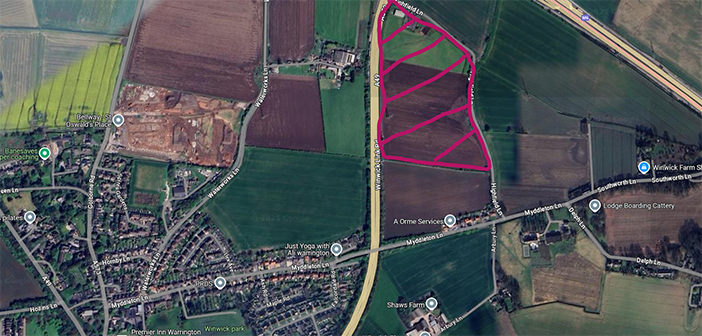
The site of the proposed Biogas plant
Cllr Mann has raised his concerns with town planners and Chief Executive Sarah Smith stating: “I also now need to raise a more fundamental concern about the length of this process and ask why the Local Planning Authority continues to hold the application open for further negotiation rather than determining the application that is before it.
“The application was validated on 21 July 2025, meaning it has now been live for well over a year. It is also more than 18 months since I was first contacted about the proposal by Severn Trent.
“When we corresponded in February, you confirmed that the Planning Performance Agreement had been signed on 1 July 2025 and that an extension of time had been agreed until 22 October 2026. You also advised on 12 February that officers anticipated being able to conclude their assessment and formulate a recommendation following the reconsultation and narrowing of the outstanding issues.
“That date has now passed by almost five months.
“Since then, the Environment Agency issued its response of 29 April 2026. That response did not simply request minor clarification. The Environment Agency formally objected to the application, stated that the risks to groundwater were unacceptable and recommended that planning permission should be refused. It went further by expressing an objection to the principle of underground storage of pollutant-bearing materials at this particular location.
“I note this document is NOT on the planning portal.
“The applicant subsequently responded through Ayesa in May, (which is on the portal) challenging aspects of the Environment Agency’s interpretation and seeking further dialogue. However, from the documents currently available on the public planning record, I cannot see that the Environment Agency’s objection has subsequently been withdrawn or that the additional groundwater and hydrogeological assessments it requested have been published.
“I am therefore increasingly concerned about how long the process of allowing the applicant to seek to overcome objections can reasonably continue.”
He went on to say: “If a further Extension of Time or revised PPA timetable has been agreed after 26 March 2026, please could you provide the date agreed, the revised determination date and confirm where this has been recorded on the public Planning Register.
“If no further Extension of Time is currently in place, please could you explain the procedural position and on what basis further amendments, information or negotiations are continuing to be entertained.
“Secondly, given WBC’s own published guidance, I would like to understand why officers consider it appropriate to continue negotiating this application rather than determine it as submitted.
“There have now been substantial revised technical submissions, a full reconsultation and further correspondence following a statutory consultee objection.
“At what point does the Council consider that the scale and duration of amendments cease to represent reasonable clarification of an application and instead amount to significant changes which should properly require either determination of the existing application or submission of a new application?
“In particular, the February exercise involved re-notification and consultation on substantive technical issues. I would therefore be grateful if you could explain how officers reconciled that approach with the Council’s published guidance that amendments significant enough to require re-notification on substantive issues will usually require a new application.
“Thirdly, I would appreciate a direct explanation as to why the Environment Agency’s outstanding objection has not resulted in the application being recommended for refusal.
“I fully understand that officers should work positively and proactively with applicants and that a statutory consultee objection can sometimes be overcome. However, that cannot surely amount to an indefinite opportunity to amend an application until every reason for refusal has potentially been designed out.
“The Environment Agency’s April response appears particularly significant because it went beyond requesting further information and expressed a concern about the suitability, in principle, of underground pollutant-bearing infrastructure at this location.
“If officers believe there remains a clear and realistic route by which that objection can be overcome, please could you explain what that route now is, what information or changes are required, and what deadline has been given to the applicant to provide them.
“If there is not currently a clear route to resolving that objection, I would like to understand why the application is not now being determined on the evidence before the Council?”