by Glenn Screeton
SITUATED on Barbauld Street, just steps from Friars Court and within walking distance of other town-centre venues, Brickhaus is embedded in Warrington’s compact but evolving nightlife district.
This proximity creates a kind of informal circuit—audiences can move between spaces, and promoters can build multi-venue events that stretch across the town centre. In a scene that has historically been overshadowed by nearby cities like Manchester and Liverpool, this clustering is crucial for sustaining a local identity.
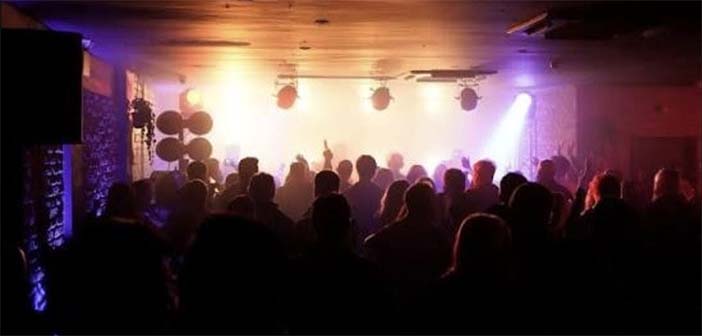
Although Sat 18th April was my first foray into the new venue, local music fans will recall the footprint operating under names like Eden and FC2 before closing its doors in early 2025. Following a significant renovation, it reopened in 2026 with a completely refreshed identity, which includes a full interior transformation, paired with updated exterior signage, a modern sound system and very funky lighting! It’s needed, because this is your traditional black cavern engineered for immersion and excitement which brands itself as being capable of hosting everything from headline gigs to private functions.
On any given month, the programme might include:
• Live band showcases spanning indie, rock, and alternative scenes
• DJ-led club nights covering house, garage, and electronic music
• Regional touring acts
• Comedy evenings and tribute performances
• Private events such as parties and celebrations
Although since opening, Brickhaus has made a clear statement about its priorities: supporting grassroots artists while also attracting established acts. Its launch night, headlined by local band The Ambersons, drew a full house and set the tone for its booking strategy. Indeed, remaining true to their word I was here to witness a mainly grassroots band night and it proved an enjoyable evening.
In this sense, Brickhaus isn’t just a venue—it’s an ecosystem, giving emerging artists a stage while keeping the programming diverse enough to sustain regular audiences.
The Bigger Picture
However, Brickhaus arrives at a time when smaller, independent venues are under increasing pressure across the UK. Rising costs, shifting audience habits, and the dominance of digital music consumption have made it harder for grassroots spaces to survive.
Yet its early success (amongst others) suggests a countertrend: a renewed appetite for physical, communal music experiences which point to a demand that streaming platforms and social media can’t fully replicate.
Its identity will ultimately be shaped by the artists who perform there, the promoters who take risks, and the audiences who decide it’s worth showing up for, so let’s all get out and support our venues!