
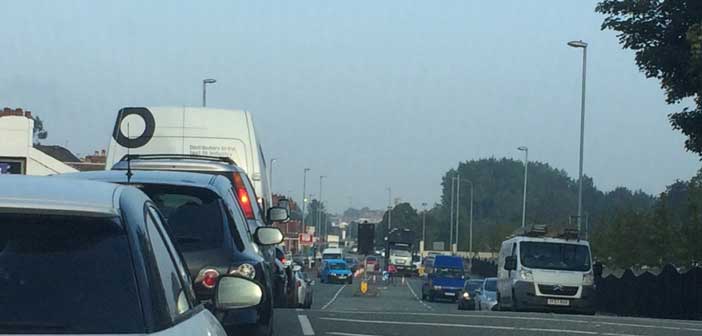
Warrington stands on the brink of its most significant transport transformation in decades. With over £33 million committed to infrastructure upgrades between 2026 and 2030, the Cheshire town is preparing for a comprehensive overhaul of its road network, public transport systems, and urban mobility landscape.
As discussions continue around the proposed Cheshire & Warrington Combined Authority, residents and businesses are watching closely to understand how these changes will reshape their daily commutes, business operations, and quality of life.
The £33 Million Investment Package: Breaking Down the Numbers
The substantial funding allocated for Warrington’s transport infrastructure represents a multi-faceted approach to modernising the town’s connectivity. This investment package targets critical areas that have long required attention, from deteriorating road surfaces to outdated traffic management systems.
The financial breakdown reveals strategic priorities across several key domains:
| Investment Category | Allocated Funding | Primary Focus Areas |
| Road repairs and resurfacing | £14.2 million | A49, A57, town centre routes |
| Traffic management systems | £8.5 million | Smart signals, congestion monitoring |
| Public transport infrastructure | £6.3 million | Bus lanes, stations, park-and-ride facilities |
| Cycling and pedestrian networks | £4 million | Cycle lanes, crossing improvements, footpaths |
Local authorities have emphasised that these improvements will be phased strategically to minimise disruption whilst maximising impact. The first major works are scheduled to commence in spring 2026, with the A49 corridor receiving priority attention due to its critical role in connecting Warrington to the M62 and M56 motorways.
Impact on Drivers: Navigating Short-Term Disruption for Long-Term Gain
For Warrington’s estimated 125,000 regular drivers, the coming years will present both challenges and opportunities. Short-term disruptions are inevitable as roadworks progress across the borough, but the long-term benefits promise to address chronic congestion issues that have plagued key routes during peak hours.
According to AUTODOC, vehicle maintenance becomes particularly crucial during periods of extensive roadworks, as temporary road surfaces and diversions can accelerate wear on suspension components and tyres. Regular checks of tyres are essential when navigating construction zones and temporary routes, as uneven surfaces and debris increase the risk of punctures and premature tread wear. Data from automotive service providers indicates that vehicles regularly driven through roadwork areas experience 23% faster tyre degradation compared to normal driving conditions.
The planned improvements to traffic management systems will introduce adaptive signal technology at 47 key junctions across Warrington. This intelligent infrastructure will respond to real-time traffic flow, potentially reducing average journey times through the town centre by 12-15 minutes during peak periods. For businesses relying on timely deliveries and service calls, this efficiency gain translates directly to cost savings and improved customer satisfaction.
Key traffic hotspots receiving priority attention include:
- The A49/A57 interchange near Winwick
- Bridge Street and its connection to the Golden Square Shopping Centre
- The Birchwood Park employment area access routes
- Warrington Bank Quay station approach roads
Transport planners project that upon completion of the road improvement programme in 2029, overall traffic flow efficiency will improve by approximately 18%, whilst accident rates at problematic junctions should decrease by up to 25%.
Electric Vehicle Infrastructure: Powering the Future of Warrington Mobility
Warrington’s 2026 transport revolution places significant emphasis on supporting the transition to electric vehicles. Currently, the borough has approximately 89 public charging points, a figure that transport authorities acknowledge falls short of supporting the projected growth in EV ownership. By 2030, this number is planned to increase to over 350 charging locations across Warrington.
| EV Infrastructure Element | Current Status (2025) | Target (2030) | Investment |
| Public charging points | 89 | 350+ | £3.2 million |
| Rapid charging hubs | 4 | 15 | £1.8 million |
| Residential charging support | Limited grants | Expanded scheme | £900,000 |
| Workplace charging facilities | 12 locations | 45+ locations | £1.1 million |
The strategy focuses on establishing charging hubs at key locations including supermarket car parks, park-and-ride facilities, and major employment centres. Birchwood Park, Warrington’s largest business district employing over 23,000 people, will receive six rapid charging stations by early 2027, addressing a critical gap in workplace charging provision.
For EV owners, the expansion represents more than convenience—it addresses range anxiety and makes electric vehicle ownership more practical for those without home charging capabilities. Approximately 31% of Warrington households lack off-street parking, making public charging infrastructure essential for equitable EV adoption.
The local authority has also committed to converting its own vehicle fleet, with plans to transition 60% of council vehicles to electric or hybrid power by 2028. This move will reduce municipal transport emissions whilst demonstrating commitment to the broader environmental objectives driving these investments.
The Cheshire & Warrington Combined Authority: A New Governance Landscape
Perhaps the most significant institutional change accompanying these infrastructure investments is the ongoing discussion around establishing the Cheshire & Warrington Combined Authority. This proposed governance structure would unite Cheshire East, Cheshire West and Chester, and Warrington Borough Council under a single strategic transport planning framework.
Combined authorities in other regions, such as Greater Manchester and the West Midlands, have demonstrated the potential for coordinated transport planning to deliver more effective outcomes than fragmented local approaches. The proposed Cheshire & Warrington body would gain devolved powers over transport budgets, strategic planning, and potentially aspects of road maintenance and public transport commissioning.
For Warrington specifically, this could mean:
Greater regional connectivity: Coordinated improvements to routes linking Warrington with Chester, Crewe, and Manchester, reducing the current “end-of-line” feeling that hampers economic development.
Enhanced public transport integration: Unified ticketing systems and service coordination across bus and rail networks, similar to Transport for London’s approach but scaled for a smaller conurbation.
Increased investment leverage: Combined authorities typically secure more favourable government funding settlements, potentially bringing additional millions to supplement the current £33 million package.
Strategic land use planning: Better alignment between housing development, employment sites, and transport infrastructure, reducing the car dependency that currently characterises much of Warrington’s suburban areas.
However, the combined authority proposal remains under consultation, with concerns raised about maintaining local accountability and ensuring Warrington’s specific needs aren’t overshadowed by Chester and the wider Cheshire region’s priorities.
Embracing “New Mobility”: Beyond Traditional Car Ownership
The 2026-2030 investment programme explicitly supports what transport planners term “new mobility”—a shift away from single-occupancy private car journeys towards a diverse ecosystem of transport options. This philosophy underpins several initiatives launching in Warrington over the coming years.
The £4 million allocated to cycling and pedestrian infrastructure will create 23 kilometres of protected cycle lanes, connecting residential areas with employment centres, schools, and the town centre. Warrington’s relatively flat topography makes it ideal for cycling, yet currently only 3.2% of journeys are made by bicycle—significantly below the national average of 4.8% and far behind leading cycling towns where rates exceed 15%.
Park-and-ride facilities at strategic locations around Warrington’s periphery aim to intercept commuter traffic before it reaches the congested town centre. Three new sites are planned at junction points with the M62 and M56, offering secure parking alongside frequent bus services into central Warrington. Similar schemes in Cambridge and Oxford have successfully reduced town centre traffic volumes by 12-18%.
Micro-mobility solutions are also receiving attention, with designated parking areas for e-scooters and potential bike-share schemes under evaluation. Whilst private e-scooters remain illegal on UK public roads pending regulatory changes, the government’s ongoing trials suggest legislation may evolve by 2026-2027, and Warrington’s infrastructure plans anticipate this development.
Preparing for the Transformation: What Drivers and Residents Should Know
As Warrington embarks on this ambitious transport revolution, several practical considerations will affect daily life for residents, commuters, and businesses:
Plan alternative routes: Major roadworks will necessitate detours and temporary traffic management. Warrington Borough Council has committed to publishing a rolling 12-month roadworks schedule, allowing drivers to plan journeys accordingly.
Consider mobility alternatives: The improved cycling infrastructure and enhanced bus services will offer genuine alternatives to car travel for many journeys, potentially saving money and stress during the construction period.
Vehicle maintenance vigilance: With increased exposure to roadworks and temporary surfaces, staying on top of vehicle servicing becomes more important. Monitoring tyre condition, suspension components, and wheel alignment can prevent minor issues from becoming expensive repairs.
Engage with consultations: The combined authority proposals and specific transport projects will undergo public consultation phases. Residents and businesses have opportunities to shape outcomes by participating in these processes.
Support local businesses: Town centre businesses may face temporary access challenges during construction phases. Maintaining patronage during these periods helps ensure they survive to benefit from improved connectivity afterwards.
Conclusion: A Turning Point for Warrington’s Future
The investments beginning in 2026 represent more than infrastructure maintenance—they signal Warrington’s ambition to transform from a town struggling with traffic congestion and limited transport choices into a modern, connected community fit for the mid-21st century. The £33 million funding package, potential combined authority governance, and commitment to diverse mobility options create a comprehensive vision for change.
For drivers, the coming years will require patience and flexibility as roadworks progress, but the promise of reduced congestion, improved road surfaces, and more efficient traffic management offers tangible rewards. For the broader community, enhanced public transport, cycling infrastructure, and pedestrian facilities promise to make Warrington more accessible, sustainable, and liveable.
Success will depend on effective project delivery, continued investment beyond the 2030 timeframe, and community willingness to embrace new mobility patterns. If Warrington can navigate the challenges ahead, the transport revolution of 2026 will be remembered as the turning point that reshaped the town’s future.





1 Comment
We’ve had 12 months of inconvenience traffic Jams. Roadworks and inconvenience throughout the town ! How much more can we suffer !