
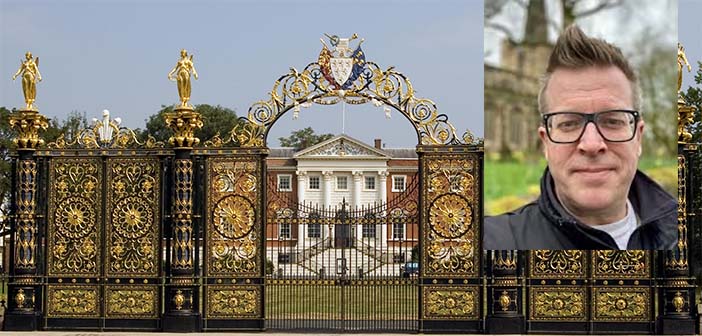
THE leader of the Independent Group on Warrington Borough Council says the greatest risk to Warrington may not be the next Local Plan – but what happens before it is adopted!
Cllr Stuart Mann says that when Warrington’s Local Plan was finally adopted in 2023, many residents understandably believed the major planning battles were over – but “Very worryingly, Warrington is not delivering homes at the rate anticipated within it current plan!”
The process had taken years. Communities across the borough attended meetings, responded to consultations, read thousands of pages of documents and tried to make their voices heard.
Whether you supported The Plan or not, there was at least a sense that a line had finally been drawn. Sites had been identified. Land had been removed from the Green Belt. Difficult decisions had been made.
For many people, the understanding was simple.
• This was the plan.
• This was the deal.
• The developments identified within it would proceed and communities would then have an opportunity to adapt, recover and move forward.
In an opinion piece sent to Warrington Wortldwide Cllr Mann said: “I am increasingly concerned that this may no longer be the case.
“The Local Plan was never universally popular. I, myself, campaigned against developments such as Peel Hall and St Oswald’s Place because I felt they would place unacceptable pressure on local infrastructure and fundamentally change the communities affected.
“I believed, naively, that once the Local Plan was adopted, the difficult choices had been made. The Green Belt releases had been identified & development sites allocated.
That certainty is beginning to unravel.”
He states he is concerned because: “Warrington has already begun the process of updating its Local Plan in response to changes in national planning policy. That process will take time.
“However, the real risk is that development pressures are emerging far faster than the Local Plan review can progress because National housing targets have increased significantly.
“Warrington Borough Council (WBC) will have to demonstrate a 5-year housing land supply PLUS a 20% buffer, equivalent to 816 more houses, – to put that into context in the current Adopted Local plan it is only 5% – the concept of Grey Belt has entered planning policy and housing delivery pressures are growing.
“Very worryingly, Warrington is not delivering homes at the rate anticipated within it current plan.
“There is now a real possibility, even a probability, that developers will seek to challenge the assumptions underpinning the adopted Local Plan and bring forward proposals NOW that many communities believed had already been ruled out.
“To be really clear, this is not a warning about what may happen in ten years’ time. This is a warning about what may happen over the next 1 to 2 years, maybe starting as early as July.
“Developers are already preparing arguments based on housing need, housing delivery and Grey Belt policy.
“Whether those arguments ultimately succeed is a matter for the planning process, but residents should be under no illusion, the pressure for additional development is already here.
“Recent proposals and consultations in Croft, Hollins Green and Lymm demonstrate that developers are moving forward on sites not in the adopted local plan.
“And while I know some will inevitably accuse me of being a NIMBY because I have actively campaigned against developments in the past, the reality is quite different.
“I understand the need for housing. I understand the need for affordable housing.
“I have two children, one approaching his eighteenth birthday and like countless parents across Warrington, I want him to have the opportunity to afford a home of his own, build his own life and enjoy the independence that previous generations often took for granted.
“It isn’t housing that’s the problem, the problem is poorly planned growth.
“My concern has always been about whether communities are being asked to absorb more change than they can realistically cope with.
Planning reports talk about housing numbers, site capacities and technical assessments.
Residents experience something very different.
• They experience years of disruption.
• Thousands of HGV movements.
• Road closures.
• Traffic management.
• Utility works.
• Dust.
• Noise.
• Construction traffic on roads that were never designed for that level of use.
• Pressure on already congested junctions.
• Pressure on already stretched public services.
Cllr Mann added: “The people living in those communities carry those impacts every single day, and far too often, once development is complete, the promised infrastructure either arrives much later than expected or never arrives at all.
“Winwick, as an example, will double the number of households in the parish within the next few years, growing from around 1,500 homes to more than 3,000 once developments already approved or under construction are completed.
Yet where is the corresponding infrastructure?
• There is no new strategic road network.
• There is no new GP surgery.
• There is no NHS dental practice.
• There is no guaranteed increase in healthcare provision.
“Peel Hall includes proposals for a new primary school and residents are entitled to ask whether that school is absolutely guaranteed and fully funded or whether it remains dependent upon future triggers, viability assessments and decisions beyond the control of the local community.
“At the same time, residents are being asked to accept more development while receiving fewer public services.
• Bus services have reduced significantly.
• Council Tax has increased substantially over recent years.
• Yet many council services have been reduced.
• Grass verges are cut less frequently.
• Hedges are maintained less often.
• Footpaths remain obstructed for longer.
• Road defects take longer to repair.
“As a councillor, I often joke that there are more photographs of potholes on my phone than there are of my own children. The reality behind the joke is less amusing. There is an infrastructure Illusion. The same concerns apply to healthcare.
“Residents are told that infrastructure concerns will be addressed through planning obligations and Section 106 agreements, yet even where funding exists, there is no guarantee that a new facility will actually be delivered.
“The recent experience at the new housing developments (also in my ward) on Omega is a good example.
“Developer contributions were available for a potential primary healthcare facility serving Eagles Green, The Landings and Holly Grange yet the facility did not proceed after it was concluded that existing nearby GP practices apparently and, in my opinion, astonishingly had sufficient capacity.
“This is a real example that demonstrates the difference between infrastructure being discussed and infrastructure being delivered.
• A contribution towards healthcare is not the same as actual healthcare.
• A contribution towards education is not the same as a school.
• A contribution towards highways is not the same as a road capable of carrying additional traffic.
Development Does Not Stop At Warrington’s Boundary
“And then to add to all my concerns in Warrington, one of the realities of representing an outer borough ward is that development in neighbouring authorities can and is having just as much impact as development within Warrington itself.
“Burtonwood faces the prospect of more than 3,000 homes through the Bold Forest Garden Village proposals in neighbouring St Helens, less than a mile from the village centre.
Winwick sits half a mile from the proposed 8.2million square feet Parkside Intermodal Rail Freight Terminal and wider Parkside developments.
“Taken together, these schemes next door have the potential to place substantial additional pressure on roads in Warrington, including the A49, the M6 Link Road and Junction 22 of the M6.
Residents will naturally ask whether those roads can cope.”
Infrastructure First. Development Second.
“With all this, the issue is not whether growth happens, the issue is whether the infrastructure is genuinely capable of supporting it.
“Too often, residents are told that capacity exists on paper, but what they experience is congestion, delays, overcrowded services and infrastructure that already feels stretched to its limits.
My Commitment
“I believe Warrington must adopt a genuinely infrastructure-led approach to development.
“Before major development proceeds, there should be clear and deliverable plans for roads, healthcare, education, public transport, utilities and community facilities.
“Infrastructure should not be an aspiration; it should be a prerequisite. Nothing less should be acceptable.
“I will continue to judge every planning application on its individual merits and against the planning policies in force at the time I will robustly challenge and oppose proposals that conflict with the adopted Local Plan, fail to properly address infrastructure requirements, or would result in unacceptable harm to the communities I represent.
“Residents expect their elected representatives to stand up for them, that is exactly what I intend to do.
“As Warrington begins the process of updating its Local Plan, I will also make the case for an infrastructure-first approach to development as a core theme of that document.
“For too long, communities have been asked to accept development first and wait for infrastructure to catch up later.
“I believe that approach has failed.
“My central argument throughout the Local Plan review will be simple:
Infrastructure First. Development Second.
“We must ensure that the understandable focus on the council’s financial recovery does not become a distraction from the equally important task of scrutinising planning applications and defending the long-term interests of our communities.
“Every major planning application has the potential to shape our borough for generations.
“Once Green Belt is lost, it is lost. Once development takes place, it cannot simply be reversed.
“I would urge everyone across Warrington to please take an active interest in both the Local Plan review and planning applications that come forward in the months ahead.
Make your voice heard.
If you agree with me, then please demand that infrastructure is treated as a prerequisite to development, not a promise that may or may not materialise years later.
A final thought
“I sincerely hope my concerns prove unfounded, but I would be failing in my duty as a councillor if I did not warn residents that I think the risk is real.
“The signs are already emerging. Developers are already ‘circling’ opportunities now.
“I will continue fighting to ensure that any growth Warrington is asked to accommodate is supported by the infrastructure, services and investment our residents deserve.
Warrington Borough Council has been invited to provide a response to Cllr Mann’s concerns.



2 Comments
I agree with everything Cllr Mann has said in his paper. During our oppositions to the Peel hall development researched objections were based on the lack of infrastructure. One of the straplines suggested that once the land is gone its gone! Personally Im paying more and getting less from the council. Delph lane on the Padgate side of the bridge is begining to look like pot hole central. I get a bus every hour and every 2 hours during the evening. I feel let down by the council who should indeed be considering infrastructure before building more houses
Another Local Plan! The last one cost millions and lasted 5 years. We all know WBC is in the pocket of Peel. The only way to protect the greenbelt is vote Reform in 2028 and drain the swamp!