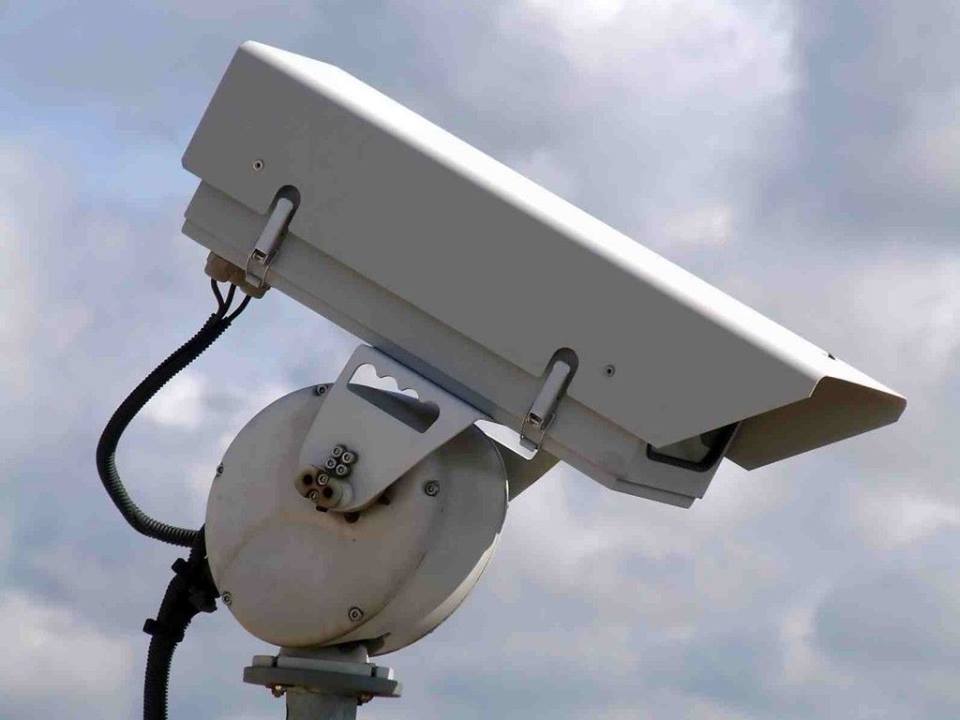
Town centre CCTV has traditionally been built around a simple idea: place cameras in busy public areas, send the footage to a control room, and rely on operators to notice incidents or retrieve recordings later. That model remains important, but the pressures facing high streets, transport areas and night-time economies are making purely manual monitoring increasingly difficult.
The scale of the challenge is substantial. The British Retail Consortium’s 2026 Crime Report recorded around 1,600 incidents of violence and abuse against shopworkers every day during its latest reporting period. Although that was down from approximately 2,000 incidents per day previously, it remained far above the 455 incidents recorded daily in 2019/20. Meanwhile, Harlow Council announced an investment of nearly £500,000 in June 2026 to modernise and integrate CCTV across the town.
Simply adding cameras, however, does not guarantee better awareness. Large CCTV estates can produce more video than operators can realistically examine continuously.
AI video analytics could change that relationship by helping control rooms identify relevant activity, search recorded footage faster and direct human attention towards events that may require investigation.
From Recording Incidents to Identifying Relevant Activity
Traditional CCTV is primarily observational. Operators either watch live feeds or return to recorded footage after something has happened. That approach works when the time and location of an incident are already known, but becomes more difficult when teams have dozens or hundreds of cameras to manage.
AI analytics adds another layer to the camera network. Instead of treating every frame as equally important, software can analyse video for specific objects, movements and patterns. Depending on the system and its configuration, this might include distinguishing people from vehicles, identifying movement into restricted areas, counting pedestrians or locating an object matching particular characteristics.
The practical change is not that AI replaces the CCTV operator. Its more useful role is filtering information. An operator who previously had to move continuously between camera feeds can instead investigate alerts or searches that have already narrowed the amount of footage requiring attention.
For town centres, that could be particularly valuable during busy shopping periods, major events, weekend evenings and other times when activity across streets and public spaces changes rapidly.
Making CCTV More Useful During Live Incidents
One of the biggest opportunities for AI-enabled CCTV is improving the time between something happening and someone becoming aware of it.
Analytics can be configured to flag defined events such as a person entering a controlled area, an object remaining in one location for an unusual period or a crowd beginning to form. Vehicle analytics can also help operators locate vehicles by characteristics or, where appropriate systems are deployed, work alongside Automatic Number Plate Recognition.
This does not mean software can reliably determine whether somebody intends to commit a crime. Behaviour in a public space is often ambiguous, and an automated alert should generally be treated as information for human assessment rather than a conclusion about a person.
Local authorities are already investing in infrastructure that could support this type of approach. In September 2025, Hammersmith and Fulham approved £3.2 million of CCTV capital investment covering 2025/26 to 2027/28, with its programme describing opportunities to use AI and other emerging technologies as the surveillance network is modernised.
For control rooms, the benefit is therefore less about creating autonomous surveillance and more about giving operators a better way to decide which camera or event deserves attention first.
Connecting Cameras, Search and Analytics
The usefulness of AI increases when analytics are connected to the broader CCTV environment rather than functioning as isolated tools. Town centres can contain fixed cameras, PTZ cameras, retail systems, transport cameras and other infrastructure installed at different times.
Modern video analytics platforms can help create a searchable intelligence layer across some of that existing infrastructure. Coram, for example, describes a hardware-agnostic platform that can connect with ONVIF-compliant IP cameras and apply AI to identify people, vehicles, objects and behaviours. Its supplied platform information also describes natural-language video search and the ability to follow people or vehicles across multiple cameras.
The broader value of this type of architecture is interoperability. Councils and other organisations may have already invested heavily in cameras, networking and control-room equipment. Being able to introduce analytics without automatically replacing every camera could make modernisation more practical.
Integration can also improve investigations. Instead of knowing the precise camera and timestamp before beginning a search, an operator may be able to work from descriptive information and progressively narrow the available footage.
Faster Investigations Could Be Just as Important as Live Alerts
Much of the discussion around AI surveillance focuses on real-time detection, but retrospective investigation could prove equally important for town centre CCTV.
Consider an incident reported several hours after it occurred. Investigators may know what a vehicle looked like or what clothing a person was wearing, but not exactly where they entered or left the camera network. Traditionally, operators may have to review multiple recordings and manually follow movement between cameras.
A recent Police Scotland evaluation provides a useful indication of how analytics can change that workload. One case example involved an investigation requiring review of around 250 hours of footage from Penrith. Video analytics processed the material using a vehicle filter in approximately one hour and 50 minutes, producing a dataset covering around 450,000 vehicle appearances across multiple cameras for investigators to examine further.
The example does not mean every investigation will achieve the same result. Camera quality, lighting, weather, image angle and the analytical model all affect performance.
It does show why search may become one of AI’s most practical contributions to public CCTV. Reducing the amount of irrelevant footage humans must manually review can allow investigators to spend more time assessing evidence and less time locating it.
Privacy, Accuracy and Human Oversight Will Matter
More powerful CCTV also creates more significant responsibilities. Systems capable of analysing people, movements, vehicles or biometric information can process personal data at a scale that traditional monitoring may not.
The Information Commissioner’s Office states that organisations operating video surveillance involving identifiable individuals must comply with the UK GDPR and Data Protection Act 2018. Its guidance stresses principles including fairness, transparency, accountability, data protection by design and the need for surveillance to be necessary and proportionate to the problem being addressed.
Town centres present a particularly sensitive environment because cameras can capture thousands of people simply going about ordinary daily activities. Councils therefore need clearly defined purposes for analytics rather than enabling capabilities merely because the technology exists.
Accuracy must also be tested under realistic conditions. Rain, darkness, crowded pavements, partially obscured subjects and changing camera angles can affect results. False alerts can create additional work and, in more sensitive applications, potentially lead to unfair scrutiny.
Human review remains an important safeguard. Analytics can surface an event, but trained operators should understand what triggered an alert, examine the surrounding context and follow established policies before deciding whether further action is appropriate.
What Town Centre CCTV Could Look Like Next
The next phase of town centre CCTV is unlikely to be defined simply by installing more cameras. The larger change may be extracting more useful information from the cameras already operating.
Future control rooms could increasingly combine live video with object detection, searchable archives, mapping, crowd information and vehicle data. Instead of manually cycling through screens, operators may work with interfaces that organise information according to location, urgency or predefined events.
Some councils are already building infrastructure with this longer-term flexibility in mind. Redbridge’s 2025 infrastructure planning documents, for example, outlined proposals that included replacing ageing systems with HD and AI-capable cameras as part of a ten-year CCTV strategy. Scottish Borders Council has also discussed the potential for future video analytics to contribute information relating to areas such as destination management and traffic monitoring.
This points towards a wider role for CCTV infrastructure. With appropriate governance, the same camera network used for public safety may provide anonymised operational insights about pedestrian movement, congestion or how public spaces are being used.
The challenge for 2026 and beyond will be ensuring that technological capability develops alongside clear limits, measurable purposes and public accountability.
FAQs
What is AI video analytics in town centre CCTV?
AI video analytics uses software to analyse video and identify defined objects, movements or events. It can help CCTV operators locate relevant footage or draw attention to activity that meets predetermined conditions, while human operators remain responsible for assessing the context.
Can AI monitor every CCTV camera automatically?
AI can analyse multiple video streams, but practical performance depends on computing resources, camera quality, connectivity and the software being used. Councils also need to decide which analytical functions are necessary and proportionate rather than automatically enabling every available capability.
How can AI help CCTV investigations?
One of its most useful functions is reducing manual video review. Operators can potentially search for characteristics such as vehicles, people, objects or movement patterns instead of watching hours of recordings sequentially.
Do councils need completely new cameras for video analytics?
Not necessarily. Some analytics systems can work with compatible existing IP cameras, although older analogue cameras, low-resolution footage or unsuitable camera positioning may limit what the software can reliably analyse.
What are the main concerns around AI CCTV?
Privacy, accuracy, cybersecurity, transparency and inappropriate automated decision-making are important concerns. Organisations need clear policies, suitable data protection assessments, staff training and human oversight so that analytics support legitimate CCTV objectives without becoming unnecessary or disproportionate surveillance.
Conclusion
AI video analytics could make town centre CCTV more useful by shifting attention from simply collecting footage towards finding relevant information quickly. Faster searches, better event prioritisation and connections between cameras could help control rooms respond more efficiently without relying solely on continuous manual observation.
The technology alone, however, will not determine whether these systems succeed. Councils and CCTV operators will need to balance capability with accuracy, transparency, privacy and human judgement. The future of town centre surveillance may therefore depend as much on responsible implementation as it does on advances in artificial intelligence.