
There is a particular kind of adult logic that applies to health checks. If nothing is visibly wrong, the appointment can wait. Life is busy, the NHS is stretched, and booking a GP visit or specialist appointment for something that feels manageable feels somehow indulgent. So the check gets pushed to next month, then next quarter, then indefinitely.
Most people reading this have at least two or three health checks they have been meaning to book for longer than they would comfortably admit. The problem is not laziness. It is that the conditions most worth catching early are precisely the ones that do not announce themselves with obvious symptoms until they are considerably harder to deal with.
The Dental Check Nobody Books Until Something Hurts
Dentistry is the most widely skipped routine health appointment in the UK. The standard recommendation is every six to twenty-four months depending on individual risk, but a significant proportion of adults go considerably longer between visits, typically until something hurts enough to force the issue.
The dental check is worth prioritising not just for teeth but because dentists routinely screen for early signs of oral cancer, gum disease linked to cardiovascular risk, and other systemic conditions visible in the mouth. A cavity caught early is a filling. A cavity caught late is a crown, a root canal, or an extraction. The economics of skipping dental checks are worse than they appear at the time of not booking.
Blood Pressure: The One That Rarely Has Symptoms
Hypertension affects around a third of adults in the UK and the majority of them are unaware of it. High blood pressure does not typically produce pain or obvious physical signals. It sits there silently, increasing the risk of stroke, heart attack, and kidney damage over years, while the person it is affecting feels entirely normal.
Blood pressure checks are available at most GP surgeries without an appointment, at pharmacies, and increasingly through workplace wellness programmes. The check takes around two minutes. The information it provides is genuinely significant. There is very little reason to keep putting it off and a clear one not to.
Cholesterol and Blood Sugar Levels
These two are frequently checked together and are worth treating as a pair. High cholesterol and elevated blood sugar both develop without noticeable symptoms and both carry meaningful long-term health implications if left unaddressed.
The NHS Health Check, offered to adults between 40 and 74 who have not been diagnosed with certain conditions, covers both of these alongside blood pressure and several other cardiovascular risk factors. It is free, takes around twenty minutes, and is specifically designed to catch the things most likely to become serious problems in the following decade. Take-up remains lower than it should be, largely because the people who would benefit most from it feel fine and therefore deprioritise it.
The Eye Test: The Health Check That Does More Than Check Vision
Eye tests in the UK are probably the most undervalued routine health check available. Most people treat them as a prescription update, something to book when the glasses stop working rather than on a regular schedule. This fundamentally misunderstands what happens during a thorough eye examination.
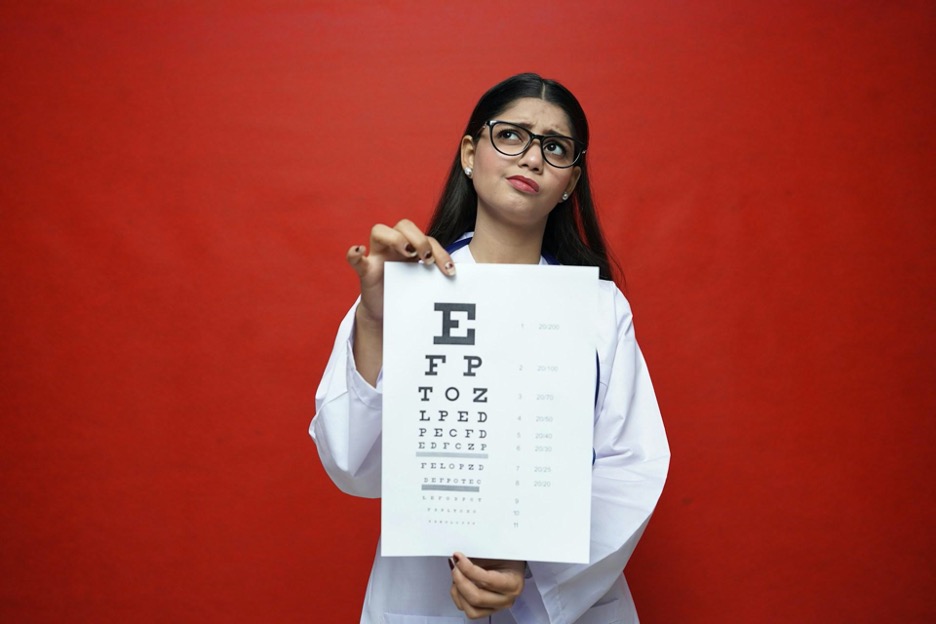
An optician examining the back of the eye has a direct view of blood vessels and neural tissue that cannot be seen anywhere else in the body without an invasive procedure. Changes in those structures are visible markers of conditions that include hypertension, diabetes, raised intracranial pressure, and in some cases early signs of conditions affecting the brain and central nervous system. There are documented cases of patients leaving routine eye tests with urgent referrals for conditions they had no idea they were at risk for.
Beyond the health screening, an outdated or uncorrected prescription has a more significant effect on daily functioning than most people realise. Eye strain and fatigue that build across a working day, persistent headaches that worsen during screen use, and difficulty focusing that gets attributed to tiredness or stress are frequently vision correction issues rather than the lifestyle problems they are assumed to be.
Prescription glasses fitted to a current and accurate prescription remove the compensation work the visual system is doing continuously to manage an imperfect image. The cognitive load of that compensation is drawn from the same resources used for concentration and sustained focus, which is why the improvement in getting a correct prescription often extends well beyond clearer vision into sharper thinking and less end-of-day fatigue.
Eye tests in the UK are free for children, NHS patients, adults over sixty, and those with specific risk factors including diabetes and a family history of glaucoma. For everyone else, the cost is modest relative to the information and correction it provides. The standard recommendation is every two years for most adults, annually for contact lens wearers and those with existing eye conditions.
Hearing Tests
Hearing loss is gradual enough that most people do not notice it happening. The brain compensates remarkably well for the early stages, to the point where significant hearing loss can develop before the person experiencing it is fully aware. Family members tend to notice first, usually by observing that the television volume is creeping up or that conversations are being repeated more often than they used to be.
Untreated hearing loss is linked to social withdrawal, cognitive decline, and depression in research that has become more consistent over the past decade. Early identification and correction produces considerably better outcomes than late diagnosis, and the correction options have improved substantially. A hearing check is a twenty-minute appointment that most people can access through their GP or a high street audiologist.
Skin Checks
The UK has one of the highest rates of melanoma in Europe, which makes routine skin monitoring more relevant than many people treat it. An annual self-examination, understanding what changes in existing moles are worth having assessed, and not putting off a GP appointment when something looks different are habits that have measurable effects on outcomes.
Skin cancer caught early is highly treatable. Caught late, the picture changes significantly. The check requires no appointment and no equipment.
Why We Keep Skipping Them
The honest reason most adults keep putting off routine health checks is not that they are unconvinced of the value. It is a combination of time pressure, mild anxiety about what might be found, and the general friction of organising an appointment in an already full life.
The conditions that make catching things early most valuable are exactly the conditions that feel manageable enough to defer. Nothing hurts. Nothing is obviously wrong. The appointment can wait until things settle down a little.
They rarely settle down. And the checks get easier the longer they are left, only in the sense that the problems they might catch tend to become more established rather than less. The most straightforward version of each appointment is the one booked before anything has gone wrong.
A Practical Note
If the list above feels overwhelming to act on all at once, picking one and booking it this week is more useful than planning to address all of them eventually. An eye test in the UK takes around thirty minutes, is widely accessible, and covers more ground than most people expect. It is as reasonable a starting point as any.