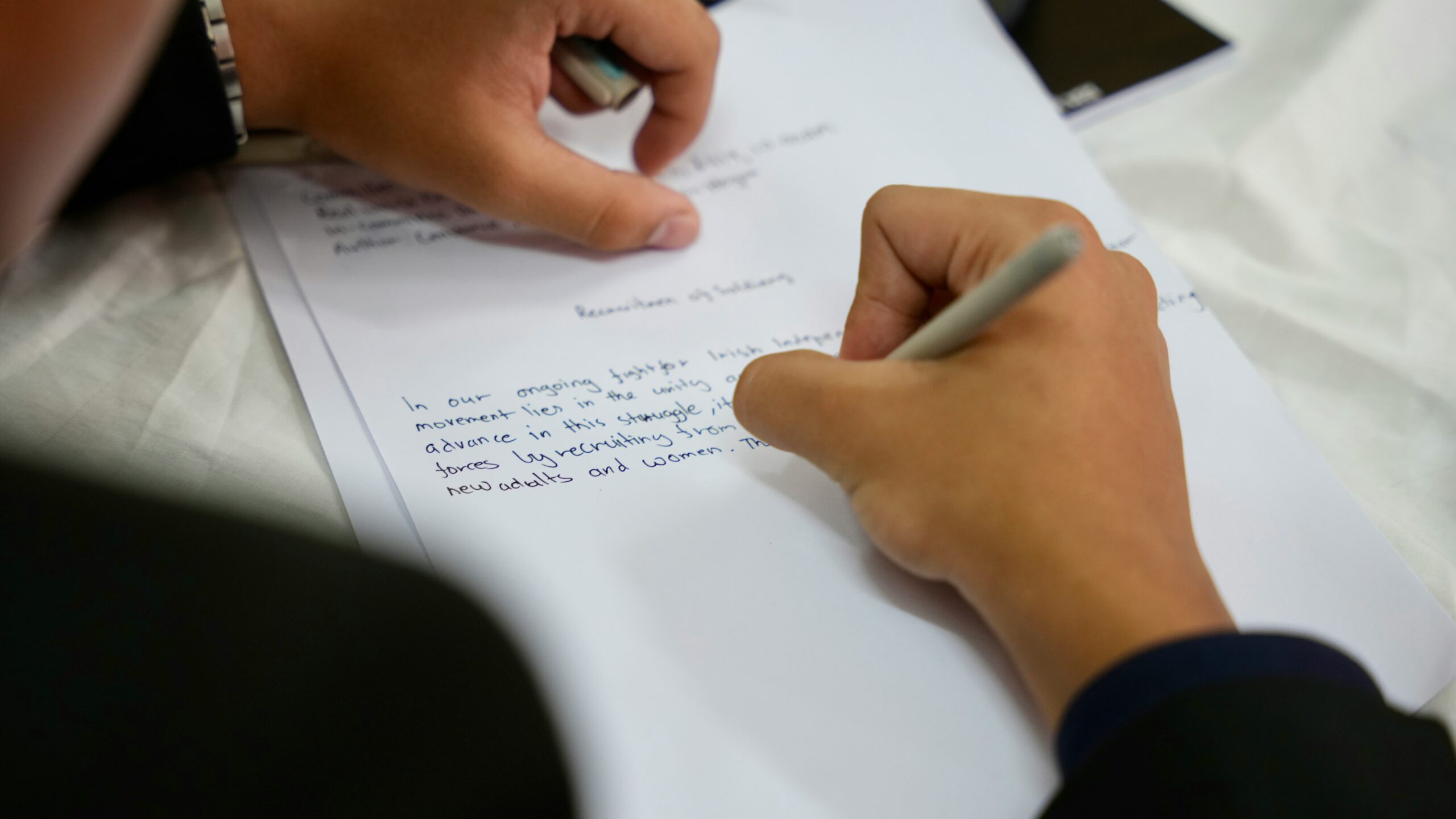
A first draft can be readable and still feel as though anybody could have written it. The sentences work, the structure is present, and the message is clear, yet nothing holds the reader’s attention for long. This often happens in articles, student assignments, newsletters, and online posts written quickly from notes.
The answer is not to decorate every sentence. A stronger revision adds three things deliberately: precise detail, controlled rhythm, and a recognisable point of view. These changes matter whether the draft is intended for customers, colleagues, tutors, or a wider online audience.
Replace Broad Claims With Details Readers Can Picture
Generic drafts rely on phrases such as “many people,” “a range of challenges,” or “significant results.” These expressions are convenient, but they leave the reader with little to imagine.
Look for one broad statement in each paragraph and ask what actually happened. “The event helped local businesses” might become: “The Saturday market brought independent food sellers, craft traders, and nearby cafés into the same stream of visitors.” The revision does not need a statistic to become clearer; it needs observable detail.
Names, places, actions, timings, and consequences make a paragraph feel grounded. Use only details that are accurate and relevant.
Vary the Pace Instead of Making Every Sentence Sound Alike
A draft feels mechanical when each sentence has a similar length and construction. This often happens when information is added point by point without considering how the paragraph sounds.
Read the passage aloud. A longer sentence can develop an idea or connect causes. A short sentence can then give the conclusion weight.
For example: “The team revised the campaign after the first week because readers were opening the emails but rarely following the links. The message was clear. Interest existed, but the next step felt vague.”
Rhythm is not about making prose dramatic. It controls where readers pause, what they notice, and how easily they move between ideas.
Use Automated Revision as a First Pass, Not a Final Voice
When a draft contains repetitive wording or stiff sentence patterns, an AI humanizer may provide initial alternative phrasing. The writer still needs to check whether the revision preserves every fact, matches the audience, and sounds natural in context.
Do not accept a smoother sentence simply because it reads quickly. Check whether it has changed certainty, removed a useful qualification, or introduced language you would never use. Voice comes from judgement: what you include, what you omit, and which idea you emphasise.
Add a Point of View Without Turning the Draft Into an Opinion Piece
Point of view does not require a personal declaration in every paragraph. It means showing the reader why a detail matters.
After presenting a fact or example, ask: “What should the reader notice here?” A business article might explain that a new digital system saves administrative time, but the sharper observation is what staff can now do with that time. A student essay might describe a historical decision, then explain whose experience the usual account overlooks.
Point of view often appears through comparison, interpretation, or consequence. It guides the reader without forcing a conclusion.
Perform One Final Paragraph-Level Test
Not every paragraph must answer the questions mentioned below in the same way. Some sections provide evidence; others create context or connect ideas. The aim is balance across the complete piece.
So, review each paragraph using three questions:
- Does it contain at least one concrete detail?
- Does its sentence pattern vary enough to remain readable?
- Does it explain why the information matters?
Make the Draft Recognisably Yours
A generic first draft is not a failed draft. It has completed the useful job of putting the main ideas in place. Revision gives those ideas shape.
Specific detail helps readers see the subject. Rhythm helps them follow it. Point of view shows them why it deserves attention. When all three work together, the writing becomes clearer and more memorable without sounding forced.