
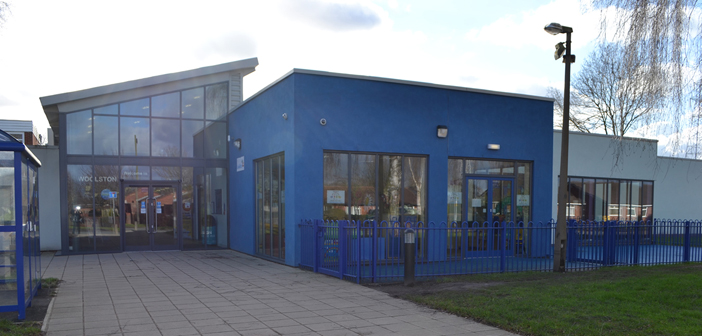
Warrington Borough Council is holding a six-week public consultation on the future of Woolston Neighbourhood Hub, which is facing permanent closure.
The hub – a multi-purpose facility housing a swimming pool, leisure facilities, library, a GP surgery, and community organisations – has been partially closed since July and fully closed since September.
This temporary closure was triggered by a combination of factors, including structural concerns and the presence of Legionella bacteria in the water supply. Despite comprehensive flushing and disinfection efforts, recent testing has confirmed that Legionella remains present.
The council estimates that the full cost to repair the hub and bring it back into safe, operational use is approximately £3m. Given the escalating budget pressures, the council is unlikely to be able to afford the repairs and is therefore considering the future options for the site.
The consultation will run until Friday 2 January 2026. The feedback gathered will be crucial in helping the council shape the future of the hub.
Deputy Council Leader and cabinet member for communities, culture and leisure, Cllr Jean Flaherty, said: “The budget pressures we are facing are more significant than ever, and we must be realistic about which services we can afford to provide in the future.
“The issues at Woolston Hub will be extremely costly to fix – and beyond this immediate cost, the hub has been running on a subsidy from the council for some time, meaning it isn’t financially sustainable as it stands.
“Unfortunately, this is just one of many difficult decisions we anticipate having to take across the council as we grapple with our current financial situation.
“I would urge LiveWire members, residents, and communities to take part in this consultation about the future of the hub. While all options are currently on the table, the permanent closure of the site is one of the options, and we need to hear your views as part of this important work.”
To take part in the consultation, please visit warrington.gov.uk/woolston-hub-consultation and complete the survey. Following the consultation period, all feedback will be considered, before a final decision is made by the council’s Cabinet.




1 Comment
Proposal / open letter — Invest in reopening Woolston Neighbourhood Hub (LiveWire)
To: Warrington Borough Council / LiveWire leadership / local councillors
From: Concerned residents and service users of Woolston, Padgate & Rixton wards
Date: [today]
Executive summary
Closing Woolston Neighbourhood Hub permanently would be a false economy. The Hub is a multi-service, high-value community asset (pool, gym, library, GP space and community rooms) whose loss would disproportionately harm older people, families, people with disabilities, those without private transport and low-income households. Reopening after targeted investment (repairs, engineering remediation and any necessary upgrades) preserves health outcomes, equality duties, social value, and local resilience — often at a lower social and economic cost than permanently closing the facility and forcing users to travel further or forego services. LiveWire and Warrington Borough Council are already publicly consulting on the Hub’s future; now is the moment to choose reinvestment and a sustainable transition plan.
—
1) Current facts
Woolston Neighbourhood Hub has been closed/partially closed due to structural concerns and confirmed legionella in the water system; LiveWire and the council are assessing remedial work and costs and have announced a public consultation.
—
2) Legal / statutory considerations you must factor into any closure decision
Public Sector Equality Duty (PSED): Under s.149 Equality Act 2010 the council (a public authority) must consider how its decisions affect people with protected characteristics and must have “due regard” to eliminating discrimination, advancing equality and fostering good relations when changing, reducing or removing services. Failure to properly consider PSED when deciding to close leisure facilities has led to successful legal challenge elsewhere. Any decision to close must therefore be backed by a robust, documented equality impact assessment and engagement showing mitigation for those disproportionately affected.
(Practical implication: an un-evidenced decision to close — without meaningful analysis of impacts on older people, disabled residents, pregnant women, families with young children, and those who cannot travel — risks judicial review and reputational / legal costs.)
—
3) Community need and social value (why the Hub matters)
Local health & wellbeing: Public leisure facilities act as hubs for physical activity, rehabilitation (MSK and NHS-linked programmes), mental health support, and social prescribing. Sport England and Local Government guidance emphasise that well-designed community leisure hubs increase participation, prevent disability, reduce health service demand and deliver measurable social value. Closing a local hub forces many residents to travel further (or stop attending), reducing activity levels and increasing long-term health costs.
Local demographics & access: Warrington’s borough population is growing and the Rixton & Woolston ward contains a significant local population that relies on nearby, affordable, accessible services. Ward profiles and borough data show a stable/ growing population base that needs local provision; many households do not have cars or face barriers to travel. Removing the Hub will therefore reduce equitable access to services.
Disproportionate impact on vulnerable groups: Independent impact assessments for other councils have consistently shown closures disproportionately harm older people, disabled people, families with children, and the economically vulnerable — groups that are often less able to travel to alternative sites. Any closure therefore requires robust mitigation (transport, subsidies, tailored outreach) — mitigation that can be costly and less effective than keeping a local site operational.
—
4) Financial and economic arguments — why reopening is an investment, not just a cost
Preventative spend saves downstream costs. Maintaining local activity provision reduces future NHS and social care demand (e.g., falls, chronic disease progression, mental health deterioration). The social value generated by community leisure (measured in national analyses) represents many millions in avoided costs and improved productivity. Closing the Hub shifts those costs onto the NHS, social care and households.
Asset value and sunk costs. The Hub already exists — it is usually cheaper to remediate (structural repairs, plumbing/system upgrades, targeted capital works) than to decommission, repurpose, or rebuild an equivalent facility elsewhere. Investing to repair legionella and structural defects preserves the original capital investment and local jobs. (LiveWire’s updates indicate remediation is being scoped; targeted capital funding + phased reopening can preserve income streams.)
Alternative income / funding models. Options to reduce net cost: phased reopening (open safe areas first), targeted capital grants (Sport England’s facility funds / Swimming Pool Support Fund and other place-based funds), local partnerships (healthcare commissioning of MSK clinics), increased community programming, social enterprise models, and targeted commercial hires (e.g., lettings, classes). These can offset repair costs and deliver a financially sustainable model.
—
5) Practical risks of permanent closure
Accessibility & transport barriers. Many local residents cannot easily travel to Orford, Great Sankey or Birchwood — either due to mobility, cost, caring responsibilities, or lack of public transport. This will reduce participation, increase isolation, and worsen health inequalities.
Legal risk. If the council fails to evidence compliance with PSED in making the closure decision, it may face judicial review and the associated legal and reputational costs. Precedent shows courts require transparent, evidence-led decision making for closures affecting equality groups.
Hidden long-term costs. Savings from closing a hub are often offset by increased demand on statutory services (health, social care, public transport subsidies) and by the social value lost from community programmes, volunteer capacity, and youth services.
—
6) Recommended approach — a practical, responsible path to keep the Hub open
1. Commission an independent technical and cost report (if not already done) focused on remediation options and phased reopening scenarios (short-term fixes vs. long-term refurbishment). Tie funding proposals to the technical plan. (LiveWire has begun specialist remediation scoping — accelerate this and publish timelines).
2. Publish a full Equality Impact Assessment (EIA) that identifies who will be affected, how the council will mitigate impacts, and what alternative provision is guaranteed while repairs are done. This is legally and politically essential.
3. Explore blended funding: apply to Sport England and national facility funds, seek NHS/MSK commissioning for rehab services, and trial income generation (community classes, hire, social enterprise models). Use a short-term resilience fund to cover immediate remediation while long-term finance is secured.
4. Phased reopening & community prioritisation: reopen accessible parts (library, studios, gym if safe) while water system remediation continues; prioritise services for the most vulnerable (SEND swim sessions, older adult classes, social prescribing referrals). Communicate a clear timetable to residents.
5. Local transport mitigation where needed: where immediate travel is unavoidable, agree subsidised or community-led transport for targeted groups (older residents, disabled users, youth programmes) until full reopening. This should be short-term, monitored, and reported publicly.
—
7) Suggested wording for councillors / cabinet decision
When the Council decides, use wording that commits to:
an independent technical remediation report published within X weeks;
an Equality Impact Assessment published and consulted on;
a transparent funding plan that explores Sport England/NHS/social investment;
a commitment to phased reopening where safe, with priority access for vulnerable groups;
clear engagement and regular public updates.
(This language reduces legal risk and shows the council is fulfilling statutory duties while acting in the public interest.)
—
8) Call to action
Woolston residents ask the council and LiveWire to prioritise reopening the Hub by funding the necessary remediation, publishing the evidence and equality assessment, and committing to a transparent, phased plan that protects vulnerable residents. Closing a neighbourhood hub should be treated as a last resort — only after exhaustive exploration of repair, funding and mitigation — because the social, health and equality costs of permanent closure are profound and long-lasting.
—
Key sources (selected)
LiveWire — Woolston Hub updates and closure details.
Warrington Borough Council — Woolston hub consultation and facts about borough services.
Public Sector Equality Duty guidance (Equality Act 2010 / GOV.UK and EHRC).
High-court precedent & legal risk: case where council failed to meet PSED in leisure-centre decision.
Sport England / Local Government guidance on community leisure hubs, Active Design and social value of facilities.