By Rod Scotney
Warrington’s relationship with wine reaches back far beyond the present, into centuries when its river crossing carried not only people and goods but tastes and traditions from distant places. Beer would later become the town’s industrial heartbeat, but wine is where the story begins — and where it quietly returns.
Roman Beginnings — Wine at the Edge of Empire
The Romans didn’t grow grapes in Cheshire, but they certainly brought wine with them. At Wilderspool, archaeologists have uncovered Mediterranean amphorae — clay vessels that once held wine, oil or fish sauce — reminders that even on the edge of empire, imported goods travelled north.
Warrington’s early settlement stood at a junction of roads and a crossing of the Mersey. Traders and soldiers passed through with the tang of foreign vintages still on their tongues. Even then, the town’s identity was forming around movement: a place where routes converged and goods flowed.
Medieval Warrington — Wine for the Clergy, Ale for the Town
By medieval times, England’s wine culture belonged largely to monasteries and the ruling classes. Southern abbeys grew vines; northern houses relied on trade. Warrington’s Augustinian Friary near Bridge Street stood beside the crossing where travellers and commerce passed daily. Imported wine arrived for Mass, hospitality and the tables of those who governed.
But for most people — townsfolk, labourers, soldiers — beer and ale were the everyday drink. Medieval Warrington brewed locally, as most towns did. Alewives, small household brewers and local inns produced the drink that sustained the peasantry and working classes. It was safer than water, cheaper than wine, and central to daily life.
Wine moved through the crossing for the clergy and elite, and beer brewed within the town for everyone else. Both drinks flowed through Warrington, but in very different ways.
From Crossing to Industry — Warrington Becomes a Brewing Giant
If wine shaped Warrington’s early centuries, beer shaped its industrial ones.
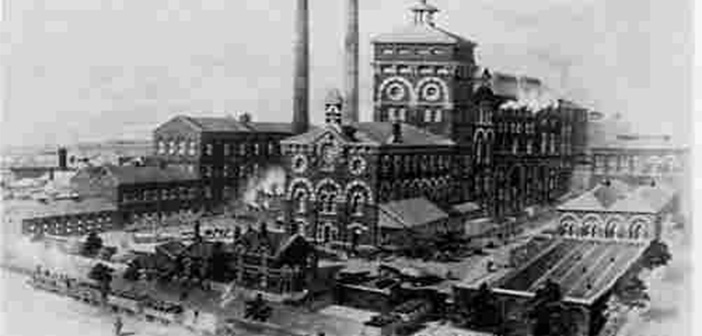
By the dawn of the Industrial Revolution, factories needed workers and workers needed beer. Warrington’s ascent as a brewing powerhouse began in 1778 at the Saracen’s Head Brewery at Wilderspool, which grew into Greenall Whitley & Company. Less than a century later, Walkers of Warrington operated the vast Dallam brewery.
By the late 19th and early 20th centuries, Greenalls and Walkers dominated the region. Two world wars made beer production vital for the nation’s needs and morale. By the 1990s, national pressure to separate brewing from pub ownership pushed Greenalls to abandon brewing entirely. Walkers — merged with Tetley’s decades earlier — finally called last orders on their Dallam Lane operation in 1996.
The industrial chapter closed, but Warrington’s taste did not stand still.
A Changing Palate — Why Wine Returned
As the big breweries faded, Warrington’s drinking culture began to shift — not suddenly, but through a series of quiet changes that unfolded over half a century.
In the 1960s and 70s, cheap continental package holidays introduced millions of British travellers to table wine for the first time. Families returned from Spain, Italy and France with new tastes and new habits, and Warrington was no exception.
By the 1980s, supermarkets transformed the national palate. Wine became affordable, visible and varied. Bottles that once seemed exotic appeared on shelves in Culcheth, Birchwood, Westbrook, and the town centre, turning wine from an occasional indulgence into an everyday option.
The 1990s brought gastropub culture — menus that paired food with wine rather than beer, and a new middle‑class confidence in choosing a bottle. Warrington’s suburbs grew more cosmopolitan, and restaurants began offering wines that would once have felt out of place.
By the early 2000s, wine had quietly woven itself back into Warrington’s everyday life. The town’s wine bars — from Stockton Heath to the Cultural Quarter — reflected a new social rhythm: glasses raised in converted mills, small bars tucked into side streets, tastings held in places that once served only beer.
Home winemaking found its place too. Demijohns in garages, grape presses in sheds, bottles lined up on kitchen counters — a quiet revival of craft and curiosity. Wine returned not through vineyards, but through people: their habits, their gatherings, their willingness to try something new.
Beer Today — A Tradition That Never Left
Although the industrial giants departed, Warrington’s brewing heritage remains alive. The Coach House Brewing Company, founded in Howley in 1991, continues the tradition. Modern pubs and microbreweries across the region reflect a national revival in craft beer — a return to small-scale brewing that echoes the medieval alehouses more than the Victorian factories.
Beer never disappeared; it simply changed shape.
Today’s Place in the Story
Wine in Warrington has always been a story of movement rather than cultivation. Roman goods crossed here. Medieval barrels crossed here. Industrial cargo crossed here. Today, ideas, people, bottles and glasses still cross here.
The wine has changed. The seasons have changed. Beer has risen, fallen, and risen again. But the wine crossings remain — a quiet thread running through two thousand years, carrying Warrington’s story forward like a river that never forgets its way home.
Cheers – and Good Health.
About the author
Rod Scotney is a Cheshire‑born writer of cultural philosophy living with his wife Heather in Somerset. A musician as well as a writer, he explores how place, memory and belief shape everyday experience.