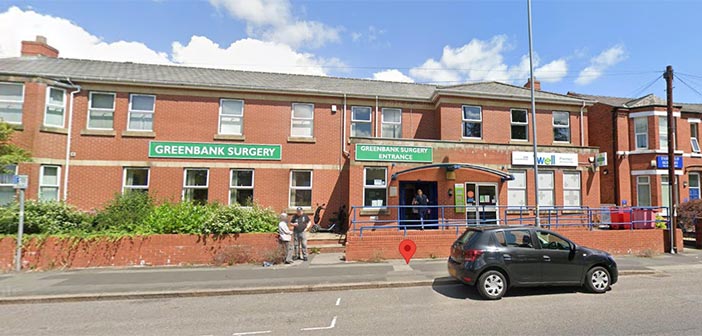
THE Greenbank Surgery, a GP practice and delivering services to approximately 8,000 people under a contract held with NHS England, has been rated “Good” following an inspection by the Care Quality Commission (CQC).
According to the latest available data, the ethnic make-up of the service area for the practice on Manchester Road, is approximately 93.9% White, 2.8% Asian, 1.5% Mixed, 0.8% Black and 1.0% Other. Information published by the Office for Health Improvement and Disparities shows deprivation within the service population group is in the 5th decile (5 of 10). The lower the decile, the more deprived the service population is relative to others.
It involved a focused assessment due to the length of time since the last assessment. Inspectors assessed 10 quality statements from across all 5 key questions. This assessment considered the demographics of the people using the service, the context the service was working within and how this impacted service delivery.
Inspectors found staff kept facilities clean and maintained equipment appropriately to ensure people were kept safe. They assessed and managed the risk of infection well and took steps to control the risk of it spreading. There were enough staff with the right skills, qualifications and experience. Staff supported people to live healthier lives, monitoring their care and treatment to ensure they received positive and consistent outcomes.
The system for booking appointments was responsive to people’s needs and patient satisfaction with being able to readily access the service was good. Leaders were visible, knowledgeable and supportive, helping staff develop in their roles and staff understood their individual roles and responsibilities. Staff treated people with kindness, empathy and compassion, and respected their privacy and dignity. Leaders and staff were alert to discrimination and inequality that could disadvantage groups of people who used the service and sought ways to address any barriers. The service had a clear vision and strategy, which considered the needs of the people who used their service and the wider community. Staff understood their individual roles and responsibilities.
People’s experience of this service
As part of the assessment, inspectors reviewed feedback from people who used the service to understand their views and experience. People were positive about the quality of their care and treatment. They described how staff treated them with kindness and compassion and respected their privacy. This was mirrored in the results of recent surveys, including the 2025 National GP Patient Survey, which showed most people were satisfied. Recent feedback from the NHS Friends and Family Test was positive with 89% of respondents reporting the service to be good or very good. At the time of the assessment, the practice did not have an active Patient Participation Group (PPG). The provider was exploring alternative ways to gather and act on feedback to help inform service improvement.
Equity in access
The provider made sure that people could access the care, support and treatment they needed when they needed it, and staff treated people equally and without discrimination.
The majority of people had their initial consultation needs met on the day of request or through being booked into routine appointments. Clinicians were available to see people for all types of appointment requests including urgent appointments. The provider monitored patient access effectively and made changes in response to ensure patient satisfaction.
CQC received feedback from patients through ‘Give Feedback on Care’ which was mostly positive and Friends and Family Test Data shared by the practice showed that feedback regarding access was also mostly positive. However, The National GP Patient Survey reported that 65% of people who responded felt their overall experience of contacting their GP practice was good, which was below the national average of 70%. The provider had recently introduced improvements to support a more efficient access model including the use of digital/online services and these needed time to fully embed. Information was available for people to support them to understand how to access services, including on websites, telephone messages and newsletters.
Extended access appointments were available. There were arrangements to prioritise patients to ensure urgent needs were met on the same day. Home visits were made following an assessment of need. Patients were directed to 111 if they needed care and treatment when the practice was closed. Clinical staff were available for face-to-face appointments 5 days a week. Triage was undertaken by trained care co-ordinators and supported by a duty GP. Patients were supported to use the digital front door to access services and were signposted appropriately to the most suitable clinician. The provider regularly reviewed accessibility feedback to ensure no group was disadvantaged by the mode of access.
Premises were accessible for people who were physically disabled and treatment rooms were available on the ground floor. There was plenty of on road parking close to the practice and there was 1 disabled parking space.