POLICE across Cheshire are highlighting the clear and significant link between stalking and serious violence and urging professionals and the public to recognise the warning signs early.
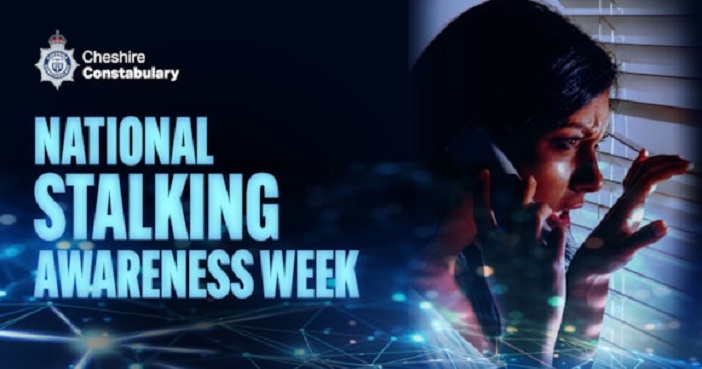
The message comes during National Stalking Awareness Week which this year highlights the link between stalking and homicide and the importance of early intervention.
Stalking is not harmless persistence or unwanted attention – it is a pattern of fixated, intrusive and threatening behaviour that causes fear, strips victims of their freedom and, if not identified and addressed, can escalate rapidly to serious harm.
Police are urging professionals, victims and loved ones to trust their instincts and look out for the following signs of stalking:
• Fixation on daily routines – following, monitoring movements, or using tracking devices
• Obsessive and repeated communication – constant calls, messages, emails, or contacting people connected to you
• Threatening or intimidating behaviour – including suicide threats, “last resort” thinking, or threats towards others
• Unwanted attention or ‘love bombing’ – unannounced visits, repeated gifts, or constant declarations of love
• Unwanted sexual contact – sexual assault, harassment, or unwanted touching
• Criminal behaviour to cause fear or gain attention – damage to property or breaking into homes or vehicles
Cheshire Constabulary has taken a nationally leading approach to tackling stalking through its specialist Harm Reduction Unit (HRU), created to transform the response to stalking by shifting the focus away from victims repeatedly having to prove their fear, and instead placing responsibility firmly on perpetrator management and professional intervention.
Detective Chief Inspector Neil Doleman, Stalking Lead for Cheshire Constabulary, said: “Stalking is not a series of minor or isolated incidents – it is a pattern of behaviour that causes fear and, if left unchecked, can escalate to the most serious forms of violence, including homicide. Through our Harm Reduction Unit, we deliberately place responsibility where it belongs – on the perpetrator – supported by professionals working together to identify risk early and act decisively.
“By focusing on behaviour patterns rather than single incidents, and by bringing together policing, health professionals, advocates and probation partners as one team, we are able to intervene sooner, manage offenders robustly and keep victims safe.
“Our outcomes show this approach works. We have some of the highest charge and conviction rates for stalking in the country, and most importantly, victims tell us they feel believed, supported and protected.”
The Harm Reduction Unit takes primacy for the most serious and complex stalking investigations and is the only specialist unit in the country with a dedicated stalking investigation team. The unit brings together detectives, clinicians, advocates, probation and policing specialists who collectively own and manage risk – rather than risk being carried by the victim alone.
This collaborative, victim centred model has delivered measurable results:
• The highest charge rate for stalking and harassment nationally
• 98 per cent conviction rate for HRU stalking cases reaching court last year
• A significant increase in early safeguarding, with one Stalking Protection Order secured every week
• The longest known single victim stalking sentence ever recorded in the UK
Cheshire Constabulary is also working with the Suzy Lamplugh Trust and academic partners to test innovative AI software aimed at improving the early identification of stalking behaviours in control rooms and enhancing officer response.
If you are experiencing persistent, unwanted behaviour that causes fear or distress, it is stalking and it is a crime.
Detective Chief Inspector Doleman added: “Early recognition and professional action can be life-saving. Cheshire Constabulary remains committed to ensuring victims feel safe, are safe, and stay safe, and to preventing stalking from escalating into serious harm or homicide.”