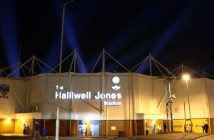

The Warrington Wolves have a unique status in British rugby league. The story of the club goes back to pre-Super League era in 1996. The examples of many seasons, famous players and traditions unite several generations. The team has won the Challenge Cup nine times, from 1905 to 2019.
In addition, in 1948, 1954 and 1955, the club became the English Championship winners. These awards speak volumes, but the significance of Warrington cannot be judged by trophies only.
The role of the club in the modern world has been great. The club has competed successfully with the strongest teams in Super League. In 2011, they became the winners of the regular-season table in Super League. However, the Challenge Cup has become the most successful achievement of the club in modern history. For the fans, the victories at Wembley have become landmarks that made a huge impact on their lives throughout several generations.
Beyond results, rugby league now exists within a much broader digital entertainment culture. Supporters looking beyond traditional match analysis may encounter this practical overview website, where sports-related markets appear alongside other forms of digital entertainment. This environment demonstrates how following sport has changed considerably, even if the history and emotional importance of clubs such as Warrington remain firmly connected to what happens on the pitch.
How have Warrington built their place in rugby league history?
Warrington’s successes are illustrated in its collection of silverware. Historical data that was collected by Rugby League Project reveals that the club managed to win Challenge Cup tournaments in 1905, 1907, 1950, 1954, and 1974 before entering a new era of success starting with the inception of the Super League. Indeed, the club had further achievements in 2009, 2010, and 2012, which helped to win three of the competitions in a row.
Those achievements continue to appear prominently in contemporary sport news whenever Warrington is headed toward another significant final. The memorable event of 2012 took place in the form of an impressive victory by Tony Smith’s team over Leeds Rhinos with a score of 35-18 at Wembley Stadium claiming the title of the winner of the Challenge Cup for the eighth time. Brett Hodgson became a recipient of the Lance Todd Trophy in addition to the six tries scored by Warrington’s team in an outstanding display of offensive skills.
Why has the Challenge Cup been so important to Warrington?
There are few competitions that showcase Warrington’s modern identity. Their victory in 2009 marked the end of a 35-year wait for another Challenge Cup, having last won the trophy in 1974. By winning the trophy again in 2010, it showed that the success in 2009 was not a one-off win; it proved that Warrington had become a regular contender for championship titles.
The final of 2019 was another great moment in their recent history. In the final held in Wembley, Warrington played against St. Helens and secured an 18-4 victory thanks to them having a very strong defense. Joe Philbin and Ben Murdoch-Masila scored the two tries for Warrington, while Declan Patton was in the role of kicker. As a result of this victory, Warrington has now won the Challenge Cup for the ninth time since 2012.
The figures for the attendance at these events reveal that they carry great significance for the team. According to Rugby League Project, 85,217 fans witnessed Warrington winning over Leeds with 30-6 score in the 2010 Cup final. In 2012, the number of those attending the final for Warrington was 79,180. In 2019, this number decreased to 62,717 for the game against St Helens.
What can recent seasons tell us about the club?
The latest campaigns illustrate how challenging it is to remain among the top teams in a more competitive Super League. Warrington returned to Wembley in 2025 and came very close to winning another Challenge Cup trophy.
They were ahead against Hull KR 6-2 at halftime, but Tom Davies scored towards the end of the second half. Mikey Lewis converted and Hull KR won by 8-6 with 63,278 spectators watching. Although this defeat was hard to take, it proved to Warrington that it can still compete for considerable trophies in the future.
Today’s fans interact with their teams differently. Modern platforms rely heavily on such methods as tournaments, enticing prizes, holiday activities, and short promotions to sustain communication.
Why does the rivalry with Wigan Warriors matter?
Wigan Warriors also have a significant part of Warrington’s history. Both teams come from the heartlands of rugby league, and this competitive relationship has existed long before the super league.
An example is the Locker Cup, which began as Wardonia Cup in 1938, but was renamed in 1972 before making a comeback in the modern times. As of April 2026, the trophy has been contested 57 times, with Wigan winning 36 times, while Warrington won 21 times, with 1 meeting resulting in a draw.
The rivalry was made stronger by major finals. In 2024, Wigan beat Warrington 18-8 in a Challenge Cup final that added yet another chapter to a long story between the 2 teams.
The people behind Warrington’s legacy
In the end, it was players and coaches who granted the trophies significance. The modern era of the Challenge Cup was managed by Tony Smith, while names such as Lee Briers, Brett Hodgson and Chris Riley are now associated with successful teams of Warrington.
Briers, however, is perhaps the most vital element of this association. His name appears in the Rugby League Project with 2,584 points scored for Warrington, making him the all-time leader of the club’s scorers. A new generation of players started their own story. Joe Philbin, born in Warrington, has already scored the club’s final try at Wembley in the match of 2019 and achieved a record of 190 substitutes at the end of the season 2025.
What comes next for Warrington?
Warrington’s past does create expectations for each new generation. Their Challenge Cup victories in 2009, 2010, 2012 and 2019 show that the club can continuously put together winning sides.
The next step is turning perseverance into trophies. Warrington’s history is rich but also incomplete. Each visit to Wembley is one more chapter being added to the club whose passion for winning continues to be part of its identity.