By Rod Scotney
FOR a few remarkable years, 100,000 honeybees lived above Warrington’s Golden Square.
On a busy shopping day, there were often more bees in the town centre than shoppers below. They moved unseen through the air, unheard above the traffic, drifting between rooftops while life carried on beneath them. Few people noticed, yet their presence suggested something remarkable: that nature could still find a foothold in one of Warrington’s busiest places.
For a while, the bees became part of the town’s skyline.
Then they disappeared.
At least, that’s what many of us assumed.
Their story intrigued me because it seemed to fit a familiar pattern. A well-intentioned environmental project arrives with publicity and enthusiasm, survives for a few years, and then quietly fades away. No fanfare. No explanation. Just another idea lost to time.
But the more I looked, the less convincing that explanation became.
Bees and people have shared a relationship stretching back thousands of years. Long before sugar sweetened our tea, honey sweetened our lives. Beeswax lit churches, workshops and homes. Across the centuries, wherever people settled, bees usually followed.
Warrington was no different.
From Celtic communities living beside the Mersey to Roman Wilderspool, medieval gardens, Victorian allotments and modern parks, bees have been part of the town’s story for longer than any of us can remember. The Golden Square colonies were simply the latest chapter.
In 2011, four hives containing more than 100,000 honeybees were installed on the shopping centre roof as part of the centre’s “Growing Up Green” campaign. The project attracted national attention and quickly became one of Warrington’s more unusual environmental success stories.
The colonies thrived.
Yet what happened next proved far more interesting than a disappearance.
Honeybee colonies cannot simply be abandoned when a project ends. They are living communities, dependent upon skilled care and management. When the rooftop hives were removed, the bees were not lost. They were relocated to established apiaries where they could continue doing what bees have always done: building colonies, gathering nectar and producing honey.
The bees left the rooftop. Their legacy did not.
While the hives were gone, the idea continued to grow.
In 2022, Golden Square joined forces with Culture Warrington and Warrington Museum to create the Warrington Sky Garden. What had once been an overlooked section of rooftop became a flourishing space dedicated to biodiversity. Wildflower beds appeared. Bee hotels were installed. Butterflies and pollinators found new habitats above the town’s streets.
Today, the Sky Garden continues to flourish, earning repeated recognition for the wildlife and community it supports.
The more I learned, the more I realised the bees had not vanished at all.
We often think of history in terms of beginnings and endings. A thing appears. A thing disappears. The story is over.
Real life rarely works like that.
More often, one idea simply evolves into another. What looks like an ending from a distance turns out to be something else entirely, a transformation hiding in plain sight.
The rooftop bees became part of something larger than themselves.
Their hives may be gone, but the question they posed remains: what happens when we give nature space to return?
High above Warrington’s streets, the answer is still unfolding.
Where tens of thousands of honeybees once drifted across the skyline, flowers now bloom, pollinators gather, and an old rooftop continues to surprise those willing to look up.
As Christmas approaches and shopping becomes ever more frantic, perhaps take a moment to visit the rooftop and enjoy a little peace.
Look beyond the shops, the queues and the decorations, and notice what is quietly thriving above them.
After all, nature is for life, not just for summer.
Rod Scotney is a Cheshire born writer of cultural philosophy living with his wife Heather in Somerset. A musician as well as a writer, he explores how place, memory and belief shape everyday experience.
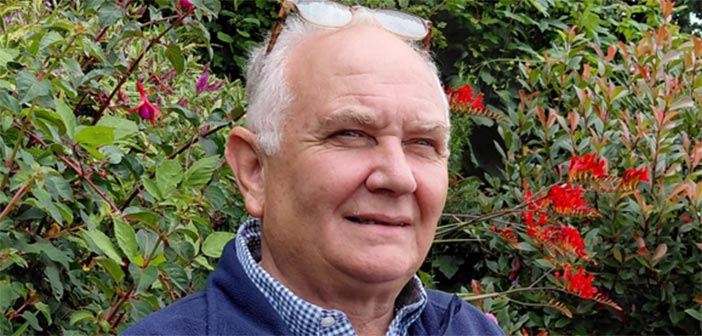
Rod Scotney