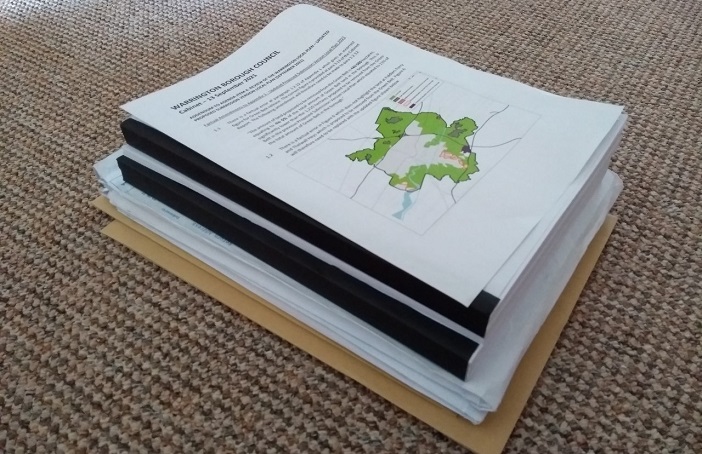
THERE are few issues that will have a greater long-term impact on Warrington than the borough’s new Local Plan.
Yet, judging by previous consultations on planning matters, there is a real danger that many residents will simply sit back, take little notice and only start taking an interest when a major development proposal appears on their doorstep.
By then, it could be too late to influence some of the most important decisions.
Warrington Borough Council has now launched the next stage of its updated Local Plan consultation, opening up an opportunity for residents, businesses and community organisations to help shape the future direction of the borough.
The consultation opened on November 17 and runs until 5pm on January 11, 2027.
My message is simple: “if you care about the future of Warrington, get involved.”
This is not just another council consultation exercise to be ignored or dismissed as a box-ticking exercise.
The Local Plan will provide the framework for decisions on where future housing and employment development should go, what infrastructure will be required and how our communities will be supported.
It will influence the Warrington our children and grandchildren inherit.
And make no mistake, the pressures facing the borough are significant.
National planning policy has changed, Government housing targets have increased and Warrington is facing competing demands for land to accommodate new homes, employment opportunities, transport improvements and community facilities.
We have already seen, through the council’s Call for Sites exercise, just how much interest there is from landowners and developers in promoting land across the borough for potential future development.
From the outskirts of villages to areas of open countryside, thousands of potential homes are being promoted.
In and around Lymm alone, the scale of land being put forward for consideration has raised serious questions about the future character of the area.
Similar pressures are being felt in communities including Culcheth, Croft, Winwick, Burtonwood and elsewhere across the borough.
But there is an important distinction residents need to understand.
This latest consultation is not about deciding which individual sites will be allocated for development. That comes later.
At this stage, the council wants views on the overall vision for Warrington, its objectives, the strategy for future growth, proposed planning policies and the evidence being used to inform the plan.
Some might ask why they should bother commenting now if the individual sites are not yet being decided.
The answer is that the broad strategy matters enormously.
It is the framework against which future decisions will be judged. The principles established now could influence everything from the scale and distribution of housing to the protection of green spaces, the provision of schools, healthcare, roads, public transport and other essential infrastructure.
If we want development to be sustainable, properly planned and supported by the services communities need, those issues must be raised from the outset.
Warrington has experienced the consequences of development and infrastructure not always keeping pace with one another.
Residents know all too well the pressures on roads, GP services, schools and other public facilities.
We cannot simply keep adding housing without asking some very serious questions about capacity and investment.
Equally, nobody should pretend that Warrington can stand still. We need homes for future generations, opportunities for young people, employment land to attract investment and a thriving local economy.
The challenge is getting the balance right.
This is not about being anti-development. It is about demanding properly planned development that benefits the borough rather than simply meeting housing numbers on a spreadsheet.
We also need to recognise that Warrington is more than its town centre and major employment sites.
It is a collection of distinct communities, villages and neighbourhoods, each with their own identity, character and infrastructure challenges.
Those differences must be recognised when decisions are made about future growth.
There is also a responsibility on the council to demonstrate that it has properly considered the cumulative impact of development, rather than looking at individual proposals in isolation.
Residents should be asking whether the evidence underpinning the plan is robust, whether infrastructure requirements are realistic and whether the proposed approach genuinely reflects the needs and aspirations of people living here.
I would also urge people not to assume that somebody else will speak up on their behalf.
Councillors, parish councils, residents’ associations, businesses and community organisations all have a part to play, but individual residents can make an important contribution too.
The council has arranged a series of public drop-in events across the borough, providing an opportunity to speak directly to planning officers and find out more about the proposals.
These will take place at:
– Birchwood Community Hub: November 24, 2pm–8pm.
– Great Sankey Neighbourhood Hub: November 26, 2pm–8pm.
– Warrington Central Library: November 28, 10am–2pm.
– St Thomas’s Church Hall, Stockton Heath: November 30, 2pm–8pm.
– Orford Jubilee Hub: December 2, 2pm–8pm.
The online consultation can also be completed at:
https://www.smartsurvey.co.uk/t/wbclocalplan2/
The deadline is 5pm on January 11, 2027.
I appreciate that planning documents are not everyone’s idea of bedtime reading. They can be lengthy, technical and difficult to navigate.
But this is precisely why the council needs to make the process accessible and explain clearly what is being proposed and what the consequences could be.
It is also why local media has an important role in keeping residents informed as the process develops.
At Warrington Worldwide, we will continue to scrutinise the issues, highlight the implications for individual communities and encourage informed debate.
There will undoubtedly be differences of opinion about what Warrington should look like in 10, 15 or 20 years. That is perfectly healthy.
But what would be a mistake is allowing decisions of such significance to progress without the voices of the people who actually live and work here.
Warrington’s Local Plan is about much more than bricks and mortar. It is about the future identity, character and quality of life of our borough.
If we want to protect what makes Warrington special while ensuring it has the homes, jobs and infrastructure it needs, we must engage with the process.
Don’t wait until a development application appears on a field near you before taking an interest.
By then, the bigger decisions may already have been made.
Have your say now. Warrington’s future deserves nothing less.