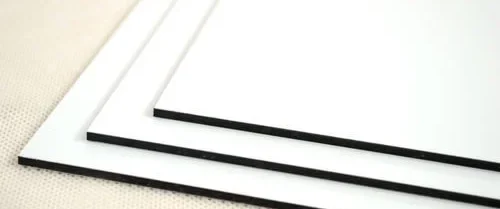
Choosing between Dibond, Foamex and Perspex? Discover the key differences in durability, cost and finish to pick the perfect sheet material for your signage.
Dibond, Foamex and Perspex: how to pick the right board
Three of the most commonly specified sheet materials in signage and display work are aluminium composite (Dibond), PVC foam board (Foamex) and cast acrylic (Perspex). They look interchangeable on a spec sheet, but they behave very differently once installed.
Picking the wrong one can mean bowing fascias, faded graphics or paying for a premium sheet when a budget board would have done the job. Here’s a genuine head-to-head across the factors that actually matter.
Material Properties and Fabrication
Weight and Rigidity
Foamex is the lightest of the three, typically around 0.55 to 0.65 g/cm³, which makes it easy to handle, transport and fix with simple fittings. Thinner gauges flex across long spans, so for anything over a metre or so it’s worth stepping up to 5mm or 10mm.
Dibond pairs a polyethylene core with two thin aluminium skins, giving excellent rigidity without much weight. A 3mm sheet sits at roughly 3.6 kg per square metre. Perspex is the heaviest of the three but still around half the weight of glass at the same thickness, and it delivers the solid, premium feel that suits architectural and retail work.
Precision Cutting
All three sheets respond well to precision fabrication, which means complex shapes, cut-outs and tight tolerances are achievable across the board. CNC routing is the go-to method for this kind of work, and Simply Plastics CNC routing can handle Dibond, Foamex and Perspex alike. Sourcing your sheets and your routing from the same supplier tends to shorten lead times and reduce handling damage between stages.
Weather Resistance and Outdoor Lifespan
Outdoor performance is where the three materials really separate.
- Dibond is the default for long-term external signage. It resists rust, holds shape across UK temperature swings, and typically lasts 5 to 10 years or more outdoors on shop fascias, hoardings and directional signs.
- Perspex also performs well outdoors. UV-stabilised cast acrylic grades carry a 30-year guarantee against yellowing, which makes it a serious option for permanent external features and light-transmitting installations. It can scratch in high-traffic spots, so siting matters.
- Foamex sits in the middle. Standard grades typically last 2 to 5 years outdoors before fading or surface degradation, with premium UV-stabilised grades pushing that to 7 years or more. It’s a strong fit for mid-term campaigns, seasonal hoardings and construction-site notices rather than permanent fascias.
Visual Appearance and Print Quality
If the brief leans on crisp graphics or high-gloss finish, surface matters. Perspex delivers the best optical clarity of the three. Polished edges give a deep, glassy finish, which is why it dominates light boxes, illuminated lettering and premium interior branding.
Dibond and Foamex both take direct UV print well. Foamex has a smooth matte surface that kills glare, making it a good fit for exhibition panels and indoor point-of-sale. Dibond’s flat, smooth face holds large-format graphics without ripple or distortion, which matters most on shop fascias and hoardings where any waviness reads from the street.
Cost and Sustainability
Budget usually sets the shortlist. Foamex is the cheapest of the three and the obvious pick for high-volume or temporary work. Dibond sits in the mid-to-upper bracket, but its lifespan means lower replacement costs over time. Perspex is the priciest, justified on permanent architectural and retail installs where finish and longevity earn back the spend.
On recycling, Perspex can be depolymerised back into raw PMMA for new sheets. Dibond is also recyclable once the aluminium skins are separated from the polyethylene core, usually through specialist composite recyclers. Foamex is the weak link. It’s PVC, so it’s not accepted by standard UK kerbside recycling, and reuse or specialist PVC recyclers are the realistic routes if you want to keep it out of landfill.
Best Uses for Each Material
- External signage: Dibond, for its weather resistance and structural rigidity.
- Internal displays: Foamex, for low cost and easy mounting.
- Exhibition panels: Foamex again, for its matte, glare-free face and light weight.
- Light boxes: Perspex, for unmatched light transmission and a glossy finish.
- Architectural features: Perspex and Dibond, for premium finish and long service life.
Selecting Your Ideal Sheet
The trick is matching the sheet to the environment, not the budget alone. Foamex for short to mid-term indoor and outdoor work. Dibond for long-term outdoor toughness and flat large-format graphics. Perspex when light, clarity or premium finish drives the design. Get that match right and the install does its job for years rather than seasons.