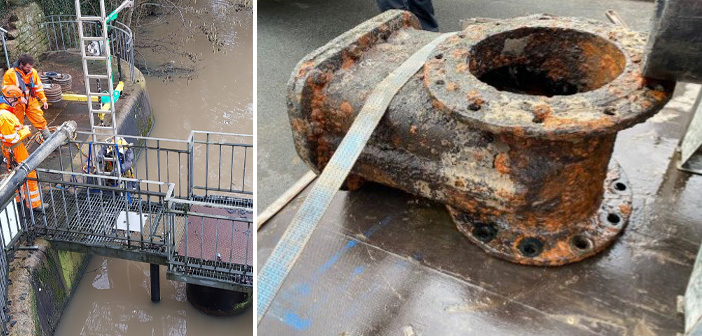
Important work to protect the future safety and integrity of the historic Lymm Dam will take place next week.
Works to replace three inlet valves as part of the draw-down mechanism for the dam begin on Monday 8 June, and are scheduled to last for approximately five days.
The critical valves have reached the end of their service lives and now require replacement to secure the future safety and integrity of the dam.
The highly skilled engineering work will be undertaken during the daytime using a specialist dive team. There will be some minor inconvenience to road users as the work will be undertaken under temporary traffic signals.
Following the valve replacement works, the A56 Church Road will be resurfaced between Elm Tree Road and Rectory Lane. The works are programmed to commence on 29 June and last for up to eight weeks. To undertake the resurfacing works safely, a road closure is required between 7pm and 1am (Monday to Friday).
Footway improvement works will also be undertaken at the same time with some works undertaken during the day under temporary traffic signals, where necessary. These works have been successfully coordinated with United Utilities who will be taking advantage of the road closures to undertake investigation and maintenance works to their assets at the dam to avoid further disruption to motorists.
Cllr Hans Mundry, Leader of Warrington Borough Council, said: “I’m delighted these projects to maintain and improve Lymm Dam and public highway are moving ahead, and I’m grateful to our highway engineering, bridges and flood risk management team for co-ordinating and delivering this essential work.
“These projects represent vital maintenance to key highway infrastructure. By upgrading the dam mechanisms and resurfacing the A56 Church Road, we are ensuring long-term safety and smoother journeys for the community.
“We understand that roadworks can cause inconvenience, which is why we have worked closely with United Utilities to coordinate these schemes. This collaborative approach eliminates the need for additional road works, ultimately saving time and preventing further disruption to motorists.”