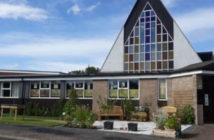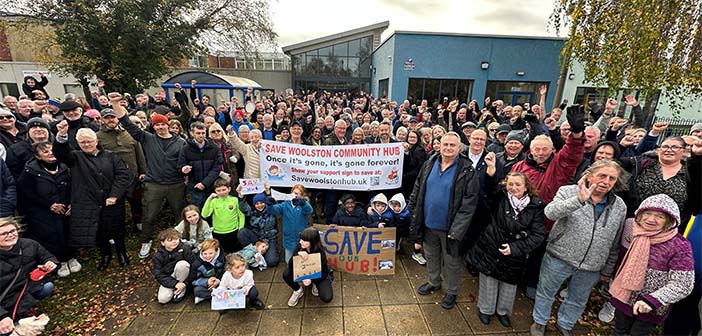
CAMPAIGNERS have written to every member of Warrington Borough Council’s Cabinet, senior officers and the town’s MPs, “laying bare the human cost” of closing Woolston Neighbourhood Hub.
A total of 72 testimonials have been received by campaigners from former users of the facilities outlining how the closure has impacted on their lives
Judy Brown, co-chair of the Save Woolston Neighbourhood Hub committee, said: “Residents of Woolston and the surrounding areas have submitted 72 testimonials to the Save Woolston Neighbourhood Hub committee, which laid bare the human cost of closing Woolston Neighbourhood Hub. These testimonials have now been passed on to our Council Cabinet members, who are due to vote on the Hub’s future before too long.
“Whilst only being the tip of the iceberg in terms of the number of people affected, they eloquently describe how much the Hub means to the people of Woolston and the surrounding areas, and the disastrous consequences of closing such an essential facility.
“A whole multitude of problems have been highlighted since the Hub closed :- physical and mental health problems, social isolation, major problems with accessing alternative venues, and huge increases in costs, amongst many others. Sadly, the people hit hardest have been the elderly, people who live alone, the disabled, people who don’t own a car, and children who are missing out on learning vital swimming skills. Health and Social Care is extremely expensive – it makes absolutely no sense to clearly ramp up these costs for the sake of a relatively small amount of money, quite apart from the clearly negative effect of the closure on residents’ quality of life. Above all, the testimonials demonstrate beyond doubt how absolutely essential it is for these facilities to be reopened as soon as possible.”
The letter, sent by email, is reproduced below.
Dear Cllr
On behalf of the people of Warrington (and particularly Woolston and the surrounding areas), who have lost the use of the well-used Woolston Neighbourhood Hub for over 8 months, we felt that it was only right to request their views on how losing the Hub has affected them, and communicate their responses to you. The responses are attached.
We appreciate that some of the testimonials may be upsetting, but we strongly urge you, in recognition of the people who have taken the time to inform you of these consequences, to read them, as a decision on the Hub is imminent, and you are a party to that decision. The views (attached) are indicative of how people’s lives in Woolston have been affected by the closure, and will continue to be affected until the Hub is re-opened.
We’re sure that for each person that chose to let us know, there’ll be many others who either didn’t know that they could inform us, or have chosen not to write for various reasons. We therefore feel that these 72 responses are merely the tip of the iceberg, and just a small sample of the number of responses that we would get should resources be available to contact more people more directly. I have all (bar two, that failed) the responders email addresses, so if you would like to contact any of them, please let me know and I’ll ask their permission for you to get in touch.
On a positive note, these replies are indicative of the massive contribution that the local Leisure Centres, supported by Warrington Borough Council for circa half a century, have made to the Health and Wellbeing of our population, and we acknowledge this. However, it emphasises just how vitally important it is for these facilities to remain.
Please act before it is too late.
To completely protect anonymity, please do not forward this attachment. Thanks.
Many thanks for reading. Please acknowledge receipt and reply to the issues raised.
Best wishes
Judy Brown (Co-chair, Woolston Neighbourhood Hub on behalf of the Woolston Neighbourhood Hub Committee.)
Summary
The report lays bare the human cost of losing Woolston Neighbourhood Hub.
Running through the testimonies of all the brave people that sent them in, is a negative impact on health (mental and physical), social connection, education and rehabilitation. The disabled, the elderly, SEND and children are all being severely affected.
Many contributors report a marked decline in their health and fitness, and are frustrated by a lack of access to the swimming pool, gym, fitness classes, library, GP services, and all the community interaction.
Children are missing out on vital swimming skills. Increased costs, the loss of vital community infrastructure, and the availability, capacity and quality of service at other sites are also frequently highlighted, along with concern that the closure will create longer-term costs for Health and Social Care services.
The respondents consistently describe the Hub as far more than just a leisure facility – instead, it is seen as being essential infrastructure that provides accessible and affordable swimming, gym, classes, social interaction, library services, GP access, rehabilitation support, and opportunities for inter-generational contact within families.
Report Detail
Physical Health – Significant Negative Impact
A consistent and dominant theme throughout the report is the decline in residents’ physical health since the Hub closed.
Contributors describe worsening fitness levels, mobility issues, weight gain, increased blood pressure, arthritis, diabetes and setbacks in recovery from strokes, cancer treatment, and surgery since the closure.
Contributors put these problems down to a reduction or a complete loss of access to regular exercise and the cancellation of their swimming, gym and rehabilitation activities.
Swimming was repeatedly described as an essential exercise for Stroke rehabilitation, arthritis management, Diabetes prevention and management, cardiac rehabilitation, weight management, low-impact fitness and disability-friendly exercise.
Several respondents specifically stated that healthcare professionals had advised them to swim or exercise regularly as part of rehabilitation or long-term condition management.
Contributors directly linked their previous health improvements to regular use of Woolston Hub and stated that these gains have reversed since closure.
Woolston Neighbourhood Hub has clearly played an important preventative health role within the community.
Healthcare professionals contributing to the report warned that reduced access to preventative exercise will increase future pressure on NHS, GP, and Social Care services.
Mental Health
Many residents stated that the Hub was critical for maintaining their mental well-being. They have reported an increase in anxiety, depression and loneliness, along with a lack of daily routine. The serious possibility of relapse and loss of confidence also feature within the testimonials. Also highlighted was the loss of informal daily social contact that previously helped reduce loneliness among older residents. The report strongly suggests that the closure has increased social isolation among vulnerable residents. The elderly, disabled and neurodivergent users have been particularly badly affected.
Several respondents described the Hub as a lifeline, family, or support system.
Many contributors stated that they now spend far more time isolated at home and have lost important daily social contact.
Social Interaction
Numerous respondents describe the Hub as a social lifeline and community focal point. The closure has reduced opportunities for friendship, informal support, and social interaction. For retired residents and those living alone in particular, it was a friendly and safe place to meet.
Accessibility
The frequency and timing of the sessions available to residents have changed, so for many people, now they’re at a time when they can’t attend. The cost of accessing alternative venues is highly significant in both time and money. The difficulty with having to catch 2 buses/ pay for taxis/ huge increase in journey time is also a major barrier to attendance. Residents have also reported overcrowding, lack of pool water space, fully booked classes, lack of accessible gym equipment and classes, and difficulty parking. The consequence of this is that the quality and frequency of their visits have decreased to such an extent that many have cancelled or are preparing to cancel their memberships, as the alternative facilities no longer meet their needs.
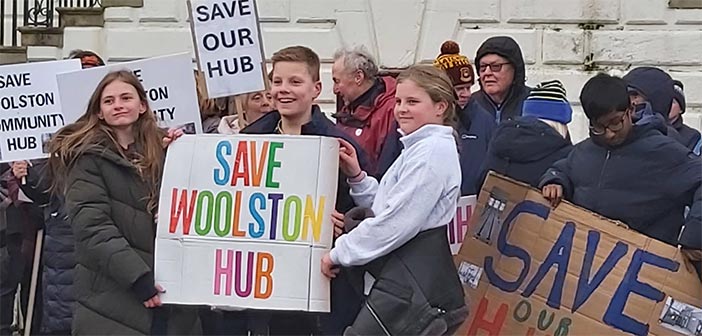
Young campaigners outside the town hall
Impact on Children and Families
Families report disruption to swimming lessons, reduced opportunities for children to learn life-saving swimming skills, and the loss of affordable family activities. Schools now face additional transport costs and reduced lesson time. Respondents stated that access to swimming lessons has been reduced, and there’s more stress caused by longer travel times and increased transport costs. Concerns were expressed regarding children learning essential water safety skills, and for disabled children to access suitable sessions.
Loss of Integrated Local Services
Beyond leisure provision, respondents stress the importance of the Hub’s library, GP surgery, and community functions, all of which are now far less accessible. Residents view the closure as the removal of an essential neighbourhood resource rather than a single standalone facility.
The closure has therefore removed not only recreational facilities, but also a broader neighbourhood support system.
Disproportionate Impact on Vulnerable Groups
The responses indicate that the closure has disproportionately affected:-
Older adults, disabled residents, neurodivergent individuals, people without access to cars, low-income households, people recovering from illness or surgery, children requiring swimming lessons, and families caring for disabled children.
Various issues have been raised including:- inability to travel to an alternative centre, overcrowded replacement facilities, reduced confidence in travelling independently, increased reliance on taxis.
Several disabled users and stroke survivors stated they can no longer exercise regularly due to travel limitations or a lack of suitable replacement facilities.
Residents without cars repeatedly stated that replacement facilities at Orford, Birchwood or Sankey were effectively unsuitable for them to use.
There’s clearly been a major disruption to children’s swimming lessons and activities, with some schools now requiring coach transport to distant facilities, and many children having to stop their lessons.
The closure therefore, appears to have widened inequalities in access to health, fitness and social participation.
Governance Concerns
A significant proportion of residents felt that the Hub’s condition resulted from years of insufficient maintenance rather than unavoidable circumstances.
Frustration and Distrust
Many contributors feel that the long-term social and health costs to the community far outweigh any short-term savings. They also feel frustrated that local investment priorities are being placed elsewhere.
Conclusion
The testimonies demonstrate that the closure of Woolston Neighbourhood Hub has had substantial, wide-ranging and life-changing consequences for members of the local community.
Residents consistently describe the Hub as an essential preventative health and social infrastructure asset, the absence of which is negatively affecting quality of life across Woolston and surrounding areas.
The closure has had widespread and deeply personal impacts across all age groups, with particularly severe consequences for older residents, disabled people, low-income households, children deprived of adequate swimming access and instruction, and the residents managing long-term health conditions.
The loss of the Hub has clearly reduced physical activity, increased isolation, weakened community cohesion and created additional barriers to accessing health and wellbeing services.
The report strongly suggests that Woolston Neighbourhood Hub is viewed as essential community infrastructure rather than an optional leisure facility.
The consistent message throughout is that reopening the facility is absolutely vital for the health and well-being of the local and neighbouring communities.