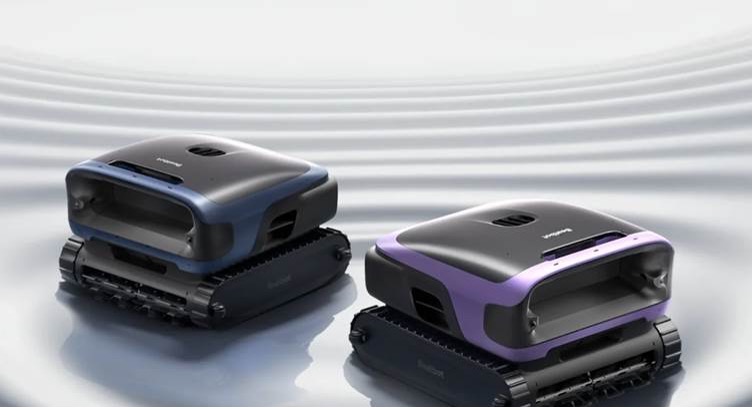
In the rapidly evolving landscape of smart home technology, 2026 marks a pivotal transition in how we evaluate domestic hardware. For years, outdoor maintenance tools were categorized as simple consumer electronics—disposable gadgets designed for basic chores.
However, as the complexity of home ecosystems increases, a new paradigm is emerging. High-value outdoor assets, particularly residential water bodies, are now being viewed through the lens of infrastructure management. In this context, a modern pool cleaning machine is no longer just a utility tool; it has become a critical piece of infrastructure, essential for the predictive maintenance and long-term preservation of the estate.
The Engineering Shift Toward Systematic Stewardship
Traditionally, aquatic maintenance was a reactive process. Homeowners or service professionals responded to visible debris or chemical imbalances after they occurred, often placing significant strain on the pool’s primary filtration and pumping systems. This reactive model is inherently inefficient, as it allows organic contaminants to degrade water quality and hardware integrity before intervention begins. The shift toward systematic stewardship requires a platform capable of continuous, autonomous oversight that prevents degradation at the source.
The emergence of intelligent, distributed cleaning nodes allows for a level of preventive care that was previously impossible. By maintaining a constant state of cleanliness, these autonomous systems reduce the accumulation of fine particulates that clog expensive sand or cartridge filters. This proactive approach significantly extends the operational lifecycle of the home’s primary aquatic infrastructure. Consequently, the selection of a maintenance platform is now an engineering decision focused on total cost of ownership and the preservation of high-value property assets.
Mechanical Autonomy and the cordless pool vacuum robot
The most significant technological leap in this sector has been the achievement of true mechanical independence. For decades, the reliance on umbilical cables and external pump pressure limited the effectiveness of robotic cleaners. The modern cordless pool vacuum robot represents a fundamental break from these constraints, utilizing onboard intelligence and high-density energy storage to navigate without physical tethers. This transition to a cordless architecture is not merely an aesthetic preference; it is a functional necessity for achieving 100% coverage in complex aquatic environments.
Among the leading-edge solutions, platforms like the Beatbot AquaSense X demonstrate the power of end-to-end automation. By integrating advanced sensor fusion with AI-driven path planning, the system can execute a precise cleaning matrix that ignores no corner of the pool’s geometry. Perhaps the most critical engineering advancement is the introduction of self-maintaining cycles. Systems featuring the AstroRinse™ automatic station reflect a deep understanding of infrastructure reliability. By automating the flushing of the robot’s internal filters after every deployment, the technology ensures that the hardware remains at peak efficiency without human intervention. This self-healing loop is what distinguishes a gadget from a reliable infrastructure asset.
The Turning Point: A Shift in Human Perception
For a long time, it was reasonable to believe that automation in pool maintenance had reached its practical limit. Many homeowners assumed that the remaining frustrations—manual retrieval, surface debris, and periodic intervention—were simply part of ownership. Even professionals accepted these compromises as structural constraints rather than design failures. We viewed these devices as helpful but ultimately flawed tools that still required a high degree of human oversight.
What changed was not a single breakthrough, but a gradual realization. As autonomous systems began operating for entire cycles without interruption, without supervision, and without creating new cleanup tasks, expectations quietly shifted. The defining moment came when intervention stopped being routine and became the exception. At that point, automation was no longer evaluated as a helpful tool, but as dependable infrastructure—something that could be trusted to operate correctly even when no one was watching. This realization marked the true turning point—when automation ceased to feel like a gadget upgrade and started to resemble genuine independence.
Hydrodynamic Stability and Surface Management
In any aquatic environment, the water surface is the most volatile interface. In regions prone to wind and seasonal debris, surface contaminants can rapidly overwhelm a pool’s skimming system if not intercepted. Traditional floor-bound robots ignore this layer, yet the chemistry of the entire water body is often dictated by the organic load at the surface. Mastering this interface requires a sophisticated understanding of fluid dynamics and propulsion.
Specialized systems like the Sora 70 have addressed this through innovations such as JetPulse™ propulsion technology. By utilizing active thrust to compensate for wind resistance and water surface tension, the device maintains a stable trajectory that allows for the surgical interception of debris. When combined with Smart Water-Surface Parking, the system ensures that the maintenance cycle ends with the robot easily accessible at the pool’s edge. This attention to detail reflects a broader commitment to engineering excellence, ensuring that the technology serves the user experience rather than creating new maintenance hurdles.
Longevity through High-Capacity Systems
Ultimately, the role of a maintenance asset is defined by its endurance and capacity. The infrastructure of 2026 relies on high-capacity lithium-ion battery systems that provide the necessary power headroom for extended operational windows. Professional-grade models capable of up to 11 hours of runtime allow for a level of consistency that ensures the water body is always ready for use, regardless of the environmental load.
Coupled with ultra-large filtration baskets—such as the 9L systems designed for heavy-duty debris management—the frequency of human intervention is reduced to an absolute minimum. This holistic approach to engineering ensures that the pool remains a pristine sanctuary while the underlying hardware is protected from premature wear. In the modern estate, the transition to autonomous stewardship is the new benchmark for excellence, aligning property management with the highest standards of technological and environmental responsibility.
Conclusion: Defining the Future of Aquatic Engineering
The story of the autonomous backyard is one of technological maturity. We have reached a point where the boundaries between tool and infrastructure have permanently blurred. By moving past the limitations of tethered power and randomized movement, innovators like Beatbot have set a new standard for how we interact with our home environments.
As we look toward the future, the integration of predictive maintenance and mechanical autonomy will continue to redefine the value of our domestic assets. The autonomous sanctuary is no longer a luxury of the few; it is a fundamental requirement for the modern, future-ready home. In 2026, investing in the right autonomous system is the ultimate expression of property stewardship—a commitment to engineering excellence that preserves both time and value.