
Scaffolding has become a familiar sight across Warrington this autumn. Older terraced streets are getting new roofs. Shopfronts in the town centre are being repainted. Large housing schemes on the edge of town are adding hundreds of new frames.
Most of these structures stay up safely for weeks without a single problem. Still, it helps to know what a sound scaffold looks like. Working at Heights Course, a UK provider of working at height training, publishes scaffold accident statistics with the latest data on scaffolding accidents among NASC member firms. Those figures are a useful place to start for anyone living or trading next to a scaffold.
What Do the Latest Scaffolding Figures Actually Show?
The National Access and Scaffolding Confederation (NASC) is the trade body for scaffolding contractors. It collects safety returns from its members every year. Its 2026 report covers calendar year 2025. It counted 332 member firms employing 20,168 operatives.
Those firms reported 82 accidents to their operatives in 2025. That was up from 73 the year before. There were no operative deaths in the member returns.
The breakdown is more revealing than the headline:
- 17 accidents were falls from height.
- 25 were slips and trips on platforms or access routes.
- 28 were specified injuries, such as fractures.
- 54 kept a worker off for more than seven days.
These numbers cover NASC members only. They are not a census of every scaffold in the country. Non-member firms and DIY towers sit outside the data entirely.
Why Does Wind Matter So Much for a Sheeted Scaffold?
Storm Boelo has just reminded the town how much damage strong gusts can do. Warrington Worldwide reported on falling branches and trees as winds battered Warrington over the weekend. Scaffolding faces the same forces.
A bare tube frame lets most wind pass straight through. Plastic sheeting or debris netting changes that completely. A sheeted scaffold is a sail in strong gusts, so the design must account for the extra load.
A recent prosecution shows what happens when it does not. A tower scaffold with sheeting overturned onto two members of the public on Putney High Street in July 2023. The company was later fined £20,000, and its director was fined separately.
After any storm, a competent person should inspect the scaffold before work resumes. Ties, base plates and sheeting fixings deserve the closest look.
What Can Residents Check From the Pavement?
You do not need training to spot obvious warning signs. A few glances on the walk to work will tell you a lot.
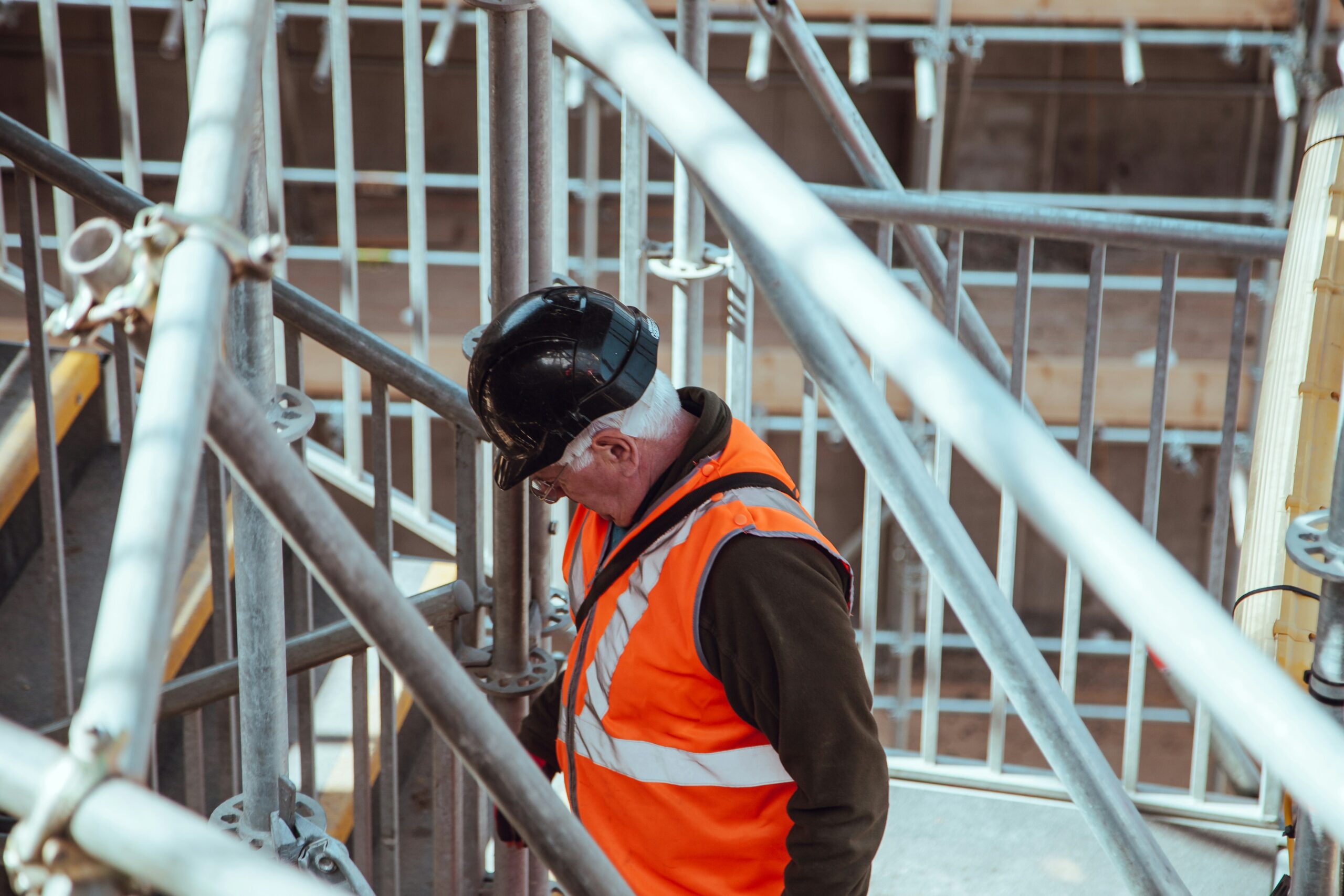
Look for these features on any scaffold near your home:
- Guardrails and toe boards along every working platform.
- Full boarding with no gaps or loose ends overhanging the edge.
- Brick guards or netting where materials are stored on top. A brick guard is a mesh panel that stops loose items falling.
- A clear, lit route for pedestrians past the base.
- A board showing the scaffold firm’s name and a contact number.
A scaffold over a pavement also needs permission from the highway authority. In Warrington, that is the borough council. If a structure blocks the footway with no protected walkway, report it.
Inspection tags are common but are not a legal requirement on their own. The law requires a written inspection by a competent person before first use. Platforms where someone could fall 2 metres or more need a fresh inspection at least every 7 days.
Are You Hiring a Scaffolder for Your Home or Shop?
Many local firms and homeowners will commission a scaffold at some point. Gutter repairs, chimney work and shop signage all need safe access. Choosing the right contractor matters more than choosing the cheapest quote.
The NASC publishes guidance on appointing a scaffolding contractor that is worth reading first. Then put these questions to every firm you consider:
- Will a competent person design the scaffold, including any sheeting?
- Do your erectors hold valid scaffolding cards for this type of work?
- Who will inspect it, and how often will you send the reports?
- Have you applied for a highway licence if it covers the pavement?
- What public liability insurance do you hold?
The Construction Industry Scaffolders Record Scheme lets you check the main CISRS card types a scaffolder may carry. A card shows training, but it does not prove competence for every task. A good firm will explain both without hesitation.
Which Small-Firm Staff Need Working at Height Training?
Plenty of local tradespeople use a scaffold without ever building one. Painters, window cleaners, signwriters and electricians often work from platforms put up by others. The new homes planned for the 4,200-home South East Warrington development will bring many more of these jobs.
Those workers still need suitable training before they climb. Employers should make sure their staff can:
- Recognise an incomplete or altered scaffold and refuse to use it.
- Report missing guardrails or boards rather than fixing them themselves.
- Keep platforms clear of tools, offcuts and waste.
- Stop work when wind or ice makes the platform unsafe.
General working at height awareness training covers these points well. It does not qualify anyone to erect or alter a scaffold. That job belongs to trained scaffolders under competent supervision.
Keeping Warrington’s Building Boom Safe at Street Level
New homes and refurbished shopfronts are good news for the town. The scaffolds that make them possible are safe when they are designed, inspected and used properly. Residents who know what to look for, and firms that train their staff, keep it that way.
Frequently Asked Questions
Who Is Responsible for a Scaffold Outside My House?
The scaffolding contractor is responsible for erecting and inspecting it. The firm that hired it must make sure it suits the job. As a homeowner, you should choose a competent contractor and raise any concerns quickly.
Does a Scaffold On a Pavement Need a Licence?
Yes. Scaffolding on a public footway needs a licence from the local highway authority. In Warrington, that is the borough council.
What Inspection Schedule Applies to a Street Scaffold?
A competent person must inspect it before first use. Platforms with a fall risk of 2 metres or more need inspecting at least every 7 days. Inspection is also needed after storms or alterations.
Can My Staff Use a Scaffold Without Formal Training?
Staff should receive suitable working at height training before they work from any scaffold. They must not alter it. Only trained scaffolders should change or dismantle the structure.