Spotlight on Local History with James Balme
Stockton Heath today is a vibrant and historic village with origins stretching right back to Roman times.
For it was the Romans who built important routes such as Wilderspool causeway and the well-known Roman industrial area much of which lies beneath the old Greenall’s site. I myself was involved in the excavations that took place at Stockton Heath Primary school in 2007 where we uncovered evidence of Roman buildings and found cremation urns and an ancient Roman well. The well is still visible today and is built into the school extension as a feature. There was also an Anglo-Saxon settlement here and during the 17th century English civil war encampments for the soldiers also existed.
Stockton Heath grew rapidly during the 19th century from a small rural village into a much busier industrialized village given its proximity to the Bridgewater canal.
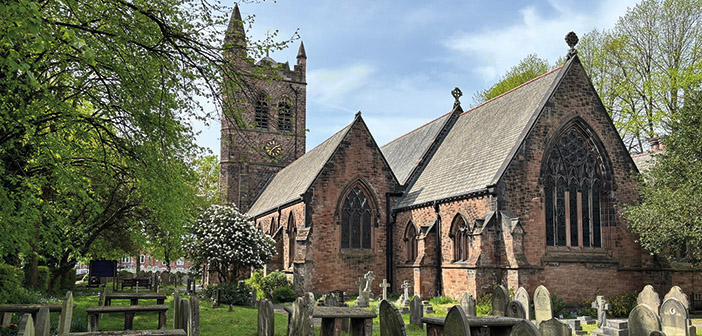
In 1826 a local church was built, but it wasn’t long before a newer church was to be constructed and dedicated to St. Thomas. The Church is a Grade II listed building completed in 1868. It is built of sandstone to the design of architects Paley and Austin and is of traditional Victorian Gothic Revival style. Although it is a relatively large church, seating over 300 people, it has an intimacy and warmth which is felt as soon as you enter. The high roof and imposing chancel and east end inspire a sense of awe, while the fine detail of screens, woodwork, tiling and stained glass demonstrates the craftsmanship and care invested over generations. The church is significant as a landmark parish church in the Stockton Heath Conservation Area.
St Thomas’ Church is included on Historic England’s Heritage at Risk Register. This entry is significant because it confirms that, while St Thomas remains an active and valued place of worship and community building, its historic fabric is vulnerable and requires planned intervention. The church’s Gothic Revival architecture and tower contribute strongly to this village character and to the legibility of London Road as a historic route through the settlement. The church sits within this sensitive townscape and contributes to the experience of Stockton Heath as a historic and socially active village centre. The churchyard provides a tranquil centre to a busy village and an appropriate setting for the church. It is also a place of memory, family history and local identity. The Crosfield family graves are located in the churchyard, linking the memorial windows and benefactors inside the church to the memorial landscape outside. The Crosfield family established a soap and chemical manufacturing business in Warrington and in time this became known as Joseph Crosfield and Sons.
In 2016, a ring of ten bells was installed in the tower. Eight bells had been salvaged from the redundant church of St John’s in Bollington and the remaining two were donated by local bell enthusiast Dr Ashley Pugh and his daughters in memory of his wife Hélène Pugh.
The church today is a community focal point in the village, open daily for social interaction, refreshments, prayer and sanctuary. It hosts many school visits and assemblies, the annual Art Exhibition and Festival Praise during Stockton Heath Festival, and the Village Carol Service. If you are visiting Stockton Heath then a visit to see St. Thomas’ church is a must. The church is open Monday to Friday 10am to 12pm.