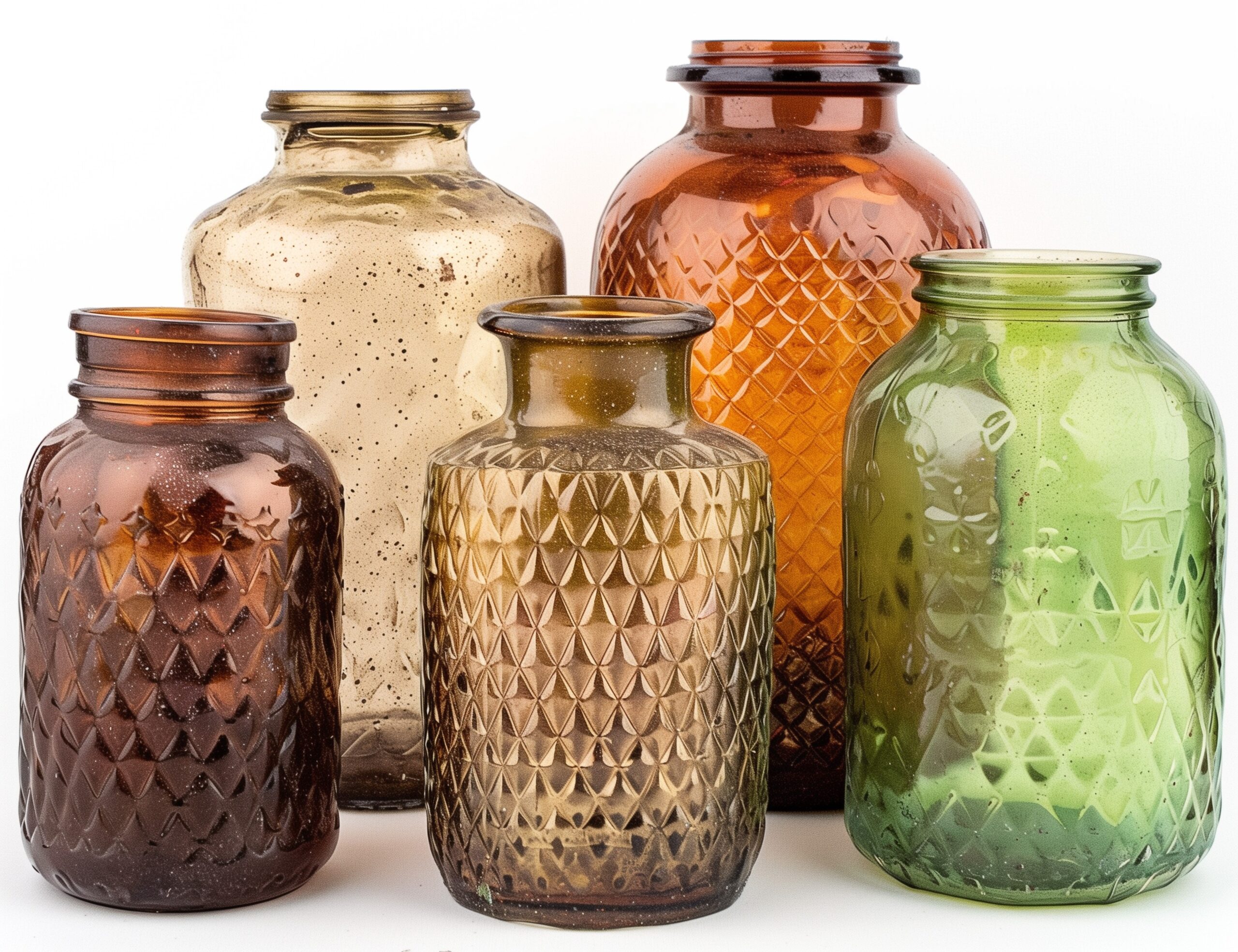
For development teams in cosmetics, nutraceuticals, and specialty food, packaging is part of quality assurance. Ingredients such as essential oils, vitamins, carotenoids, and plant extracts can be sensitive to light, oxygen, and moisture. The wrong packaging can lead to discolouration, off odours, or loss of efficacy, resulting in more complaints, shorter shelf life, and additional stability testing.
Why Apothecary Bottles Remain Popular
Apothecary bottles and matching jars are chosen because they offer a balance between appearance and process reliability. In a B2B context, this is not only about design but about reproducibility in production and the supply chain.
Key benefits:
- Glass is inert and does not migrate, which matters for clean label products and sensitive actives.
- A suitable closure (screw cap, lid, liner, or insert) helps limit oxygen and moisture ingress.
- A consistent shape supports labeling, coding, and traceability (batch, expiry date, lot).
- Different neck openings make it possible to work with powders, capsules, balms, or viscous serums.
For brands scaling from pilot to full production, standardising jars and bottles is often a practical long-tail choice: the same packaging across multiple SKUs, with variation in volume and closure.
What to Consider During Selection and Validation
Selecting an apothecary bottle can be approached the same way as material selection in a lab: define the risks, test, and document.
- Product risk: light sensitive, oxidation sensitive, or hygroscopic.
- Headspace: minimize free space to limit oxidation.
- Closure and liner: check compatibility with oily formulas and volatile components.
- Handling: does the opening fit your filling process, dosing solution, and cleaning routine.
- Transport: test for leakage, breakage, and temperature cycling.
This approach helps prevent reformulation down the line and supports a stable shelf life.
Applications from Cosmetics to Supplements
The term apothecary refers to traditional pharmacies, but the applications are broad.
- Skincare and cosmetics: creams, balms, serums, and powders where color and scent need to stay stable.
- Supplements: capsules, tablets, and blends that can be sensitive to moisture and light.
- Specialty food: herbs, tea, and superfood blends where aroma and freshness are crucial.
Teams comparing variants and formats can browse the range of apothecary bottles. This is useful for teams looking for a premium glass jar or bottle that fits their fill volume, closure type, and brand positioning.
Beyond classic jars and bottles, demand is growing for alternatives such as travel sizes, modular sets, and refill concepts. For these use cases, it is also worth exploring alternative glass packaging.
Biophotonic Glass as an Extra Layer of Protection
Miron Glass supplies biophotonic glass packaging for natural products. The premise is that the glass filters light influences more selectively, so sensitive contents can stay better protected. For R&D and QA teams, this can be relevant for formulas containing botanicals or active substances that degrade quickly.
By factoring packaging into your development plan early, you make the step from lab to market more predictable and reduce the risk of quality loss across the chain.