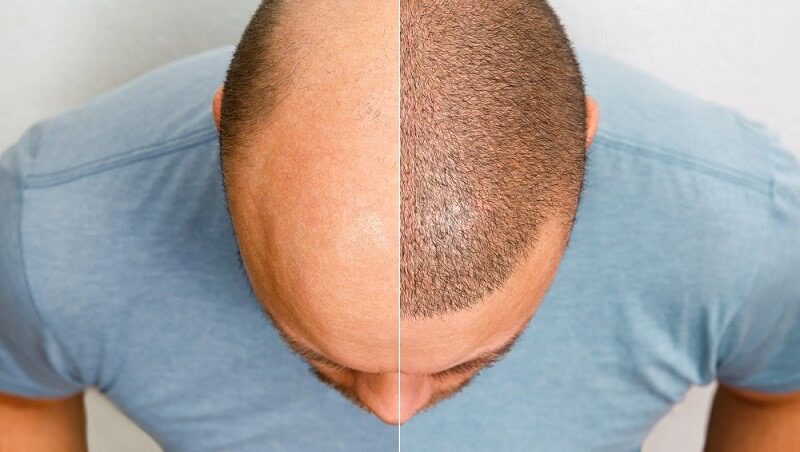
Five years ago, your options for thinning hair or patchy loss were pretty limited. You had minoxidil, finasteride, and traditional transplant surgery. They all worked to some degree, but nothing about them screamed cutting-edge. That’s changed quickly.
Several treatments that weren’t available in any mainstream form back in 2021 are now on offer in clinics across the UK and beyond. Some go after hair loss at the immune system level, others use artificial intelligence to map out transplant surgery right down to the individual graft.
Next-Generation PRP Therapy
You’ve probably heard of PRP (platelet-rich plasma) therapy before. It’s been around for a while and the basic idea is simple enough: a clinician draws your blood, spins it to concentrate the platelets and their growth factors, then injects it back into your scalp to get follicles working again.
What’s different now is how the treatment gets prepared and what goes into it. Modern PRP systems let clinicians customise the concentration of growth factors with much more precision than older methods allowed. Some newer protocols add peptides and vitamins to the injection to boost the effect on dormant follicles, and research is exploring the potential of micro-RNAs, though that’s still in early stages.
There’s also growing interest in something called secretome therapy, which uses the regenerative signals released by stem cells instead of the platelets themselves. It’s sometimes described as the next step beyond PRP, and the early clinical results have been promising.
The NHS lists several treatment options for hair loss depending on the cause, but PRP in its newer forms is still a private treatment in the UK. For people with early-stage thinning who don’t want to jump straight to medication or surgery, this updated version of PRP offers a middle ground that didn’t exist in its current form a few years ago.
JAK Inhibitors for Alopecia Areata
For people with alopecia areata, where the immune system attacks the hair follicles and causes patchy or total hair loss, the last five years have brought a real breakthrough. In 2022, baricitinib became the first oral drug ever approved by the FDA specifically for severe alopecia areata. Since then, two more JAK inhibitors, ritlecitinib and deuruxolitinib, have also received approval.
JAK inhibitors work by blocking specific enzymes in the immune system that drive the attack on hair follicles. Before these drugs came along, treatment options for severe alopecia areata were limited to corticosteroid injections, topical immunotherapy, or immunosuppressants that carried serious side effects. The British Association of Dermatologists now includes JAK inhibitors in its clinical guidelines for managing the condition, and trials have shown that around 35% of patients taking baricitinib achieved substantial hair regrowth after 36 weeks. Longer-term data suggests that figure climbs with continued treatment.
These aren’t miracle pills. They need to be taken on an ongoing basis, and stopping can lead to relapse. But for the thousands of people in the UK living with severe alopecia areata, having a targeted oral treatment is something that simply wasn’t on the table before.
Unshaven Hair Transplant Techniques
Traditional FUE hair transplants required patients to shave their entire head before surgery. For a lot of people, especially those in public-facing roles or anyone who couldn’t take extended time off work, that was a dealbreaker. It made the procedure immediately obvious, and recovery came with a built-in announcement.
Unshaven FUE techniques have existed in some form for over a decade, but until recently they were limited to a handful of specialist clinics and typically restricted to small graft counts. What’s changed is the refinement and availability. Clinics now offer hair restoration with minimal shaving as a routine option, where the donor area is shaved only in a small strip, or in some cases not shaved at all. Most importantly, the surrounding hair stays at its existing length, which means patients can cover the treated areas almost straight away. Some are back at work within days, with no visible signs that they’ve had anything done.
The trade-off is that unshaven procedures tend to be more labour-intensive for the surgeon and can take longer than a standard shaved transplant. They also tend to cost more as a result. But for the growing number of people who want the results of a hair transplant without weeks of obvious recovery, this option has removed one of the biggest barriers to going ahead with treatment.
AI-Assisted Transplant Planning
Hair transplant surgery has always depended on the skill and eye of the surgeon. That hasn’t changed, but the tools surgeons can work with have. AI-powered planning software can now analyse a patient’s scalp in detail, mapping hair density, follicle angle, graft availability, and projected future loss to build a detailed surgical plan before any incision is made.
This matters because one of the biggest risks with hair transplants is poor planning. If a surgeon doesn’t account for how a patient’s hair loss will progress over the next decade, the transplanted hairline can end up looking unnatural as the surrounding hair keeps thinning. AI modelling helps predict those patterns so the surgeon can place grafts in a way that’ll still look right years down the line.
Some robotic systems now incorporate AI to help with the extraction phase too, improving consistency and reducing the risk of graft damage. But it’s the pre-surgical planning side where AI is making the biggest difference right now. The surgeon still makes every final call, but they’re working with a much clearer picture than they had five years ago.
What These Treatments Mean Going Forward
Hair loss treatment used to be a choice between a daily pill, a topical lotion, or a full surgical procedure with visible downtime. That’s no longer the case. The treatments covered here target different types of hair loss in different ways, from immune-driven conditions like alopecia areata to the very real concerns around surgical recovery time.
What’s most encouraging is that none of this is experimental. These treatments are available now, in UK clinics and beyond. And as data continues to build around JAK inhibitors, AI-assisted surgical planning, and newer forms of PRP, the outcomes will only get better. If you’ve been putting off dealing with hair loss because the options didn’t appeal, it’s a good time to take another look.