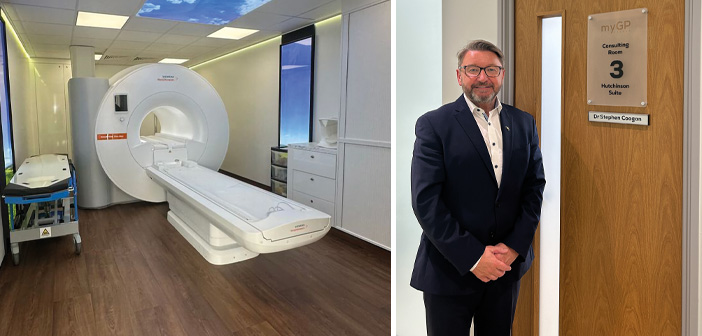
By Dr Stephen Coogan MBChB MRCGP, Founder and CEO, myGP Clinic
In general practice, a scan is rarely the whole answer. It is one part of a careful process: listening to the patient, understanding the symptoms, considering risk and choosing the right investigation.
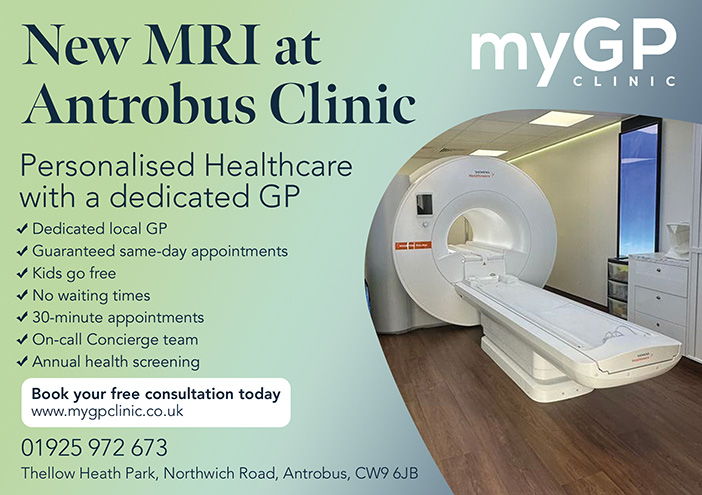
At our Antrobus clinic, we now have a private MRI scanner and ultrasound facilities. These are available to existing myGP Clinic members, but they are also open to people who do not use our GP service.
What we are offering is a scan combined with a one-off “taster” appointment. This gives someone the opportunity to meet a clinician, discuss why they are considering imaging and ensure that the requested investigation is appropriate. There is no requirement to become a member of the clinic.
MRI, or magnetic resonance imaging, uses a strong magnetic field and radio waves to produce detailed pictures of the body. It is useful for examining soft tissues, including the brain and spine, muscles, ligaments, joints and internal organs. It does not use X-rays.
Ultrasound uses high-frequency sound waves and is commonly used to investigate abdominal or pelvic symptoms, lumps and swellings, thyroid problems, muscles and tendons, and blood flow. It does not involve ionising radiation and is quick and well tolerated.
One area where earlier assessment can be particularly valuable is prostate health. Prostate cancer may develop without obvious symptoms, which is why men should understand their individual risk rather than waiting until something feels wrong.
At Antrobus, a prostate cancer assessment can combine a clinical appointment, a PSA blood test and a prostate MRI scan where appropriate. PSA measures a protein produced by the prostate. It is not a perfect cancer test: a raised result can have non-cancerous causes, while some significant cancers do not produce a markedly raised PSA.
MRI can provide detailed images of the prostate and may identify areas that require further specialist assessment. However, neither PSA nor MRI can diagnose or exclude every prostate cancer on its own. The value lies in interpreting the results together, alongside age, symptoms, family history, examination where appropriate and clinical judgement.
This is particularly relevant for men with urinary symptoms, a family history of prostate cancer, Black men, who have a higher underlying risk, or anyone who wants an informed discussion about testing. Screening is not automatically right for every man, and the benefits and limitations should be understood beforehand.Whatever part of the body is being investigated, the best scan is the one that answers a clear clinical question. Results must then be explained and followed up properly.
Anyone interested in private MRI, ultrasound or prostate assessment at our Antrobus clinic can call the onboarding team on 01925 972 673. The service is open to members and non-members, with no obligation to join.