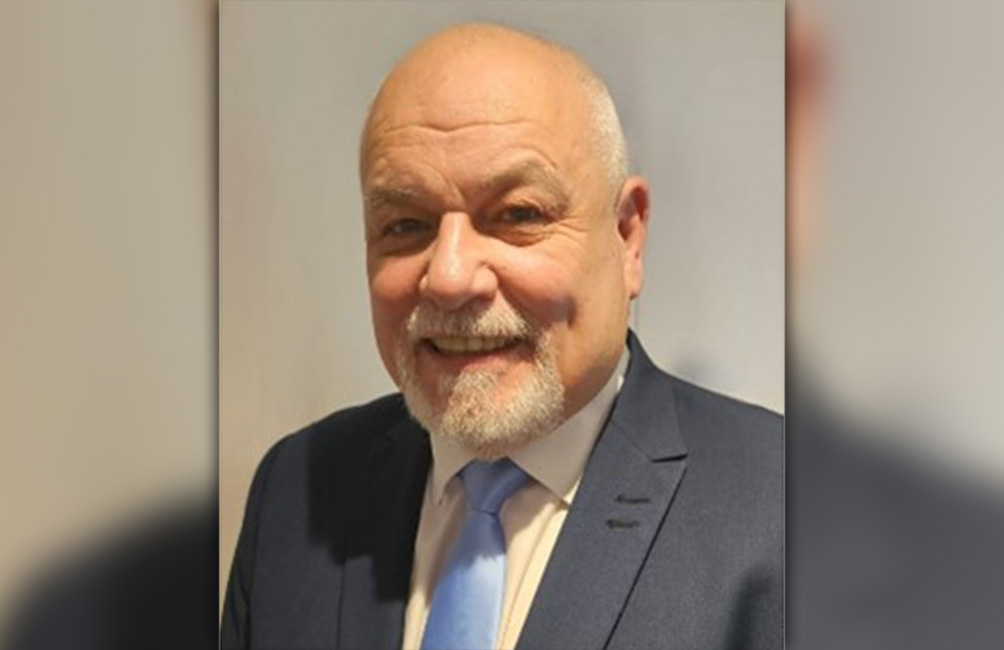
TORY Cllr John Roddy has warned that Warrington Borough Council’s future “savings” programme requires far greater political scrutiny after questioning senior officers about proposals intended to help restore the authority’s finances.
Cllr Roddy welcomed recent Warrington Worldwide reporting which has continued to highlight both the scale of Warrington’s financial problems and the claims being made about the Council’s recovery.
But following a briefing attended with Conservative Group Leader Cllr Rob Tynan and senior Council officers, Cllr Roddy said the questioning left him significantly more concerned about whether some of the proposed future savings were supported by the level of detail and evidence required to make them genuinely deliverable.
“I went into the meeting wanting to understand how individual departments intended to achieve the savings being placed against future years.”
“I appreciated the openness of officers and the opportunity to question them directly.”
“But I was genuinely stunned that relatively straightforward scrutiny exposed so many unanswered questions.”
“These were not forensic or deliberately difficult questions. I asked what technology had been identified, where it was already working, what it would cost, what evidence supported the savings claimed and what impact reducing staff would have on services.”
“In too many instances, the detail simply wasn’t there.”
“The targets have been identified. What I am far less convinced about is whether the substance required to deliver them has.”
AI is not a savings strategy
Cllr Roddy said reliance on artificial intelligence and digital technology featured prominently in proposals supporting future headcount reductions.
“I support AI and technology where there is evidence that it will improve services and productivity.
“But what concerned me was the apparent confidence being placed in future AI savings without comparable detail about the systems, implementation costs, proven productivity benefits or delivery timetable.
“Other councils were referred to as already using similar technology. When I asked which councils, none were identified during the meeting.
“That should concern everybody.
“You cannot responsibly remove people today on the assumption that technology might replace their capacity tomorrow.”
Resident communication with council services
Cllr Roddy also questioned proposals affecting how residents communicate with Council services.
“One simple example concerned telephone contact.
“I asked approximately 15 officers present how many had personally called WBC anonymously, through the same system residents use, to test waiting times and the quality of the service.
“Not one hand went up. I found that astonishing.
“Before deciding a service can operate with fewer people, surely somebody should first establish what the resident actually experiences today.
“We risk designing tomorrow’s savings without properly testing today’s service.”
Cuts have consequences
Cllr Roddy said similar concerns arose around Social Care, community facilities, neighbourhood services, town security, unadopted developments and areas already suffering visible deterioration.
“Many of these teams are already stretched, yet we are considering further reductions while Warrington is expected to grow substantially through future housing development.
“More houses mean more residents and greater pressure on planning, highways, waste, environmental services, housing and Social Care.
“You cannot endlessly reduce capacity while simultaneously increasing demand and simply assume technology will bridge the gap.
“A saving that creates a backlog, damages a community or generates a bigger bill elsewhere is not a saving.
“Before major staffing or service reductions are approved, there should also be clear impact assessments showing the likely consequences for residents, service quality, waiting times, vulnerable groups and any pressures transferred elsewhere within the Council.”
Where has Labour’s scrutiny been?
Cllr Roddy said his greatest concern was the impression created by the responses to Conservative questioning.
“What became increasingly apparent to me was that some of the straightforward questions we were asking appeared not to have been asked before. If that impression is correct, there is a serious question for Labour Cabinet members.
“Have they genuinely scrutinised these proposals, or have they simply accepted assurances that the numbers will work?”
“That question matters because Warrington has been here before.
“The Best Value process identified weaknesses around political oversight and challenge. Those lessons cannot be acknowledged when convenient and forgotten when difficult decisions have to be made. Government Envoys can advise. Officers can recommend. Consultants can provide expertise.
“But Labour Cabinet members are the elected Administration. They cannot outsource political responsibility for the decisions they approve.”
Cllr Roddy said the Conservative Group wanted the Council’s recovery programme to succeed.
“Warrington residents desperately need this recovery to work. This is not about opposing savings simply for political advantage. It is about making sure they are real.
“A number entered against 2027, 2028 or 2029 does not become a saving because it makes the financial plan balance.
“There must be evidence, a delivery plan, measurable milestones, meaningful impact assessments and accountability if it fails.
“Labour Cabinet members should be satisfied not only that the savings add up financially, but that the impact assessments demonstrate they are sustainable and will not simply create greater problems elsewhere.
“Public confidence cannot be built on reassurance alone. After what I heard, Labour Cabinet members should be asking whether they have challenged these proposals hard enough before presenting them as a credible route to recovery.
“Warrington has already paid an enormous price for decisions where optimism and assumptions were not challenged sufficiently.
“We cannot afford to make that mistake twice. Targets are not a recovery plan. Delivery is.”
Following on from Warrington Worldwide’s revelations, the council issued a statement saying: “The council is set to publish a report detailing a further £51.2 million of savings proposals.
“This savings plan is alongside £39 million of savings previously identified by the council in March, taking the council’s current total savings to around £90 million.
“The savings proposals will be discussed at the council’s Scrutiny Committee, before being considered for approval by Cabinet and endorsement by Full Council.
Cabinet member for finance, Cllr Denis Matthews, said: “The council faces a significant financial challenge, with a £179m gap up to 2029/30.
“Our latest savings plan, which will be published in full next week, proposes a further £51.2 million of savings, alongside £39 million of savings previously identified.
“The report sets out a number of proposals to make savings, and also details proposals that will require consultation. Seeking the views of our residents and partners will therefore be an important part of this process.
“The savings plan, which is subject to approval by Cabinet and endorsement by Full Council, is a critical part of ensuring the council’s future sustainability, but we know that we are faced with difficult decisions.
“Nevertheless, we remain ambitious and committed to providing the best possible services, within budget. This means ensuring that we continue to provide a good level of day-to-day services, while ensuring that our most vulnerable residents are still looked after and supported.”