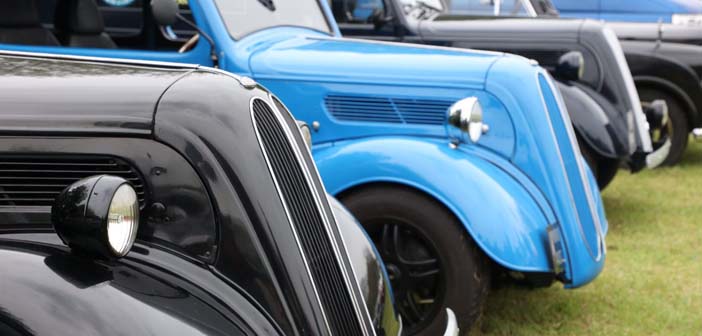
Over the past decade, classic car restoration has moved from a niche hobby enjoyed by a small group of enthusiasts into a thriving cultural movement across the UK.
From suburban garages to specialist workshops in rural areas, more people than ever are investing time, money, and passion into bringing older vehicles back to life. This resurgence is not just about nostalgia; it reflects broader shifts in values, craftsmanship, sustainability, and the way people relate to cars in an increasingly digital age.
A Growing Appreciation for Automotive Heritage
The UK has a long and proud motoring history. From post-war British marques to iconic European sports cars that once dominated winding country roads, classic vehicles represent an era when cars were as much about personality as performance. As modern vehicles become more standardized, software-driven, and sealed away from user intervention, many drivers are rediscovering the appeal of machines that can be understood, repaired, and appreciated on a mechanical level.
Classic cars tell stories. Each dent, modification, or faded badge hints at decades of use, ownership, and social change. Restoration allows owners to preserve those stories while ensuring the car remains roadworthy for future generations. In many cases, restorers aim not for perfection, but for authenticity—keeping period-correct finishes, interiors, and mechanical components wherever possible.
Restoration as a Hands-On Craft
One of the key reasons for the rise in restoration projects is the desire for hands-on craftsmanship. Unlike modern cars, which often require proprietary tools and software to diagnose issues, classic vehicles invite owners to get involved. Mechanical simplicity makes them approachable, even for amateurs willing to learn.
Restoration often starts small: replacing worn hoses, refurbishing interiors, or tackling rust spots. Over time, many enthusiasts build up the confidence to attempt full engine rebuilds or body-off restorations. This process can take years, turning the project into a long-term personal journey rather than a quick upgrade or purchase.
For some, the appeal lies in learning traditional skills such as welding, panel beating, upholstery, or carburetor tuning—skills that are becoming increasingly rare. The satisfaction of seeing tangible progress, bolt by bolt, stands in stark contrast to the abstract nature of much modern work.
Economic and Cultural Shifts Fueling the Trend
Economic factors have also played a role. While some rare classics command high prices, many older vehicles remain relatively affordable entry points into car ownership compared to new models. Rising costs of new cars, combined with longer wait times and complex financing, have encouraged people to look backward instead of forward.
At the same time, classic cars are increasingly seen as assets rather than depreciating commodities. While not every restoration is profitable, the stability of certain classic car values makes the investment feel more justifiable. Even when resale value is not the goal, owners often feel reassured knowing their time and money are not being poured into something disposable.
Culturally, social media and online forums have amplified interest. Restoration builds, once hidden away in private garages, are now shared step by step with global audiences. This visibility has demystified the process and inspired newcomers who might previously have felt excluded.
The Role of Specialist Knowledge and Parts Availability
Restoration would not be possible without access to parts, knowledge, and expertise. In the UK, a robust ecosystem of specialists has grown around classic vehicles, offering everything from reproduction trim to original-spec engine components. The availability of resources for specific marques has been particularly influential in sustaining interest.
For example, owners of classic European sports cars often rely on established supply networks for maintenance and restoration. Searches for niche components, including terms like Porsche parts UK, reflect how localized expertise and supply chains support long-term ownership. Without reliable access to correct parts, many restoration projects would stall before they ever reach the road.
Equally important is the transfer of knowledge. Workshops, clubs, and online communities provide guidance that once would have taken decades to acquire. This shared expertise lowers the barrier to entry and helps preserve standards within the restoration world.
Community, Clubs, and Shared Identity
Classic car restoration is rarely a solitary pursuit. Across the UK, owners’ clubs play a central role in bringing people together. These groups organize meetups, shows, and rallies, offering spaces where restored cars are celebrated not for their price tags, but for the effort behind them.
For many restorers, these communities become social anchors. Conversations about paint codes or suspension geometry often lead to friendships that extend far beyond cars. In a time when many traditional community structures are weakening, classic car culture offers a shared identity built around mutual respect and enthusiasm.
Younger participants are also joining these spaces, challenging the stereotype that classic cars are only for older generations. Apprentices, students, and first-time restorers are increasingly visible, drawn by the authenticity and hands-on nature of the hobby.
Sustainability and the Case for Restoration
Environmental concerns have added another dimension to the restoration movement. While classic cars are not emissions-free, restoring and maintaining an existing vehicle can be seen as a form of reuse rather than consumption. The energy and resources required to manufacture a new car are significant, and extending the life of an existing one aligns with broader sustainability principles.
Many restorers are also incorporating subtle modern upgrades—such as improved braking materials or cleaner-running engines—without compromising the car’s character. This balance between preservation and practicality reflects an evolving mindset within the community.
Looking Ahead: A Living Tradition
The rise of classic car restoration in the UK shows no signs of slowing down. As long as there are people who value craftsmanship, history, and mechanical honesty, older vehicles will continue to be revived rather than forgotten. Restoration is not about rejecting progress, but about choosing what is worth carrying forward.
Each restored car on British roads represents more than a hobby project. It is a statement that time, effort, and care still matter—and that some things are worth fixing, not replacing. In a fast-moving world, classic car restoration offers a slower, more deliberate way to engage with both the past and the present.