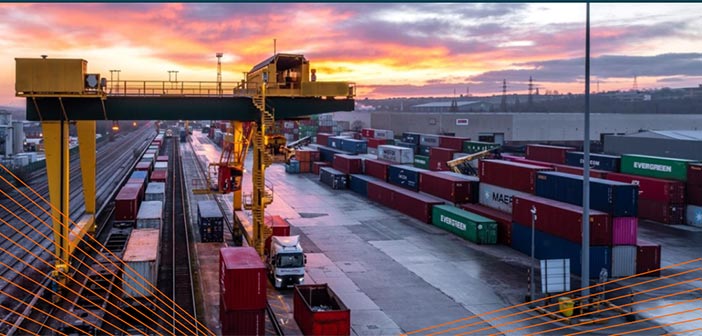
A new twist has emerged in the battle over plans for a huge Intermodal Logistics Park bordering Warrington, after Wigan Council unanimously backed a motion opposing the proposed development insofar as it affects land within Wigan Borough and the communities around Lowton.
The move has been welcomed by Independent Warrington Borough Councillor Stuart Mann, who represents Burtonwood and Winwick and has been closely involved in raising concerns about the potential impact of the scheme on communities around the Warrington boundary.
The proposed Intermodal Logistics Park North (ILPN) would create a major rail freight interchange and logistics development close to the boundaries of Warrington, Wigan and St Helens.
The scale of the proposal means communities including Winwick, Croft, Lowton, Culcheth, Glazebury and surrounding areas could be affected by increased traffic, noise, air quality issues and changes to the countryside.
Wigan Council’s motion highlights concerns over the impact on Lowton and surrounding communities, the loss of protected land and whether there would be sufficient direct benefit to those communities.
It also commits the council to writing to the Prime Minister, the relevant Secretary of State, the Liverpool City Region Mayor and the Mayor of Greater Manchester to formally set out its opposition.
Cllr Mann said the decision was significant because of the cross-boundary nature of the proposals.
“Wigan’s decision doesn’t stop ILPN, but it does change the planning picture,” he said.
“Wigan is now proposing that this Green Belt land isn’t required to meet its employment needs, while Tritax continues to promote nationally significant development involving the wider area. Whether that has any material impact on the eventual national decision remains to be seen.”
Cllr Mann has previously stressed that the potential impact on Warrington cannot simply be viewed in terms of the M6 Junction 22.
The proposed development is expected to generate substantial HGV traffic, with the transport assessment identifying 395 two-way HGV movements during the busiest daytime hour.
Cllr Mann said:“This isn’t simply a Junction 22 issue. The transport route extends to M62 Junction 9 and Newton Road through Winwick.”
He said residents needed to understand how much additional traffic could be expected on those routes and what would happen when other planned developments were taken into account.
That issue is particularly important for Winwick, where Cllr Mann has previously highlighted the need for highway improvements.
He said concerns over traffic had led him and Warrington Borough Council to push for £6 million of ringfenced funding for junction improvement works in Winwick as part of the Parkside Phase 2 scheme.
He added that he would expect further support or funding for roads if any future rail freight scheme was approved, including the possibility of ANPR-managed routes.
Another major concern is the cumulative impact of development across the area.
Housing developments at Peel Hall, proposals for homes around Winwick and Croft, developments around Culcheth and Glazebury and major schemes in neighbouring St Helens are all at different stages.
Cllr Mann said: “Residents don’t experience one planning application at a time. They experience the combined traffic from developments using the same roads and junctions.”
He said updated transport information needed to make clear which developments had been included in the modelling and whether the combined impact could be accommodated by existing infrastructure.
Despite the Wigan Council vote, the ILPN proposal remains alive.
Tritax is promoting the development as a Nationally Significant Infrastructure Project, meaning it will go through the Development Consent Order (DCO) process rather than being determined as an ordinary local planning application.
The application will be examined through the Planning Inspectorate, with the final decision ultimately resting with the relevant Secretary of State.
Tritax has also continued to move forward with the project, recently completing the acquisition of around 40 acres of land as it prepares its DCO application.
Further consultation is expected to focus particularly on highways, noise and air quality, providing an opportunity for councils, residents and community organisations to scrutinise the evidence.
For communities around northern Warrington, the Wigan decision therefore represents an important intervention – but not the end of the road.
As Cllr Mann has previously stressed, the eventual decision will need to take account not only of the proposed development itself but of its potential combined impact on the communities and infrastructure across the wider area.