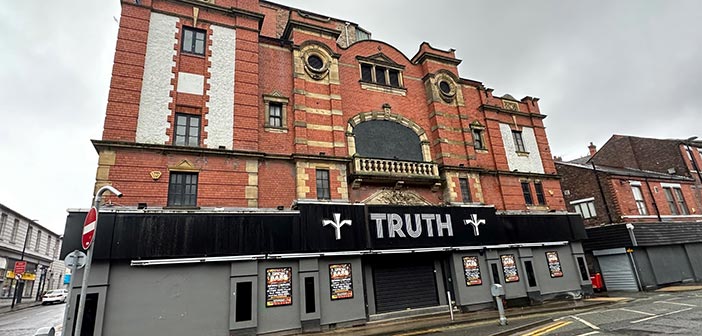
THE owners of the Truth nightclub in Warrington town centre are seeking a judicial review over the council’s decision to refuse a Sexual Entertainment Venue licence to allow activities including lap dancing and striptease.
The nightclub owners have submitted a 21-page pre-action protocol document for a judicial review to Warrington Borough Council, which the council has up to 14 days to respond to.
The application for a Sexual Entertainment Venue (SEV) was to provide lap dancing, pole dancing, striptease and table dancing on the first floor of the premises on Friars Gate, Warrington, from 7 pm to 3 am seven days a week and created a storm of protest including a petition signed by more than 200 people.
The Claimant made an application on 6th February 2024 for a new Sexual Entertainment Venue (“SEV”) licence under Schedule 3 of the Local Government (Miscellaneous Provisions) Act 1982 as amended by Section 27 of the Policing and Crime Act 2009. On 23 April 2024, the Council refused it. The Claimant’s right of appeal lies to the High Court by way of Judicial Review. The Council has failed to give reasons; has failed properly to identify the relevant locality; has failed to apply the Public Sector Equality Duty appropriately and has infringed the Claimant’s human rights.
Listing five grounds including Failure of Reasons.
The Claimant is entitled to have clear reasons, in order to understand the basis of the Council’s decision. The reasons for refusal give rise to different appeal rights in SEV cases. The Council’s Decision Notice ( “DN”) is written in such a way that it is not clear what the reasons for refusal are.
Failure to Identify the Character of the Locality.
The Council rightly identified that the relevant locality was a question of fact to be determined on the particular circumstances of a particular application. The Council identified that the relevant locality means the area surrounding the premises, but carries no connotation of precise boundaries. It was for the Council, therefore, to identify and define the relevant locality surrounding the premises in all the particular circumstances of this case, in order to be able to assess the character of the locality that they had identified, and thereafter, judge that the particular application was inappropriate to the character of that defined locality. This the Council has manifestly failed to do.
They also state irrelevant reasons following the non-appearance of one of the nightclub owners at the hearing and failure to exercise the Customer Public Sector Equality Duty appropriately.
Having gone through PSED issues, and having correctly highlighted the potential impact of their decision as an equality issue for the women who work or wish to work at the SEV, the Committee rejected that issue as irrelevant because they had decided to refuse “in any event”, based on the character of locality. It is clear that the Committee believed that this reason for refusal made any further consideration of the PSED irrelevant. On the contrary, the Committee should have grappled with the impact of their decision on protected characteristics, in the context of denying the opportunity of work to women in a female focussed working environment. The Committee rightly identified the correct issue, and then wrongly ignored it in reaching their decision. The issues were “not the subject of conscientious consideration by it and were instead treated as largely irrelevant to its decision”
The notice concludes that the council has also breached the human rights of the nightclub owners.
Regarding the Breach of Human Rights the officer’s report to committee stated “In making a decision consideration will need to be given to the applicant’s rights under the European Convention on Human Rights. The right to peaceful enjoyment of possessions (Article 1 of the First Protocol) and freedom of expression (Article 10) may be relevant.”
In response solictors acting on behalf of the nightclub stated:”Having had their attention specifically drawn to the applicant’s human rights, the Committee has paid no regard to them in reaching their decision. The DN (Decision Notice) seeks to interfere with the Defendant’s rights and possessions. The Committee seeks thereby to place a restriction or prohibition on the Claimants’ lawful property and their rights over it. This restriction is unlawful and in contravention of Protocol.
They go on to say the refusal of the licence is an interference with the Claimant’s legitimate business and any refusal should be necessary and proportionate to control the use of property in accordance with the general interest. Human rights law supervises the lawfulness, purpose and proportionality of the interference with the licensed business. The question of proportionality requires a determination as to whether there was a reasonable relationship between the means employed and the aim sought to be realised or, in other words, whether a fair balance has been struck between the demands of the general interest and the interest of the individual.
The claim would therefore include a claim that the LPA’s actions are disproportionate, and in breach of human rights, and a claim for damages under the Human Rights Act 1998.
A Warrington Borough Council spokesperson said: “There is a permission stage to a Judicial Review and the council will respond to any application.”
Bid to open lap dancing and striptease venue at town centre nightclub rejected