WARRINGTON’S lost Orford Hall is among 35 lost Cheshire country houses which, collectively, could represent an estimated £31.4 million a year in vanished heritage value, according to new analysis by Family Tree.
The striking claim comes as the family history publication examines what Britain has lost through the demolition, ruination or decline of its historic country houses – and argues that their disappearance was about far more than the loss of grand architecture.
Family Tree estimates that the 35 named Cheshire houses could have generated around £31.4m a year in economic activity today, with approximately £20.9m potentially filtering through to local spending.
The figure is not intended to be a formal valuation of the individual properties. Instead, Family Tree has applied the average economic contribution of today’s independently owned historic houses as an illustrative benchmark.
And among the Cheshire properties on its list is Orford Hall in Warrington, along with other long lost notable local halls, Oughtrington House, Grappenhall Hall and Appleton Hall.
The historic house, which stood in the Orford area of the town, is a reminder of a very different Warrington – when large estates were significant employers and country houses were at the heart of the surrounding communities.
Family Tree says the story of lost country houses should not simply be viewed through the prism of aristocracy and architecture.
Behind every large estate were servants, gardeners, cooks, grooms, stable hands, craftsmen, estate workers, tenant farmers, builders and local suppliers.
The houses generated employment and supported trades while their estates influenced roads, farms, parks, housing and the wider development of surrounding communities.
For family historians, their loss can also leave significant gaps in the historical record.
Country houses can provide important clues about where ancestors worked, where they lived and how ordinary families fitted into the social and economic structure of their communities.
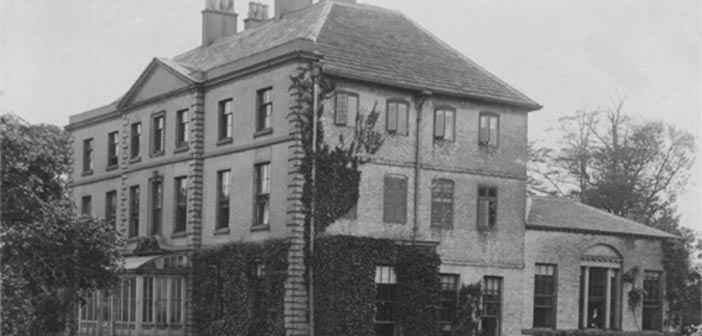
Orford Hall was once one of Warrington’s most prominent country estates, with a history stretching back more than 700 years before the house was finally demolished in 1935.**
The origins of Orford Hall date back to 1232, when the Le Norris family built an early timber-and-thatch hall on the estate.
In 1595, the property was acquired by Thomas Tildesley, who rebuilt the house in the fashionable Jacobean style. Four decades later, in 1638, the estate was purchased by Thomas Blackburne, beginning a long association between Orford Hall and the Blackburne family.
The Blackburnes were wealthy merchants and the estate became particularly famous for its gardens and botanical collections.
One of its most remarkable residents was John Blackburne (1693–1786), who developed an extensive botanical garden at Orford Hall. He installed a heated hothouse in which exotic plants could be cultivated, and the estate became renowned for growing what were reputed to be the first ripe pineapples, coffee and tea in the North of England.
His daughter, Anna Blackburne, became a respected botanist in her own right and developed a particular interest in natural history.
The estate continued to have connections with prominent Warrington families. Lucy Hornby leased Orford Hall during the early 19th century, while in later years it became home to William Beamont, the solicitor, antiquarian and historian who became Warrington’s first mayor.
By the 20th century, however, the fortunes of the estate had declined.
In 1916, Colonel Robert Ireland Blackburne presented Orford Hall and around 18 acres of land to Warrington as a war memorial.
The gift could have secured the future of the historic house, but financial difficulties after the First World War meant that the council was unable to restore and maintain the building.
Eventually, the decision was taken to demolish the hall, and Orford Hall disappeared in 1935.
Although the house itself was lost, its grounds survived and were transformed into the public open space now known as Orford Park.
Today, little remains above ground to reveal the grandeur of the former country estate, but the park preserves an important part of Warrington’s history.
Its demolition in 1935 marked the end of more than seven centuries of history – but the land on which it stood continues to serve the people of Warrington.
Marbury Hall shows what Cheshire lost
Family Tree highlights Marbury Hall near Northwich as one of the clearest examples of what disappeared.
The Marbury estate had earlier houses dating back centuries before the final hall was remodelled during the 19th century.
The property subsequently played another role in Cheshire’s history during the Second World War, including being used as a prisoner-of-war camp.
But the hall was demolished in 1968.
Today, the surrounding grounds form part of Marbury Park – meaning that although the landscape survives, the country house which once dominated the estate has disappeared.
Family Tree Editor Helen Tovey said Marbury Hall demonstrated why lost country houses remained important to family historians and local communities.
“Marbury Hall is exactly the kind of place that shows why lost country houses still matter.
“It was not just a grand home. It was a workplace, a local landmark and part of Cheshire’s story.
“Behind houses like Marbury Hall were servants, gardeners, cooks, tenant workers, estate staff, local suppliers and families whose lives were tied to those places.
“When a house like that disappears, we lose more than architecture. We lose part of the local context that helps people understand where their families worked, lived and belonged.”
She added: “That is why family history is not just names and dates. It is about putting people back into the places, jobs and communities that shaped their lives.”
The analysis forms part of Family Tree’s wider investigation into Britain’s lost country houses.
Country house historian Matthew Beckett currently puts the number of lost country houses across the UK at 3,054, with more than 2,000 recorded losses in England alone.
By comparison, Historic England records that Historic Houses represents around 1,450 independently owned historic houses, castles and gardens across the UK.
In 2022, those properties collectively generated £1.3 billion for the UK economy, supported more than 32,500 full-time equivalent jobs, hosted 26,000 cultural events, provided 4,100 days of filming and spent more than £156m on repairs and maintenance.
Using the £1.3bn figure as a simple benchmark produces an average economic contribution of approximately £897,000 per historic property each year.
Applied to Cheshire’s 35 named lost country houses, that produces the estimated £31.4m annual figure.
Family Tree stresses that it is an illustrative calculation. There is no guarantee that every demolished estate would today have operated as a visitor attraction, hotel, wedding venue, filming location or events space.
But the exercise is intended to demonstrate the potential scale of the economic and cultural value which could have been associated with these properties had they survived.
The 35 Cheshire properties identified by Family Tree are: Aldersey Hall; Appleton Hall; Ashfield Hall; Aston Hall; Barrowmore Hall; Brackenwood House; Calveley Hall; Capenhurst Hall; Christleton Hall; Cuerdon Hall; Darnhall Hall; Dutton Hall; Eaton Hall; Foxley Hall; Grafton Hall; Grappen Hall; Henshall Hall; High Legh Hall; Hooton Hall; Kermincham Hall; Marbury Hall; Marton Hall; Mere New Hall; Mollington Hall; Norton Priory; Orford Hall; Oulton Park; Oughtrington House; Poole Hall; Poynton Hall; Poynton Towers; Somerford Hall; Tytherington House; Wettenhall; and Withington Hall.
For Warrington, the inclusion of Orford Hall provides another reminder of how dramatically the town’s landscape and communities have changed over generations.
What disappeared was not simply another historic building.
It was a network of employment, family connections, local trades and memories built around it.
And for today’s family historians, every demolished hall can represent another missing piece of the jigsaw when trying to understand the lives of previous generations.
Family Tree’s analysis comes ahead of Family Tree Live, a two-day family history event being held at Statfold Country Park near Tamworth on May 22 and 23, 2027, sponsored by Ancestry.
The event will bring together family historians and genealogy enthusiasts to explore the records, stories and places which help bring the past back to life.