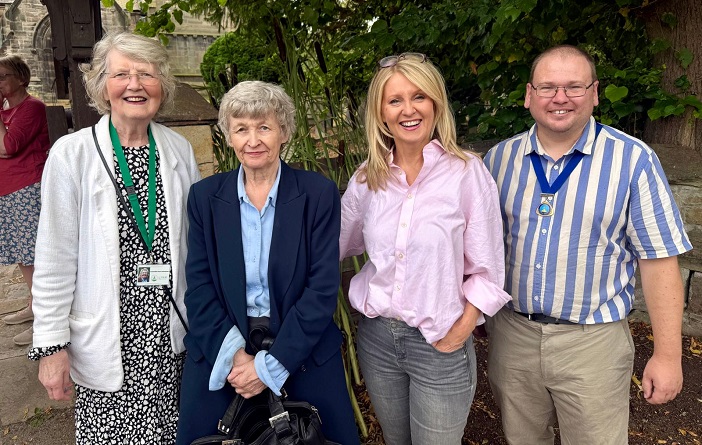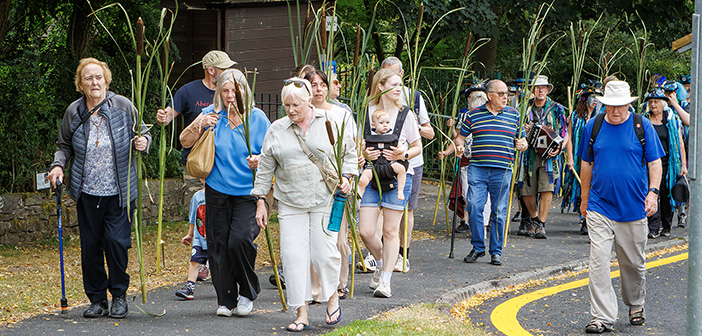
LYMM’S centuries-old Rushbearing tradition was brought vividly back to life on Sunday as villagers gathered for one of the community’s most distinctive annual celebrations.
The Lymm Rushbearing Festival, organised by local resident Chris Limb, saw the traditional procession make its way through the village before the rushes were taken to St Mary’s Church for a special service.
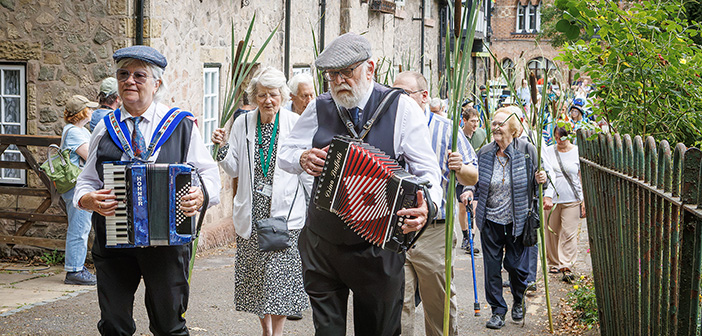
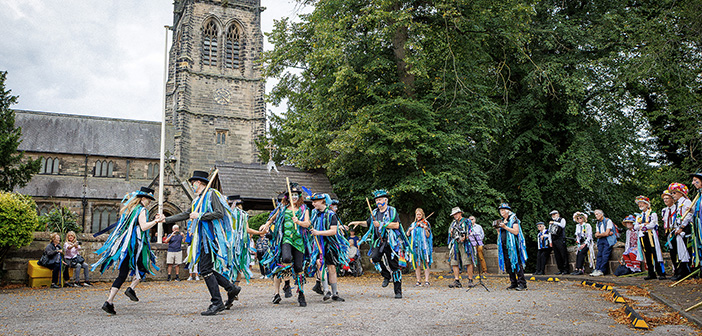
The event once again combined history, community and English folk tradition, with Morris dancers helping to create the colourful atmosphere as participants carried rushes and decorated garlands through Lymm.
For Chris Limb, the organiser who has played a key role in keeping the tradition alive for decades, the event represents an important part of Lymm’s heritage.
The Rushbearing tradition dates back to the days when church floors were made from earth and rushes were used as a natural covering to provide warmth, cleanliness and insulation.
According to the Lymm Heritage Centre, the tradition was widespread across Britain during the Middle Ages and was well established by the time of Shakespeare.
In Lymm, the custom became a major annual celebration. Historical records show the Rushbearing ceremony taking place in the village as early as 1817, with Morris dancers accompanying the cart carrying rushes to the church.
At its height, Rushbearing was far more than simply the practical task of replacing the church floor covering.
The celebrations could extend over several days and included dancing, music, sports, fairground attractions and plenty of activity around the village’s public houses.
A surviving 1858 Rushbearing poster held by the Lymm Heritage Centre provides evidence of just how large the event once was – with celebrations lasting four days.
But like many traditional customs, Rushbearing eventually went into decline.
By the 1890s there were concerns about rowdy behaviour and drunkenness and restrictions were placed on activities in the village centre. The tradition subsequently disappeared for much of the 20th century.
It was revived in Lymm in the 1970s, with Chris Limb taking responsibility for maintaining the event from 1976 onwards. The modern celebration is a much more sedate affair than its Victorian predecessor, but retains the essential ingredients of the historic ceremony.
The revival has also helped preserve the link between Rushbearing and Morris dancing, with Thelwall Morris traditionally playing a prominent role in the event.
Historical research records that early Lymm and Oughtrington Morris dancers took part in Rushbearing processions, while the old Lymm dance itself has also been revived and performed at Rushbearing and other village celebrations.
Today’s Rushbearing may look very different from the huge Victorian festival, but its purpose is arguably just as important – keeping alive a piece of Lymm’s identity and passing it on to another generation.
Sunday’s gathering once again demonstrated that, despite all the changes to village life over the past two centuries, some traditions still have the power to bring a community together.
And thanks to the dedication of Chris Limb and those who continue to take part, the rushes are still being carried – and Lymm’s history continues to live on.
Picture John Hopkins