PEOPLE across Cheshire and Warrington are being warned to be on their guard if they find ants indoors in significant numbers.
Identifying them is vital to ensure an effective solution to the problem, say experts at British Pest Control Association (BPCA).
While most ants in the UK are native species that are regularly seen in gardens and outdoor spaces, some tropical species can sometimes be found in large centrally heated buildings such as blocks of flats, student halls and hospitals.
Correct identification is key, as species such as the Pharaoh’s Ant and Ghost Ant should only be dealt with by BPCA members.
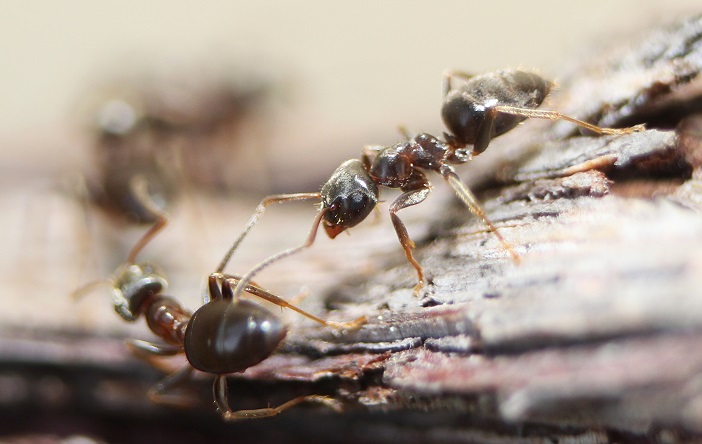
Niall Gallagher, technical manager at BPCA said: “The Black Garden Ant is the most common species found in the UK and if they remain outdoors, they can usually be safely left alone.
“It may be alarming when they take wing to mate for a short period of time in July or August – known as flying ant season – but otherwise, if they are not causing a nuisance, they can be ignored.
“However, they are highly organised social insects that are attracted to sweet foodstuffs and may invade buildings in search of food, so if Black Garden Ants are seen indoors, we recommend taking swift action.
“If ants are spotted in large centrally heated buildings in urban areas, it is advisable to seek help from a BPCA member, particularly if there is doubt over the species.”
Pharaoh’s Ants are a small yellow or light brown tropical species that can be a serious public health pest, especially in hospitals. They are attracted to protein rather than sweet food, may gnaw holes in silk, rayon or rubber goods and will often nest in hard-to-reach places within the structure of a building.
They are particularly difficult to control as they can split the colony and spread over a large area.
Ghost Ants are very small with a dark head and translucent legs and abdomen which can make them seem even smaller. They will also split the colony across a large area, making them difficult to control and are believed to carry bacteria such as Salmonella.
Mr Gallagher added: “Their tendency to nest in wall voids, under floors or in furniture, combined with the ability to split the colony means tropical ant species can rapidly become an invasive presence.
“Insecticidal sprays and dusts are generally found to be ineffective as they will cause the ants to scatter and the colonies to split, which is why we recommend seeking advice from a BPCA member who will have the knowledge and tools to tackle the issue.
“If householders are seeing Black Garden Ants in large numbers indoors, then over-the-counter products designed for ant control are a suitable option as long as they are used strictly in accordance with the instructions on the label.
“However, if ants of any species are coming into the home in very large numbers, a BPCA member will be best placed to ensure the problem is dealt with safely, swiftly and in accordance with the law.”
Pest problems can be more common than many people realise.
The independent No Small Matter report, commissioned by BPCA found that pest management firms are estimated to have attended more than 4.4 million client jobs in 2025 – more than 12,000 every day, across homes, high streets, hospitals, schools, warehouses, farms and transport hubs in every region of the United Kingdom.
BPCA members are experienced professionals with access to a range of specialist products not available to the public.
They are trained, qualified and regularly assessed to the British Standard in Pest Management BS EN 16636. BPCA members are also endorsed by the Government via the TrustMark quality scheme.
To find a BPCA member, visit: bpca.org.uk/find.