PLANS for a new synthetic rugby pitch and changing facilities at Victoria Park, Warrington, have been approved – despite warnings about flooding, drainage and the impact of surrounding development.
Warrington Borough Council’s development control committee voted eight in favour with two abstentions to approve the application last Thursday evening.
But former Warrington mayor and former Poulton North councillor Geoff Settle told the committee he had serious concerns about the site and the cumulative impact of development in the area.
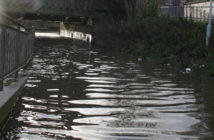
He warned of what he described as the “major flooding potential” created by flood defence walls, the River Mersey, a high water table and surface water run-off.
Mr Settle drew on more than 30 years of personal experience of Victoria Park to illustrate his concerns.
In 1988 he was race director of the Victoria Park 10km Chris Vose Road Race, which attracted around 1,000 runners and had been recognised among the Top 100 running events in the country.
But just one week before the Easter race, the running track and finish area were submerged following flooding.
He said it was “touch and go” whether the event could go ahead.
Fortunately, the water receded, the sun came out and the race was able to take place.
More than three decades later, Mr Settle says flooding remains a familiar sight at the park.
He is now a long-serving marshal at the weekly Parkrun, having marshalled more than 250 events and run in around 50.
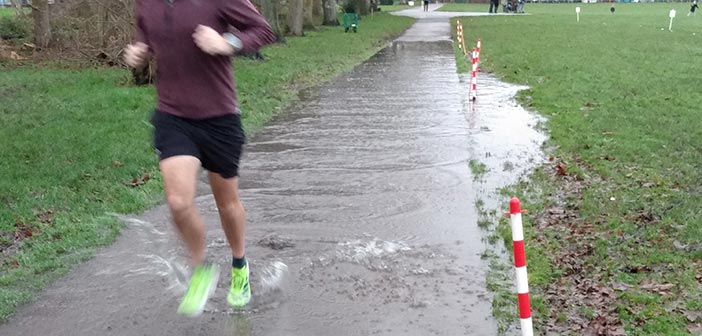
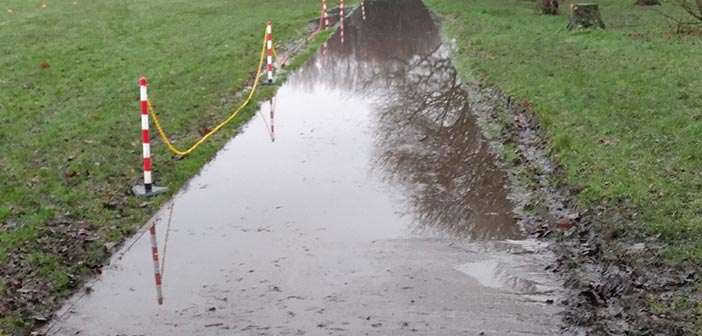
Part of the Parkrun course passes the football and rugby pitches, where he says surface water run-off can create significant areas of standing water.
Participants have even given one particularly troublesome section a nickname: “Lake Victoria.”
Mr Settle said runners can find themselves wading through ankle-deep water following run-off from the playing fields.
During the winter, he says, the water can freeze and potentially result in the Parkrun being cancelled.
Mr Settle also raised concerns about the number of developments currently on going and those in the pipeline in and around Poulton North. One of these is the Old University Campus for 400 new homes of which the Victoria Park is tied to. If approved the planning committee will have sanctioned the new build of around 1700 new homes.
He said: “Poulton North residents are very angry about what has gone on. I have spoken against all four applications. I’ve had to watch the destruction of Houghton Green Village life and the extinction of nature at Peel Hall.
Residents, he said, felt as though they had been living alongside a building site for the past five years, with development expected to continue for many years to come.
He also questioned the loss of sporting facilities at the Old University Campus and whether sufficient consideration had been given to the needs of local sporting clubs.
He highlighted potential requirements for local football, Bennet’s Recreation playground and Padgate Tennis Club, claiming the latter’s courts were in such poor condition that tennis could not currently be played.
He said the alternative facilities offered by applicants were located “miles away”.
Mr Settle also questioned why there had been relatively little public or political response to the planning application.
As a former planning committee member and borough councillor for Poulton North, he said he was surprised by the lack of response from councillors and residents.
He suggested the way the application had been separated from the original wider development proposal and advertised may have contributed to the lack of awareness.
He told the committee: “Only the planning geeks like me will trawl the notices.”He said he had only discovered the latest application by chance the previous Friday, leaving him little time to prepare his objections.

Geoff Settle
Sport England concerns
Despite the committee vote, the application is not necessarily the end of the planning story.
Mr Settle told the committee that the application still has to go to the Secretary of State, following concerns raised by Sport England about the proposed artificial pitch.
That could mean further scrutiny before the development can finally proceed.
Mr Settle is not impressed with the proposals for Victoria Park. He said: “The defence walls are designed to keep the flood waters in the park like a bowl. The rugby stadium was constructed on concrete stilts, allowing the main part of the building to sit safely above the flood waters.”
But his argument is that the wider drainage and run-off issues affecting Victoria Park cannot simply be ignored.
For someone who has spent decades watching the park’s changing conditions – from organising a 1,000-runner race in 1988 to helping stage the weekly Parkrun today – he says the warning signs are already visible.
And his central concern is whether the impact of further development has been properly considered.
The planning committee has now given the rugby pitch and changing facilities the green light. But with flooding concerns, wider development pressures and Sport England’s objections still in the picture, the Victoria Park debate may be far from over.
Lake Victoria