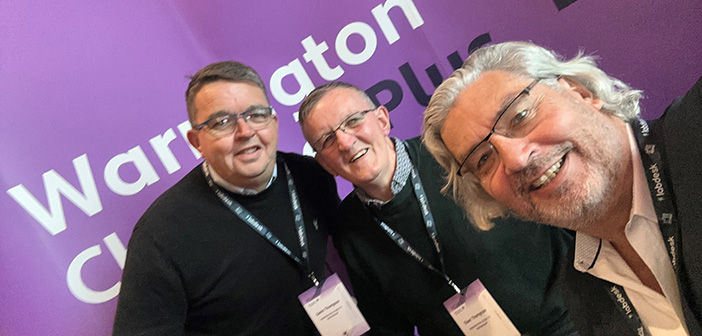
WARRINGTON Disability Partnership is proving that sustainability is about far more than saving energy – it can also mean recycling equipment, recycling opportunities and ultimately changing lives.
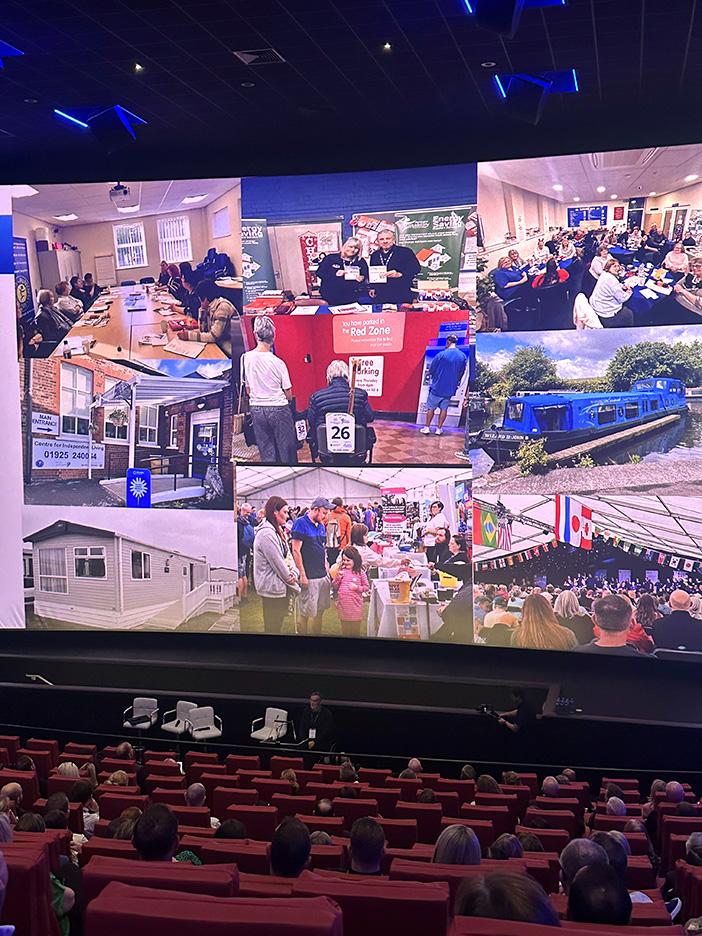
That was the powerful message delivered by Dave Thompson MBE, chief executive of Warrington Disability Partnership, when he addressed delegates at the 7th annual Warrington Business Conference.
Dave explained how the organisation had evolved from its beginnings into a charity delivering almost 30 different services, supported by around 50 paid staff – the majority of whom are disabled people.
“We employ people because they can do the job,” he told the conference, rather than simply because they are disabled.
He said the organisation had developed a reputation for “recycling lives” by identifying people’s abilities and finding ways of putting those abilities to good use.
But behind the services is an increasingly important challenge – making the charity financially and environmentally sustainable.
Spotting the problem 15 years ago
Dave said WDP began looking seriously at sustainability around 15 years ago when it recognised that traditional sources of funding from health and social care were beginning to disappear.
The charity responded by establishing the Disability Trading Company, creating an ethical, values-based trading arm with profits returned to the charity.
It was also designed to challenge what Dave described as some of the questionable practices disabled people could encounter when buying mobility equipment.
He recalled how someone looking for something as simple as a walking stick or walking aid could potentially end up being encouraged to buy much more expensive equipment they did not necessarily need.
WDP wanted to provide an alternative based on value, affordability and ethical trading.
Turning unwanted equipment into a global lifeline
One of the most successful spin-offs has been the charity’s Phoenix Project, which tackles the huge amount of mobility equipment that would otherwise end up discarded.
Dave told delegates how the charity began seeing piles of Zimmer frames, walking aids, beds, hoists and other equipment outside stores across the region.
In some cases, equipment was virtually brand new.
But recycling it was not simply a matter of loading it into a van.
WDP had to meet strict requirements around licensing, collection and decontamination before equipment could be safely reused.
With help from Warrington Borough Council, the charity established a dedicated facility and began putting unwanted equipment back into circulation.
At one point, Dave said, the organisation had around 1,100 Zimmer frames.
The obvious question was: what do you do with 1,100 Zimmer frames?
The answer was to find partners around the world who could put them to use.
WDP has since helped people in countries including Thailand, Pakistan, Sudan, Egypt, Syria, Turkey and Ukraine.
More than 24 forty-foot containers of equipment have been distributed through the project.
What could have become waste has instead become life-changing equipment for disabled people thousands of miles away.
Affordable mobility
Dave said WDP’s approach also challenged the traditional mobility-equipment market in the UK.
Through its recycling programme, scooters which might otherwise cost hundreds or thousands of pounds could be made available for around £200, while powered wheelchairs could be offered for around £300.
The charity’s philosophy, he said, was not about maximising profit – it was about making equipment affordable and keeping it in use.
That approach has also been extended through the organisation’s mobility workshops and servicing operations.
Sustainability starts at home
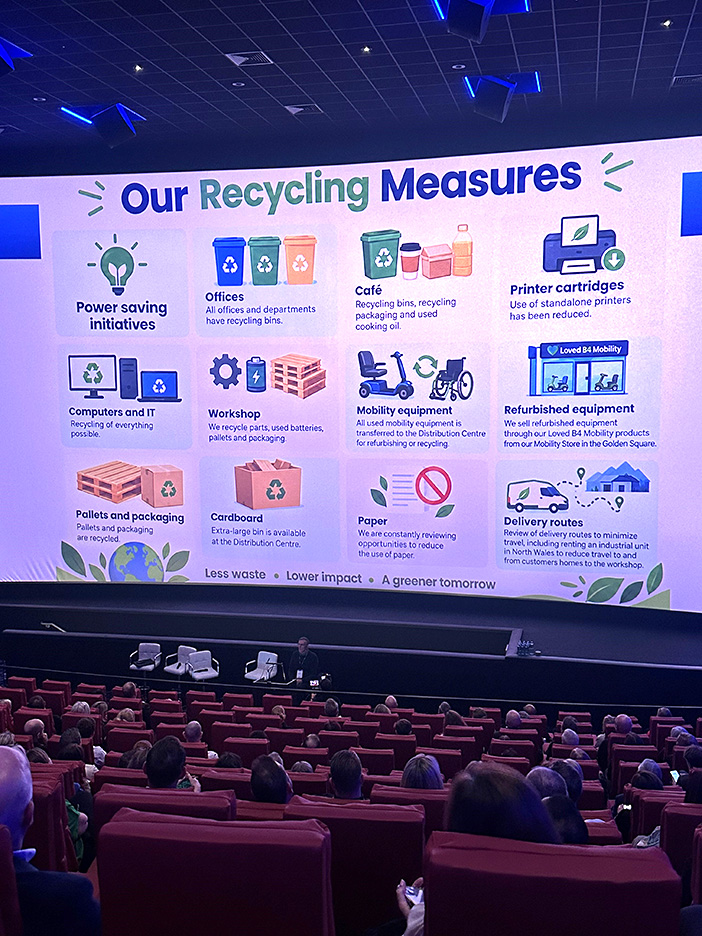
The charity has also been tackling its own environmental footprint.
Measures include:
• reducing energy consumption;
• switching off computers and electrical equipment;
• recycling paper and office materials;
• recycling IT equipment;
• using refurbished computers;
• recycling batteries;
• recycling cooking oil and food waste;
• reviewing vehicle journeys and delivery routes;
• reducing duplication between its six vans;
• introducing electric vehicles for shorter journeys;
• installing energy-efficient equipment; and
• replacing older heating systems with lower-emission alternatives.
But perhaps the biggest change has come from the roof.
WDP has installed 90 solar panels at its Centre for Independent Living site.
Dave described the installation as a major game changer, with the organisation already seeing reductions in its energy bills.
The next stage is to investigate battery storage, allowing more of the electricity generated during sunny periods to be retained and used rather than potentially being wasted.
The charity is also examining the introduction of heat pumps to replace older heating systems.
£10,000 energy saving target
The combined measures are expected to deliver significant financial benefits as well as environmental ones.
Dave said WDP expects to save at least £10,000 a year in energy costs once the first four-year period of its sustainability programme has been completed.
The environmental impact is already measurable.
He told the conference that the charity’s sustainability initiatives had resulted in approximately:
24,666kg of CO2 emissions reduced
24,740 trees preserved
3,043 litres of oil saved
For a charity of WDP’s size, Dave said, those figures demonstrate what can be achieved when relatively small organisations take sustainability seriously.
Funding challenge
But environmental sustainability is only one part of the equation.
WDP is also having to rethink how it funds its work.
Dave revealed that in 2023, contracts accounted for around 49% of the charity’s income.
By 2026, that figure had fallen to around 31%.
With pressure on council and NHS budgets, he warned that the proportion could fall further next year.
That means WDP cannot simply rely on traditional contracts to sustain its services.
Instead, it is increasingly dependent on partnerships, trading activities, fundraising and donations.
Dave stressed that even apparently modest contributions can make a huge difference.
A £500 fundraising contribution, he said, might sound small to some people – but hundreds of £500 donations collectively help WDP provide services such as its lunch clubs for disabled people.
For some people attending those clubs, the meal provided may be the only hot meal they receive that week.
Business partnerships make a difference
Dave also highlighted the importance of the business community.
He pointed to the support WDP receives from organisations and individuals across Warrington and beyond – including help from the Chamber of Commerce.
The charity has even travelled to Germany to identify new products which could benefit disabled people and is continuing to investigate opportunities to bring innovative products into the UK.
He said sustainability was about constantly looking ahead, finding new partners and being prepared to try new ideas.
“We can’t just keep going out with the bucket”
His message to businesses in the room was particularly direct.
Charities cannot simply continue relying on traditional fundraising and asking people for money.
They need to operate sustainably, reduce expenditure where possible and find new ways of generating income without compromising the quality of services they provide.
Dave said WDP’s experience demonstrated that sustainability required organisations to:
plan ahead, constantly review their options, find new partners and remain open to new ideas.
And he challenged businesses to think of charities not simply as organisations asking for donations, but as potential partners with shared values.
A model born in Warrington
Dave also reflected on how partnership working has helped turn ideas born in Warrington into initiatives with a much wider impact.
He recalled working with Nick Litherland in the early 1990s to develop what became the Warrington Disability Awareness Day.
What began as a one-day event in Warrington has grown into a major annual gathering attracting around 20,000 people from across the UK, while the model has subsequently been adopted internationally.
For Dave, it demonstrates what can happen when councils, the NHS, charities, businesses and individuals work together.
His message to the Warrington business community was simple:
Sustainability is not just about surviving. It is about finding better ways of working, reducing waste, protecting resources, creating opportunities and making sure services continue to change people’s lives.
And, perhaps most importantly, he urged businesses to look beyond the traditional idea of corporate charity.
“Treat a charity like a small business,” was one of his key messages – while remembering the values that brought the organisation into existence in the first place.