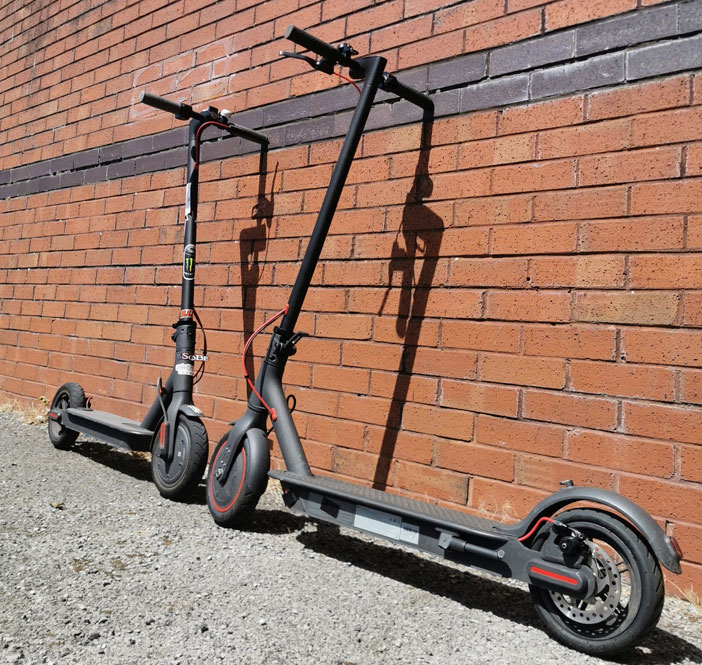
Warrington sits in an unusual sweet spot for local travel. It’s compact enough that most everyday destinations, the town centre, Bridge Street, Golden Square, the train stations, or a nearby park are within a short ride of most residential areas, yet spread out enough that walking everywhere isn’t always practical.
For a lot of people, that gap gets filled by the car, even for trips of a mile or two. With fuel costs, congestion charges in some zones, and the constant hassle of town-centre parking, it’s worth looking at what else is actually available for short local journeys.
This article runs through the realistic, electric scooters under 300 UK budget-friendly options for getting around Warrington without relying on a car for every trip, including some that have become much cheaper and more accessible in recent years.
Why Short Trips Are Where the Real Savings Are
Most car journeys people make in Warrington are genuinely short. Runs to the shops, the school gate, a friend’s house, or the station rarely stretch past two or three miles, but they’re exactly the trips where running a car costs the most relative to the distance covered — cold engine starts, town-centre parking fees, and time lost in traffic near the Golden Square area during peak hours. Swapping just these short trips for a cheaper mode of transport is where most of the savings and time benefits actually show up, without needing to give up the car altogether.
Walking and Public Transport: The Baseline Options
Walking remains the cheapest option for anything under a mile, and Warrington’s town centre is reasonably walkable once you’re in it. For anything further, the local bus network covers most residential areas reasonably well, and Warrington Bank Quay and Warrington Central stations make short rail hops to nearby towns straightforward. The drawback is flexibility — buses run to a timetable, and walking simply isn’t realistic for a three or four-mile round trip carrying shopping.
Bicycles: Low Cost, But Not for Everyone
A standard bicycle is still one of the cheapest ways to cover a couple of miles quickly, and Warrington has been steadily improving its cycle lane network in recent years. The catch is that cycling asks more of the rider physically, and turning up somewhere sweaty or out of breath puts a lot of people off using a bike for commuting or errands, even when the distance itself is manageable.
Personal Electric Transport: Where the Real Shift Is Happening
This is the category that’s changed the most for short-journey affordability. Electric scooters and lightweight e-bikes have become genuinely inexpensive entry points into personal transport, especially compared to running a car for the same short trips. A decent unit can now be bought outright for less than a single month of typical car running costs, with no ongoing fuel spend and minimal maintenance.
For residents looking at options on a tighter budget, electric scooters under 300 UK have become a common starting point, offering enough range and speed for most local errands without the higher price tag of premium models. They’re compact enough to store in a hallway or under stairs, which matters for anyone in a flat or terraced house without a shed or garage.
Matching the Option to the Trip
Not every short journey suits the same mode of transport. It helps to think in terms of distance and purpose rather than defaulting to whichever option is most familiar.
Under Half a Mile
Walking is almost always the simplest and cheapest choice here — no setup, no charging, no parking to think about.
Half a Mile to Two Miles
This is the range where an e-scooter or bike tends to outperform both walking and driving, cutting journey time without the cost or hassle of the car.
Two to Five Miles
A bus, train, or e-bike with a longer battery range usually makes more sense, particularly if the route includes any uneven ground or hills.
Carrying Shopping or Equipment
Panniers on a bike, a backpack on a scooter, or simply sticking with public transport for bulkier loads all work better than trying to carry heavy bags on foot.
Practical Considerations Before Switching
A few things are worth checking before committing to any alternative:
- Storage space at home: Compact or foldable options solve most storage limitations for flats and smaller homes.
- Typical trip distance: Match the range and speed of whatever you choose to the journeys you actually make most often.
- Weather protection: Consider how often you’d realistically use an option that leaves you exposed to the elements.
- Local rules: E-scooter use on public roads and pavements is subject to UK regulations, so it’s worth checking current rules before buying.
- Security: A solid lock is worth the small extra cost for anything left outside shops or at the station.
Final Thoughts
Warrington doesn’t require an all-or-nothing choice between driving everywhere and giving up the car entirely. For the short, frequent trips that make up most day-to-day travel, walking, cycling, and increasingly affordable electric options can cover the gap at a fraction of the cost, while keeping the car available for the journeys that genuinely need it.
FAQ
Are electric scooters legal to ride in Warrington? Private e-scooter use is currently restricted under UK law when it comes to public roads and pavements, and rules can change, so it’s worth checking the latest government guidance before riding one in public spaces.
How much does it typically cost to run an e-scooter compared to a car? E-scooters have no fuel costs and minimal maintenance, with the main ongoing expense being electricity for charging, which is a small fraction of typical car running costs for short trips.
What’s the realistic range of a budget electric scooter? This varies by model and battery size, but most budget-friendly options offer enough range for several short local trips on a single charge, making them well suited to errands and commuting within a town like Warrington.
Is a bike or an e-scooter better for getting around Warrington? It depends on the trip and the rider. E-scooters generally require less physical effort and are easier to store, while bikes can cover longer distances more comfortably and don’t rely on battery charge.
Do I need insurance for a personal electric scooter? Requirements can vary depending on where and how the scooter is used, so it’s worth checking current UK regulations for the specific use case before relying on one for regular journeys.