
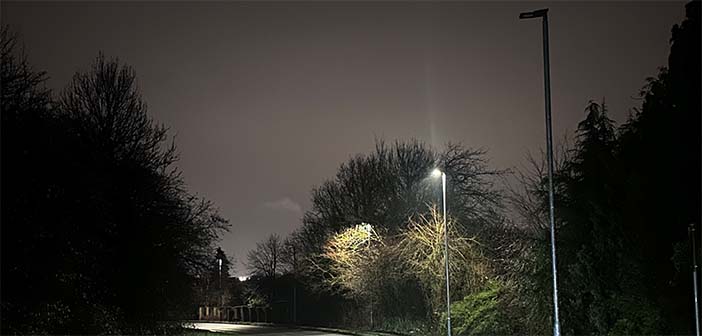
DEBT-ridden Warrington Borough Council is proposing to switch off, or significantly reduce street lighting across parts of the borough, as part of its emergency 2026/27 budget.
The decision, critics, say symbolises a council still unwilling to confront its own role in the financial crisis now facing residents.
Ironically one of WBC’s most recent updates said – It’s more expensive to “keep the lights on.”
The proposals appear in newly published Cabinet and Scrutiny papers released publicly yesterday. Buried deep in hundreds of pages of technical documents, the plans would see darker streets, reduced services, higher charges and increased fines — while residents are asked to accept more pain with little clarity on accountability, says Independent Cllr. Stuart Mann.
Street lighting reductions are framed as a cost-saving measure. Yet there is no clear, publicly presented assessment of the impact on road safety, crime, personal security or community confidence. For many, the decision to “turn off the lights” has become a metaphor for a council still failing to illuminate how Warrington reached this point.
Cuts and charges hidden in plain sight
Beyond lighting, the same papers set out a sweeping programme of cuts and income generation measures, including:
• Closure and mothballing of council buildings
• Community centres and libraries placed under review, with the expectation that volunteers or community groups take over if services are to survive
• Services reduced to statutory minimums only, ending discretionary support
• Council jobs deleted, reducing capacity across departments
• Increases in parking charges, resident permits, leisure fees and golf course prices
• Introduction of moving traffic offence enforcement, creating new fines where none previously existed
These measures are not presented in a clear, resident-friendly way. Instead, they are scattered across dozens of financial tables, requiring expert knowledge to interpret — a fact critics say actively discourages public understanding.
A budget built on uncertainty
Despite the scale of the changes, the budget itself remains unstable.
The council is currently assuming a 4.99% council tax increase, but its own papers confirm this figure is speculative. Warrington has formally applied to Government for Exceptional Financial Support (EFS) and, as part of that request, has asked for permission to raise council tax above 5%.
If that permission is granted, residents should expect the increase to rise further — after scrutiny has already taken place.
More starkly, the papers make clear that without EFS the council cannot legally balance its budget. In that scenario, the council’s Section 151 Officer would be required to issue a Section 114 notice, effectively declaring the authority unable to meet its financial obligations.
Yet councillors are being asked to scrutinise and progress a budget that:
• Relies heavily on one-off borrowing and reserves
• Assumes demand for services will fall
• Pushes responsibility onto communities and volunteers
• Allows officers to rewrite the budget after scrutiny once Government decisions are known
Who is being held accountable?
As residents face darker streets, fewer services and higher costs, attention is turning to a question the papers largely avoid: who is responsible?
Many of the councillors still sitting on the authority — including in senior positions — were directly involved in approving the commercial investments, borrowing strategies and financial decisions that are now widely acknowledged to have contributed to the council’s financial collapse.
Yet nowhere in the papers is there:
• A clear admission of error
• An explanation of which decisions failed
• Any indication of accountability
• Or any reassurance that lessons have genuinely been learned
Instead, the burden is being shifted onto residents — asked to pay more, accept less and trust the same political leadership to fix a crisis it helped create.
Transparency still lacking
Council leaders insist the detail is “in the papers”. But critics argue that transparency is not achieved by volume.
There is no single, plain-English explanation of:
• What services will close
• What support residents will lose
• Which communities will be hit first
• Or how long emergency measures can realistically delay further action
Residents are expected to piece together the impact themselves while decisions move rapidly through Cabinet and Full Council.
A town left in the dark
Switching off street lights may reduce costs, but for many it has become emblematic of a deeper problem — a council that continues to ask residents to bear the consequences of past failures, while remaining opaque about responsibility and the true scale of what lies ahead.
As Warrington approaches some of the most consequential decisions in its history, the questions remain unavoidable:
• Why are residents paying the price for decisions they did not make?
• Why are the same councillors who approved past strategies still setting the future direction?
• And why is the full truth still so hard to see without digging through hundreds of pages of technical paperwork?
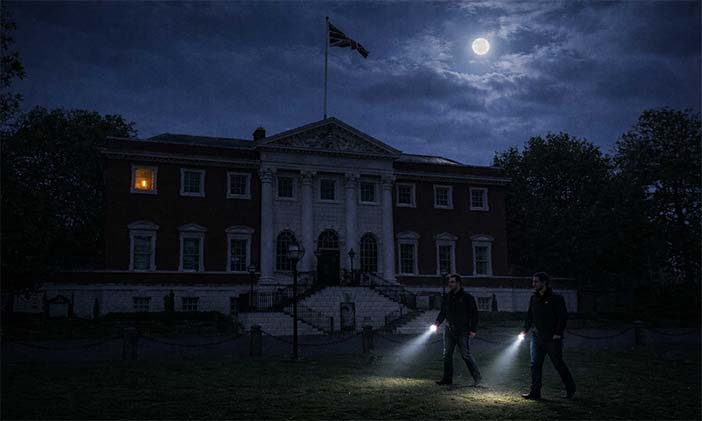
A gloomy future at the corridors of power
Residents are being encouraged to read the full cabinet and scrutiny committee papers at the following link CLICK HERE


9 Comments
A timely and welcome report Gary.
DO IT AND HOPE PUBLIC SUE CLOWNCIL FOR “SLIP, TRIPS AND FALLS” AND HOW WILL WE AVOID ALL THE POTHOLES IN THE JOKE OF A TOWN THIS HAS BECOME ! HOPE CAR OWNERS ALSO SUE FOR DAMAGE DUE TO ALL THE POTHOLES ALL OVER THE TOWN !
A great summary of a dire situation.
WBC councillors should hang their heads in shame
When looking at the Warrington Council Treasury Management plan there are many areas of concern. One of the main ones is the inflation forecast contained within it at 2.5-2.7% when general inflation is currently 3.7%. This increases the uncertainty especially as in certain areas inflation far exceeds that, Services inflation at 5.6% (well above target) driven by: Wage growth still elevated (4-5% range):Public sector pay rises (15%+ for some groups) filtering through. If the council assumptions on inflation are not meet then everything collapses as borrowing rates will remain high or grow. The councils plans are probably doomed before they start.
There are three documents available from gov.uk/government/downloads/ that are required reading, they are ‘Warrington Best Value Inspection Report’, the accompanying ‘Warrington Letter to Chief Executive, plus ‘Warrington Borough Council Explanatory Memorandum’, which followed two months later.
The Best Value Report in particular makes for sorry reading, a tale of arrogant bureaucrats, operating well above their abilities or their remit, running riot.
WBC have kept us in the dark for years over these matters !
Warrington Council:The Ultimate Test:
Can a traditional, change-resistant council with a culture of deference and defensiveness, facing the largest debt in unitary local government, with no audited accounts for 5+ years, no transformation track record, and senior officers disputing the findings, successfully deliver unprecedented change voluntarily under oversight rather than direct control?
The memorandum bets yes. The evidence suggests this is optimistic. The next six months will tell us which is correct.
VOTE THIS **PATHETIC** LABOUR USELESS CLOWNCIL OUT ! IN NEXT ELECTIONS ! BUNCH OF WORTHLESS JESTERS !