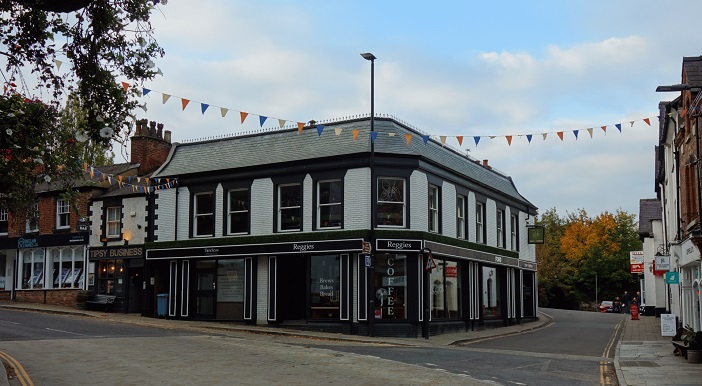
THE bold plan to convert the former Barclay’s Bank at Lymm into a bar, restaurant and retail units has won a top national award.
The scheme, in Eagle Brow, master-minded by local architects Randle-White in collaboration with Warrington Borough Council’s building control department, won the LABC building excellence award for the best non-residential extension, alteration or conversion project.
After the awards ceremony in London, Roger White, of lead architects Randle White Ltd., said: “We went up against the rest of the county and were successful in winning the national award.
“The successful transformation was down to the close collaboration we had with WBC building control department, the skilled professional consultant we worked with and the client who believed in our vision for change.”
The project had to first win the North West regional LABC award before going on to claim the national award.
Mr White said the inspiration for the project was taken from the original 1970s bank building.
The LABC Building Excellence Awards have long been established as the premier accolades within the industry; recognising the companies and individuals that demonstrate a commitment to competence, quality and standards in delivering safe and sustainable buildings
Lorna Stimpson, chief executive officer at LABC, said: “More 800 individuals from across England and Wales, came together, showcasing the amazing people and projects working in our industry.
“The Warrington borough council building control team worked closely with the contractor and architect to overcome challenges such as maintaining pedestrian access during construction and achieving level access for all units despite the site’s sloping topography. Early collaboration at pre-application stage allowed for compliant solutions, including inclusive layouts and accessible WCs, while innovative site management strategies ensured safety and minimal disruption to village life.
“ The result is a high-quality, historically sympathetic development that exceeds building regulations and delivers lasting benefits for the local community.
The judges commended the project for its in depth historic research of how the building used to look, allowed for design and technical drawings to be developed to bring this successful scheme forward. Working closely with the community and building control team, developers were sensitive to the local conservation area throughout the build of the project; minimising disruption to the community and turning a vacant building into a mixed-use commercial scheme.”