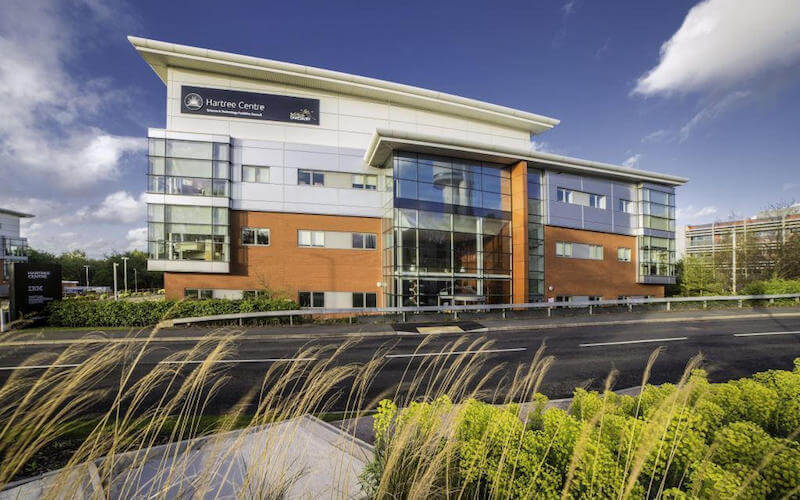
THE Science and Technology Facilities Council’s Hartree Centre – based at Daresbury Laboratory, near Warrington – and Alder Hey Children’s NHS Foundation Trust are using advanced digital technologies to develop a smart staff scheduling system that will ease complex rota planning, reduce clinician admin time and support staff wellbeing.
The work is the first phase of a new strategic agreement to collaborate using advanced digital technologies and AI (Artificial Intelligence) to tackle practical challenges in the NHS, to improve staff wellbeing and resilience for even better patient care.
One of Europe’s biggest and busiest children’s hospitals, Alder Hey provides 24-hour care, balancing planned surgery with emergency demand. Making sure the right staff with the right skills are available at all times requires careful and complex rota planning.
Senior clinicians can spend considerable time each month managing rotas using manual spreadsheets, juggling annual leave, absences, working patterns and on-call rules, while maintaining staff wellbeing and service continuity.
As service demands continue to grow, the Trust identified the need for a modern, reliable scheduling system that frees up valuable clinician time, whilst supporting staff wellbeing, operational efficiency and patient care.
Under a new joint statement of endeavour, the Hartree Centre and Alder Hey have been exploring how advanced digital technologies can transform staff scheduling for the NHS.
In close collaboration with clinicians, the Hartree National Centre for Digital Innovation team has developed an AI-driven system that automatically generates balanced on-call schedules. By incorporating real-world factors such as annual leave, working patterns and staff skills, it can produce rotas that are fair, practical, and more predictable.
A user-friendly interface enables clinicians to review and adjust schedules quickly, maintaining human oversight while replacing manual spreadsheets with a more efficient and reliable approach.
Professor Iain Hennessey, director and founder of Innovation at Alder Hey said: “Sometimes the most impactful innovations are often the simplest and improving how we build our rotas is a perfect example of technology giving clinicians more time to care.
“There is no better use of advanced computing than helping a children’s hospital run more efficiently, allowing clinicians to concentrate on what they do best.
“Through this collaboration we will be able to harness expertise and the latest technology to help make this a reality. This is what innovation and high-precision computing can do, put people back at the heart of care.”
While the first phase of the project supports on-call planning, future development will work towards full workforce rota management.
Ultimately, the technology has the potential to be scaled across the NHS, helping to improve resilience and efficiency.
Having collaborated on new technologies since 2015, the new agreement between the Hartree Centre and Alder Hey represents a strategic commitment to developing technologies that improve patient care and staff wellbeing. It will also support Alder Hey in the delivery of its new AI Strategy.
Professor Kate Royse said: “It is extremely exciting to continue our work with Alder Hey as it uses advanced AI and digital technologies to tackle real challenges facing the NHS, while supporting the wellbeing of both patients and staff.
“This is a clear example of how the Hartree Centre’s expertise can help the NHS to strengthen workforce planning, improve operational efficiency, and support staff, without compromising patient care.”
.