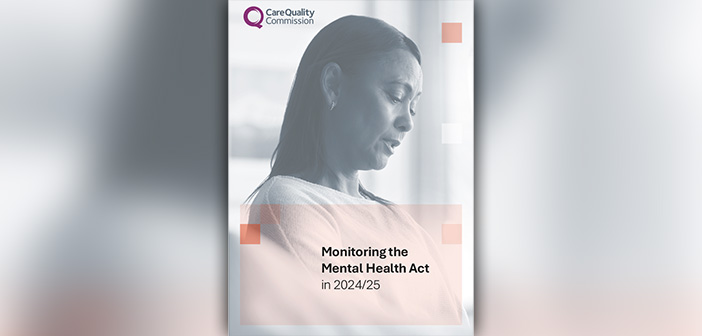
STAFF shortages and lack of beds are causing an increase in demand for mental healthcare services services according to a “deeply disappointing” report by the Care Quality Commission (CQC).
Higher thresholds for admission are also leading to long waits for mental healthcare, according to the CQC’s annual report into the use of the Mental Health Act published today, 29 January 2026.
The Monitoring the Mental Health Act 2024/2025 report, which was built on interviews with over 3,000 patients and over 700 family members and carers, revealed worrying reoccurring issues of staff shortages, a lack of beds, and inconsistencies in experiences.
While the report highlighted the positive impact of hard-working, caring, and compassionate staff, it also revealed:
• People continue to be placed far from home, with out-of-area placements on the rise even though there was a national commitment to end this practice by March 2021.
• People living in deprived areas are 3.6 times more likely to be detained under the Mental Health Act.*
• Concerns continue around racial inequalities, yet in 3 out of 4 services visited, staff hadn’t heard of the Patient and Carer Race Equality Framework** – a framework required of all NHS mental health services to tackle racism.
Building a positive relationship with healthcare staff is key to a person’s recovery but with nearly 1 in 10 roles in NHS mental health trusts unfilled*** and a reliance on agency workers, staff don’t always have the capacity to achieve this. This can mean that staff struggle to de-escalate patients in distress and are developing burnout. Meanwhile, patients report feeling unsafe as there aren’t enough staff on each ward.
With not enough beds, people are being placed in inappropriate environments. This can include children being placed in adult wards, people placed far from home so that it’s difficult for their loved ones to visit, and in some cases, people facing more restrictions than necessary, such as not being able to go outside even though it may be safe to do so. While some wards are clean, tidy, and designed in a way that supports people’s needs, some patients recall noisy, dirty, and loud wards, with one parent describing “blood on the walls” and a “disgusting” toilet.
People’s experiences remain inconsistent, with Black people being detained at 4 times the rate of white people. Despite this, in the majority of services visited (51%) staff had not received training about racial inequalities.**
Additionally, some staff appear to lack the right skills to support autistic people or people with a learning disability. People reported feeling misunderstood or spoken to in ways that felt undignified.
Personalised and compassionate care is key to recovery, and its absence can be painful as one former patient, Emily, told us. When Emily was detained, she and her family didn’t know her rights and she felt “almost like a criminal.” For the first few weeks of her stay in one unit she recalls being mostly left alone and not told what was going to happen to her.
While she has since received therapy and visitors and become well enough to be discharged, Emily feels that if she had received care in the community she might not have needed to be detained in the first place.
The regulator is calling for a system-wide approach to improve mental health care so that people like Emily don’t need to spend months or even years of their life in hospital.
Chris Dzikiti, Interim Chief Inspector of Mental Health at the Care Quality Commission, said: “It’s deeply disappointing to again be highlighting the same issues of overworked healthcare workers, unequal experiences, people being placed in inappropriate environments, and ultimately people struggling to get the care they need.
“Many people who are detained under the Mental Health Act have exhausted all other avenues of care, yet they still face long waits, with families sometimes forced to supervise them constantly while they wait.
“For Black people, autistic people, and people with a learning disability, the barriers to appropriate care are even greater.
“We have a long way to go to meet the needs of people struggling with their mental health. We need a bigger, more robust workforce, enough beds to meet all needs, and appropriate support for staff so that they can provide personalised care.
“However, I do want to thank the countless hard-working people in mental health care who provide person-centred and compassionate care in these challenging circumstances.
“We welcome the revised Mental Health Act and its ambitions to improve patient autonomy, give patients a greater role in decision-making and ultimately to improve the experience of people in mental healthcare. We will work closely with the government and others to support these aims.”
A full copy of the report can be read HERE
*Compared with people living in the least deprived areas.
**Based on 103 visits carried out between January and March 2025
***as of March 2025