
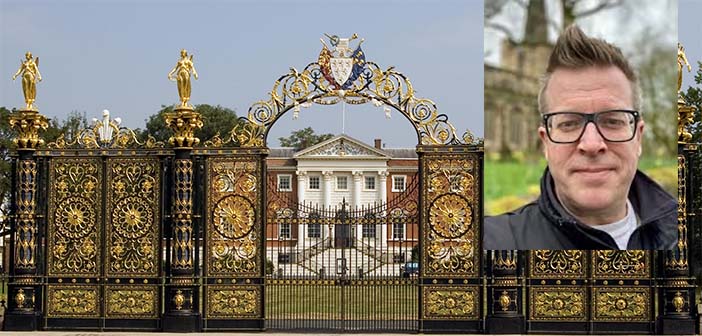
DESPITE an estimated £14m increase in funding from the Government, Warrington Borough Council is facing one of the most serious financial challenges in its history.
Independent Cllr. Stuart Mann, who has been scruitinising the figures, warns that with a remaining budget gap of around £48 million still to be addressed across its medium-term financial plan, stark financial choices remain.
The shortfall exists despite earlier rounds of savings and efficiencies already being built into the council’s forecasts. Around £30 million of cuts were made in the current financial year alone, resulting in reductions to services such as street bin emptying, environmental crime work, voluntary redundancies, and the introduction of a council-wide spending freeze.
Further difficult decisions now lie ahead.
Cllr. Mann, who represents Burtonwood & Winwick and has regularly raised concerns about the council’s worsening financial position, has warned that residents must be prepared for further changes to council services, regardless of the approach ultimately chosen.
“There is no avoiding the scale of the challenge,” he said. “The figures involved are simply too large to wish away.”
What options are being considered?
To balance the budget, the council is currently considering a combination of:
• Further service cuts
• Council tax increases greater than 5%
• An application for Exceptional Financial Support (EFS) from government, which would allow the authority to use borrowing or capital resources to support day-to-day spending
However, there is no certainty that government will approve any EFS request.
Applications for Exceptional Financial Support are assessed by ministers, and councils are not informed of the outcome until late in the budget process. If approval is not granted, the council would be required to find additional savings at short notice.
Failure to set a legally balanced budget would leave the authority facing a Section 114 notice, effectively declaring it unable to meet its financial obligations and triggering immediate restrictions on spending.
Provisional Local Government Finance Settlement
Alongside the council’s internal budget discussions, the government has now published its Provisional Local Government Finance Settlement, which sets out how much funding councils are expected to receive in future years.
The figures are provisional and subject to consultation, but they form the basis on which councils must plan their budgets.
While headline government figures suggest a much larger uplift, Cllr Mann has reviewed the detailed analysis and believes it indicates that Warrington’s funding increases by only around £14 million in cash terms between 2024/25 and 2026/27 on a like-for-like basis.
This more modest increase reflects adjustments that strip out accounting changes, grant roll-ins and funding reform, providing a clearer picture of the council’s actual spending power.
Commenting on the proposed settlement, Cllr Mann said: “Although Warrington’s headline government funding rises sharply on paper over this period, the increase is largely the result of structural changes to how funding is calculated, rather than a significant injection of new money.”
Analysis by the Institute for Fiscal Studies also suggests that once inflation, rising demand pressures and tariff adjustments are taken into account, the council’s underlying financial position does not materially improve.
As a result, despite a cash-terms increase in funding, the provisional settlement does not remove the need for difficult decisions on council tax levels, service reductions and longer-term financial support measures.
Front-loaded cuts or spreading the impact?
Taking all of this into account, one of the key questions Cllr Mann is raising ahead of the 2026/27 budget is whether savings should be heavily concentrated in the first year of the plan or spread more gradually over the four-year MTFP period.
The Labour administration’s position is that spreading cuts over several years would cost more in the long run, meaning deeper savings earlier are financially preferable.
Cllr Mann said that argument may hold from a technical accounting perspective, but believes residents deserve greater clarity about what it would mean in practice.
“If cuts are front-loaded in year one (2026), people need to understand exactly what that means for services in Warrington,” he said. “That includes whether community hubs could close, whether council assets might be sold, and whether parish councils will be expected to take on more responsibility.”
He added that the choice being presented is not straightforward.
“Some residents may prefer higher council tax increases spread over several years if that helps protect services for longer. Others may favour deeper early cuts if it reduces long-term costs. The important thing is that those trade-offs are explained honestly.”
Service changes unavoidable
Despite the different approaches being discussed, there is broad agreement that service reductions or changes are unavoidable.
Non-statutory services are expected to be most at risk, alongside continued pressure to “transform” how the council operates in order to reduce costs.
Cllr Mann said residents should not be given false reassurance.
“There is no scenario where this ends without service cuts,” he said. “The only question is how they are managed.”
Scrutiny and transparency
The council’s Scrutiny Committee met on 16 December, where members committed to examining the proposals in detail and challenging assumptions made by the administration.
Cllr Mann said he intends to attend all future scrutiny meetings and has called for greater transparency throughout the process.
“Residents need the facts in plain English,” he said. “People deserve to know what is happening, why it is happening, and what it could mean for their area.”
The government-commissioned Best Value Inspection report into Warrington Borough Council identified a series of long-standing weaknesses, including poor financial governance, over-optimistic assumptions, and a failure to respond early enough to mounting risks.
At the same time, councils nationally continue to face rising costs and long-term pressures on funding.
Cllr Mann said the current position reflects both long-term poor local decision-making and wider failures in how local government is funded.
“I make no hesitation in saying that those local decisions over the past few years, and to some extent national funding failures, have now put the finances of every Warringtonian under even greater pressure in the year ahead, whilst at the same time probably taking away some of the services that the people of our great town rely upon the most.”
What happens next?
Key meetings where the council’s budget proposals will be discussed include:
Cabinet
• 12 January 2026
• 18 February 2026
Scrutiny Committee
• 16 February 2026
Full Council
• 2 March 2026 – when the budget will be formally proposed and voted upon
Further details on all council meetings, including agendas and reports, are available via the council’s website.



1 Comment
In other words whatever happens the residents of Warrington are going to be financially crucified a matter that has been brought on by the incompetence of a labour controlled council