
WARRINGTON Borough Council is to send a strongly worded message to the Coalition Government opposing its controversial Health and Social Care Bill – but only after a fierce political debate.
The controlling Labour group forced through a motion slamming the bill on the grounds it would further marginalise and negatively affect the most vulnerable people in Warrington with cuts to services and provision.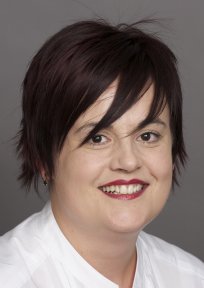 But Liberal Democrat and Conservative councillors opposed the motion.
Labour’s Cllr Lottie Ladbury (right) proposing the motion, said the bill was “unnecessary, unwanted, wasteful and damaging.
“It is threatening to end the NHS as we know it,” she said.
Cllr Ladbury said the government was ploughing on with thebill despite thousands of people calling on them to stop.
She said the bill would break up the NHS and create an unfair postcode lottery with no national standards and widespread variation in the treatments available.
Some people would have to go private for treatments available free elsewhere.
There was a risk of longer waiting times and the creation of a two-tier NHS.
Local hospitals would be free to treat private patients and make NHS patients wait longer.
The Bill would put competition before patient care. Private companies would be able to cherry-pick quick profits, potentially forcing local hospitals to go bust.
It would undermine the bond of trust between doctors and patients and create conflicts of interest, waste money and create bureaucracy.
“It is unforgivable to spend £2 billion on a reckless reorganisation when the NHS needs every penny for patient care,” Cllr Ladbury added.
Conservative leader Cllr Keith Bland said the NHS had to change to face up to the challenges of the future. The changes proposed by the Bill would cut administration costs by a third and would not mean cuts for front line services.
Every penny saved would be reinvested in health care.
It would put power where it belonged – in the hands of health professionals – but also give a collective voice to patients.
Liberal Democrat leader Cllr Ian Marks said although there may be disagreements about the content of the Bill, they could all agree that the NHS must modernise.
The age of the population and the cost of treatment and medicines were all increasing.
In some areas, the NHS was falling behind other countries.
“Money is tight. Although the budget has been protected, doing things the same as in the past is not an option,” he said.
The Bill had many positive aspects, including the bringing together of public health under local authority control had been widely mentioned.
The increased power of scrutiny for local authorities was a move in the right direction.
New health and wellbeing boards under local authorities would have wide-ranging powers to develop integrated approaches agreed jointly by commissioners, elected councillors and representatives from Healthwatch.
Giving GPs and other clinicians a central role in commissioning health care would enable money to be spent more effectively. Patients would have more choice.
Limiting political micro-management from London and slimming down the NHS bureaucracy was a positive move, as was, bringing together health and social care in a much more integrated way.
Cllr Marks added: “These changes strike me as pretty positive with the potential to bring huge benefits to patients.
“The motion is premature and without foundation so I will be advising my Group to vote against it.”
Storm over health bill
99 Comments
Share.
About Author

Gary Skentelbery
Experienced journalist for more than 40 years. Managing Director of magazine publishing group with three in-house titles and on-line daily newspaper for Warrington. Experienced writer, photographer, PR consultant and media expert having written for local, regional and national newspapers. Specialties: PR, media, social networking, photographer, networking, advertising, sales, media crisis management. Former Chair of Warrington Healthwatch Director Warrington Chamber of Commerce Patron Tim Parry Johnathan Ball Foundation for Peace. Patron Warrington Disability Partnership. Former Chairman of Warrington Town FC.




9 Comments
“Dear chief secretary, I’m afraid there is no money. Kind regards – and good luck! Liam.”
For those who can’t recall who Liam is, he is Liam Byrne, a senior finance Minister in the last Labour Government.
It might well be correct to assert that parts of the proposed reorganisation will not deliver all that it is intended to, but it is not correct to say that the NHS does not need a reorganisation. Whilst there has been a very rapid increase in the money spent on the NHS over the last decade, its productivity has fallen substantially, it cannot be right that taxpayers put more in and in effect get less out. With regards to a two teir NHS and privatisation, it is worth noting that GP practices are private businesses and that many senior, and indeed, not so senior doctors are only too willing to supplement their NHS income working in private hospitals. Also worth noting that most new hospitals are owned by the private sector and are not part of the NHS estate.
Yes Labour left the future of health on its knees – don’t be fooled by things Warrington – Labour forced through a motion on a Bill that has not become Law as yet. It is my understanding that we the people of this country are still working with Labour’s legislation —–
well done Lottie, great work in standing up for all the nurses and nhs workers who are suffering under this government. a real champion for warrington!!
Why, if the Tory-LibDem proposals for the NHS are so good… are the Royal College of Nursing and the British Medical Association… two non-political bodies… totally (not partially, TOTALLY) opposed to the plans????
When they are campaigning in local elections the labour party have next to nothing to say about local issues but harp on about national politics – some would say that was brave considering the disaster they turned out to be at a national level. They also appear to want to use national issues as a distraction now they are in power in Warrington.
Perhaps they should get on with dealing with local issues and not indulge in national party politics. Refgrettably, there is a Labour MP in the town to do that for them.
No apologies for this quote from another source as it points to one problem all our political parties have burdened the NHS with – “none of the parties can disclaim culpability for their continuing reliance on the flawed PFI system for funding many aspects of NHS moderization, in particular new hospitals. This has had an immediate impact on the increased spending on the NHS and will be a continuing financial drain on it for future generations.”
There’s no doubt the NHS is in urgent need of reorganization, as does our Council.
With money already limited and likely to be for decades, NHS patients will not have more choice as we’re being led to believe. The priority and the problem will be shaping the reorganized NHS to fit the money available and patient choice will then have to take its place in the queue, despite the political window dressing of choice.
Suggestions of “increased power of scrutiny for local authorities” will convince very few in Warrington. The weight of regular reports and comments locally and nationally, confirm our Council is in more than enough difficulty controlling its own activities(that’s why it needs reorganizing), without compounding those problems by giving it more supervision responsibilities. So the proposal of “New health and wellbeing boards under local authorities would have wide-ranging powers to develop integrated approaches agreed jointly by commissioners, elected councillors” is as hard to take as the promise of patient choice.
Maybe because as unions, neither can get what they want from the reorganisation for their members. It is worth remembering that it was the BMA ( the doctors union) who opposed the setting up of the NHS, so clearly they have a track record of not being correct in their judgements, or just maybe they were right then, and the NHS should never have been founded.
“It is unforgivable to spend £2 billion on a reckless reorganisation when the NHS needs every penny for patient care,” Cllr Ladbury added.
It does, but for the last decade and probably for decades before, rather too much of the increased spending on the NHS has gone in to everything except patient care. In order to understand how to focus money on patient care, you would probably need to look at how private hospitals are organised, with their very minimal management and bureaucratic structures. You need to ask the question, why does the NHS need so many highly paid finance directors, communication directors, chief executives, non executive directors and chairmen etc etc etc.
get real – if Labour wanted to do something why didn’t they change the 2008 Act???